nopCommerce vs Shopify

2026 ecommerce platform guide

nopCommerce vs Shopify: a practical buyer's guide

Shopify is excellent when speed and simplicity matter most. nopCommerce is stronger when your business needs source-code control, custom workflows, B2B logic, multi-store architecture, and room to grow without platform walls.

OpenOwn source code, hosting, and data.
FastShopify is quick for standard launches.
CustomChoose by future workflow needs.

The short answer for business owners

If your catalog, pricing, checkout, shipping, tax, warehouse, or B2B model is simple, Shopify can be the easiest path. If your business model is a competitive advantage, nopCommerce is usually the stronger foundation because you can shape the system around that model.

Shopify profile

Hosted commerce for fast-moving teams

Shopify packages hosting, storefront tools, checkout, themes, apps, and admin workflows into a managed SaaS platform. It is attractive for merchants who want to sell quickly and keep technical operations light.

  • Less infrastructure responsibility
  • Large app and theme ecosystem
  • Strong checkout and payment experience
  • Good fit for standard DTC and retail workflows
nopCommerce profile

Open-source .NET commerce with deep control

nopCommerce is a free, open-source ecommerce platform built on the Microsoft .NET stack. It is designed for merchants and developers who need extensibility, database access, custom logic, multi-store, multi-vendor, B2B, and enterprise-ready workflows.

  • Full source-code access and ownership
  • No monthly license fee for the core platform
  • Powerful customization through plugins and themes
  • Excellent fit for complex operations and long-term scaling

nopCommerce vs Shopify comparison table

Use this table as a buying checklist before you choose a platform, approve a redesign, or plan a migration.

Decision areanopCommerceShopify
OwnershipHigh control. You can access source code, database, hosting, and business logic.Managed control. Shopify handles the platform, but deep system-level changes are limited by SaaS boundaries.
Launch speedFast with the right theme and plugins, but hosting and setup decisions remain yours.Very fast for standard stores because hosting, checkout, SSL, and core operations are already bundled.
Total costNo core platform license fee, but budget for hosting, development, maintenance, and premium extensions.Predictable subscription entry point, but app subscriptions, premium themes, payment costs, and custom development can add up.
CustomizationExcellent for custom checkout rules, ERP logic, B2B pricing, regional catalogs, approval flows, and bespoke admin features.Excellent for theme-level and app-supported changes; advanced custom workflows may require Shopify Plus, apps, or workarounds.
B2B and multi-storeStrong fit for multi-store, multi-vendor, customer roles, tiered pricing, and complex catalog segmentation.Capable, especially with higher-tier tooling and apps, but advanced B2B architecture can become plan- and app-dependent.
SEO content controlStrong control over URLs, metadata, schema, page templates, performance tuning, and custom content sections.Good built-in SEO basics with a large app ecosystem; some technical SEO patterns are constrained by the hosted platform.
IntegrationsBest when you need direct integrations with ERP, POS, warehouse, accounting, custom APIs, or legacy .NET systems.Best when your required tools already have mature Shopify apps or native integrations.
MaintenanceYou control updates, hosting, performance, and security responsibilities.Shopify handles core platform maintenance, infrastructure, and many operational concerns.
Best fitGrowing brands, B2B sellers, distributors, enterprise stores, agencies, and businesses with unique workflows.Startups, DTC brands, small teams, and merchants who value speed, simplicity, and managed operations.

Which platform is better for your growth stage?

The real winner is not the platform with the longest feature list. It is the one that matches your next two years of operations.

New brand or simple catalog

Shopify is practical when you need a professional storefront quickly and your catalog, pricing, and fulfillment rules are straightforward.

  • Small product range
  • Standard checkout flow
  • Minimal back-office logic

Scaling merchant or niche marketplace

nopCommerce becomes more attractive when you need custom product data, rich SEO pages, regional stores, and a controlled plugin stack.

  • Multiple customer types
  • Custom shipping and payment rules
  • Advanced catalog merchandising

B2B, distributor, or enterprise

nopCommerce is often the safer long-term bet when ecommerce must connect deeply with ERP, procurement, quotations, and role-based pricing.

  • Tiered and contract pricing
  • Multi-store and multi-vendor needs
  • Direct database and source-code access

Where nopCommerce can outperform Shopify

Shopify is polished and convenient, but convenience can become a limitation when your store needs to behave differently from the average store.

  • Custom business rules: build exactly the pricing, checkout, tax, shipping, vendor, or order workflow your business requires.
  • Data ownership: keep deeper control over database structure, hosting strategy, reporting, and integrations.
  • SEO flexibility: customize landing pages, structured data, category templates, filters, and performance optimizations.
  • Plugin-first scaling: extend the platform without forcing every requirement through a monthly SaaS app.
  • .NET ecosystem: ideal for teams already invested in Microsoft technologies and enterprise integration patterns.
BSS Advanced SEO Schema plugin settings for nopCommerce
Advanced SEO controls for richer search visibility

BSS nopCommerce mobile app with REST API product screenshot
Mobile and API-ready commerce extensions
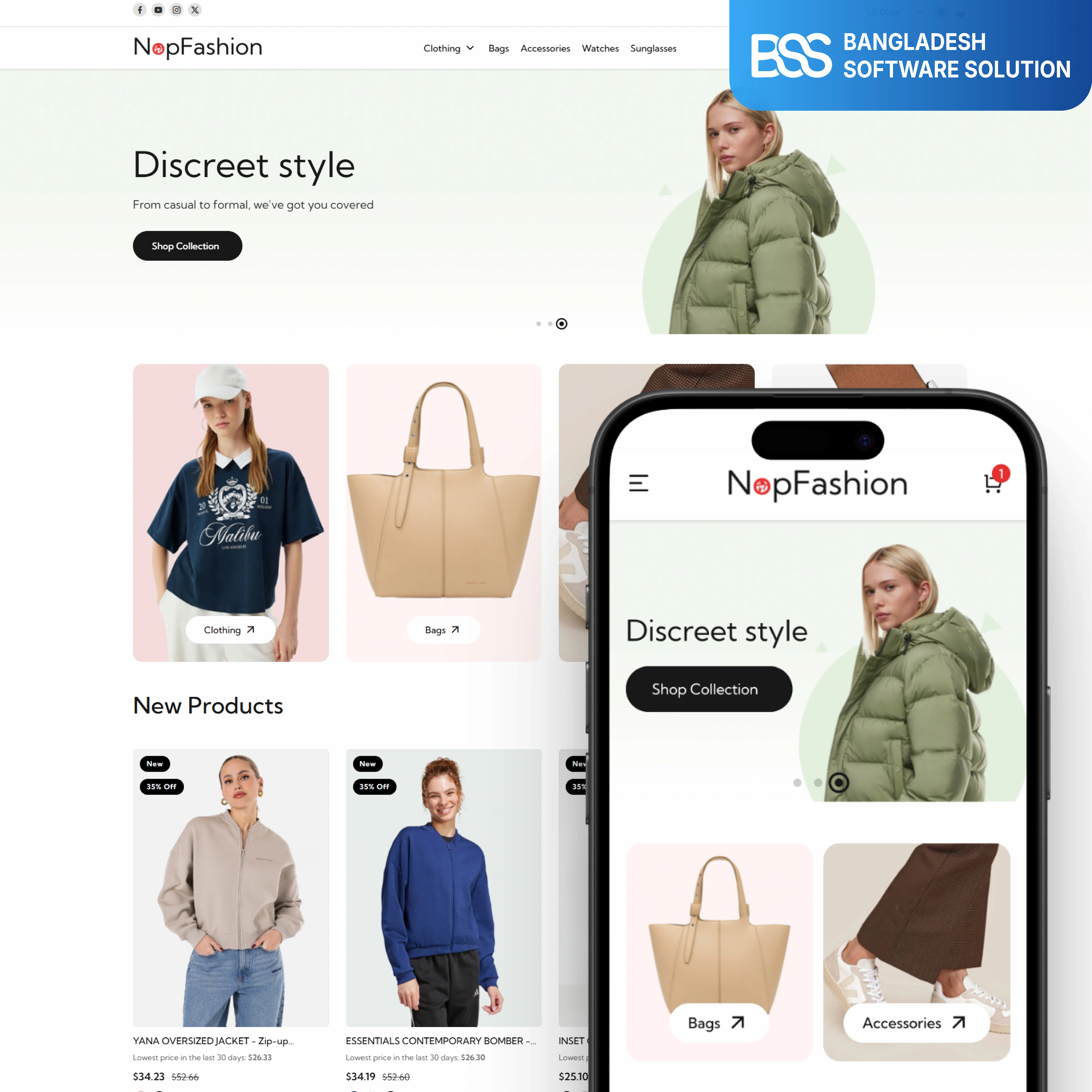
NopFashion theme and plugin bundle for nopCommerce
Conversion-focused nopCommerce theme bundles
BSS Product Box plugin storefront features
Storefront merchandising plugins that improve UX

Build a nopCommerce store that feels as easy as Shopify, without giving up control

BSS themes and plugins help you move faster on nopCommerce: better storefront design, richer SEO, smoother product discovery, stronger checkout experiences, mobile-ready commerce, and practical admin tools for real merchants.

Before you choose: ask these five questions

A platform decision is easier when you test it against the real complexity of your business.

Will your pricing stay simple?

If you need customer-specific pricing, contract pricing, regional catalogs, or quote workflows, nopCommerce gives you more room to build the exact model.

How many apps will your store depend on?

A few apps are fine. A stack of critical monthly apps can increase cost, slow decision-making, and create integration risk.

Do you need direct ERP or warehouse integration?

Deep back-office integrations are usually easier when your development team can control code, database behavior, and hosting architecture.

How important is technical SEO?

For competitive organic search, look beyond page titles. Consider schema, internal linking, category templates, performance, faceted navigation, and custom content blocks.

Will replatforming later be expensive?

The right choice today should reduce migration risk tomorrow. Choose the platform that matches the store you are becoming.

Migration path: Shopify to nopCommerce

If your Shopify store has outgrown its app stack or customization limits, plan the move carefully instead of treating it as a simple theme rebuild.

What to migrate

  • Products, variants, images, collections, categories, and filters
  • Customers, addresses, customer roles, and B2B segmentation
  • Orders, discounts, coupons, tax rules, and shipping logic
  • URLs, redirects, metadata, structured data, and blog content

What to improve during migration

  • Replace fragile app chains with clean nopCommerce plugins
  • Build faster category and product page templates
  • Add schema, review, image gallery, mobile app, and merchandising tools
  • Create a scalable foundation for the next store version

Tip: protect organic traffic with a URL map, 301 redirects, metadata review, analytics benchmarks, and post-launch crawl checks.

Frequently asked questions

Clear answers for merchants comparing nopCommerce and Shopify before a build, redesign, or migration.

Is nopCommerce better than Shopify?

nopCommerce is better when you need ownership, custom workflows, source-code access, multi-store features, B2B logic, or deep integrations. Shopify is better when you want the fastest managed launch with less technical responsibility.

Is nopCommerce really free?

The nopCommerce core platform is free and open source. You still need to budget for hosting, implementation, maintenance, design, and any premium themes or plugins your store requires.

Is Shopify easier for beginners?

Yes. Shopify is generally easier for non-technical merchants because hosting, checkout, updates, and many operational details are managed for you.

Which platform is better for B2B ecommerce?

nopCommerce is often the stronger choice for B2B because it supports deeper customization around customer roles, pricing, catalogs, approvals, vendors, integrations, and multi-store architecture.

Can nopCommerce look as modern as Shopify?

Yes. With a high-quality theme, optimized product pages, professional image galleries, strong search UX, and the right plugins, nopCommerce can deliver a modern storefront while preserving backend control.

Should I migrate from Shopify to nopCommerce?

Consider migrating if your app stack is getting expensive, you need deeper custom logic, your SEO needs more control, or your back-office integrations are becoming too complex for a hosted SaaS setup.