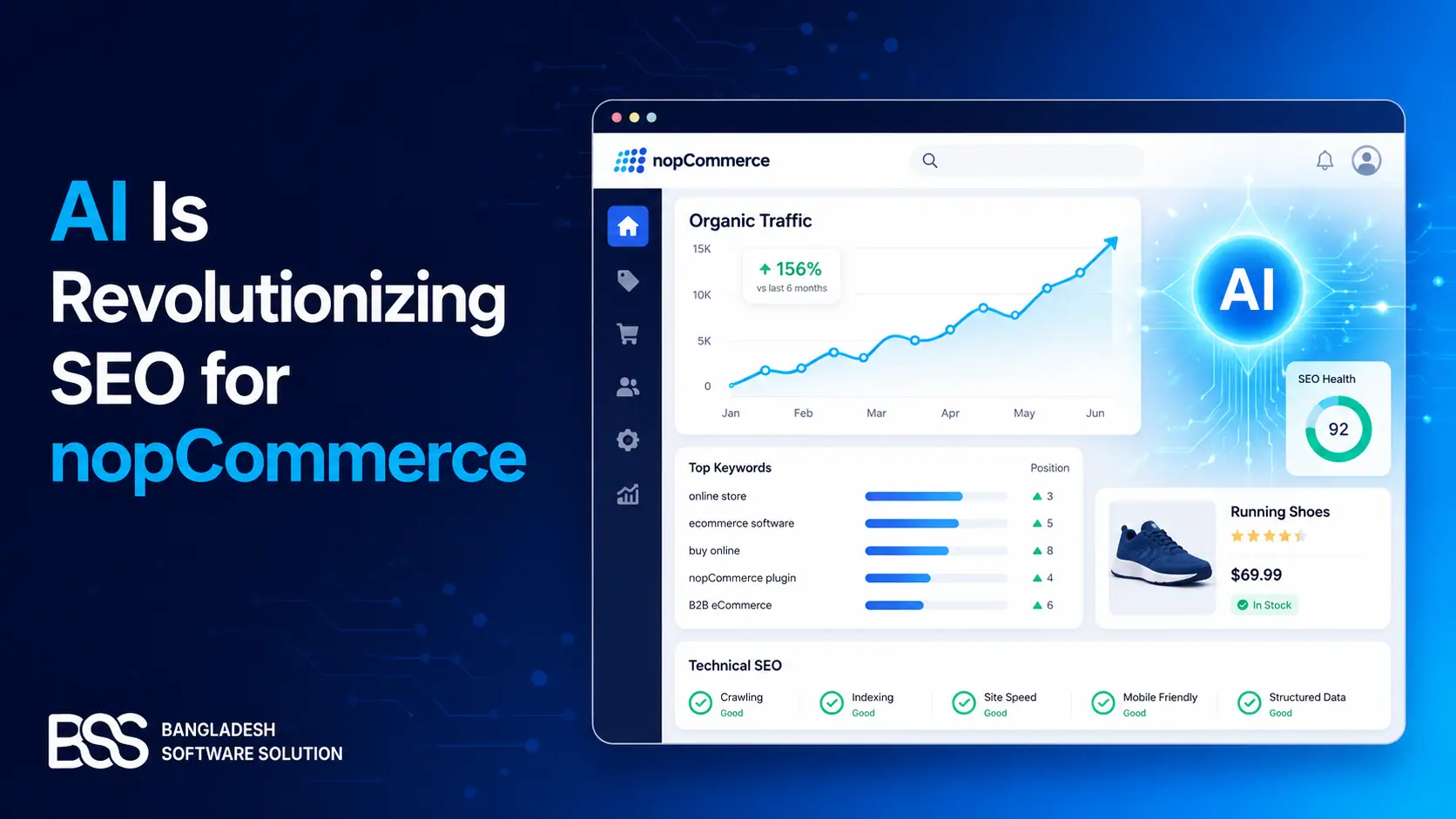
Search is changing from a list of blue links into an answer-driven experience. For nopCommerce store owners, that does not mean traditional SEO is dead — it means product data, page quality, structured content, and technical performance now matter more than ever.
This guide is a practical look at what actually changes when AI enters the picture, where AI genuinely helps a nopCommerce store rank, and the tasks you should still keep firmly in human hands.
Why AI Changes the SEO Playbook
AI search tools summarise, compare, and recommend. They reward clear information architecture, verifiable claims, and pages that answer buyer questions completely. That is especially important for nopCommerce stores, where category pages, product pages, filters, schema, reviews, and custom content blocks all influence organic visibility.
The foundation has not moved: Google's own guidance is still simple — create helpful, reliable, people-first content, show real expertise, and make pages easy for search systems to understand.
AI does not remove that foundation. It raises the standard for how complete and trustworthy each page needs to be.
The Visible Traffic Shift
The change is already measurable in how people click. A 2025 Pew Research Center analysis found a clear gap between search results that show an AI summary and those that do not:
Source: Pew Research Center, July 2025.
The lesson for ecommerce teams is not to chase every AI trend, but to become the source AI systems can confidently cite.
Where AI Helps nopCommerce SEO First
AI is most useful when it speeds up research and cleanup — not when it blindly publishes pages. In nopCommerce, the best use cases are practical and measurable.
If you would rather not build your own tooling, the BSS AI SEO Assistant brings much of this research-and-cleanup work directly into the nopCommerce admin.
An AI-Ready SEO Workflow for nopCommerce
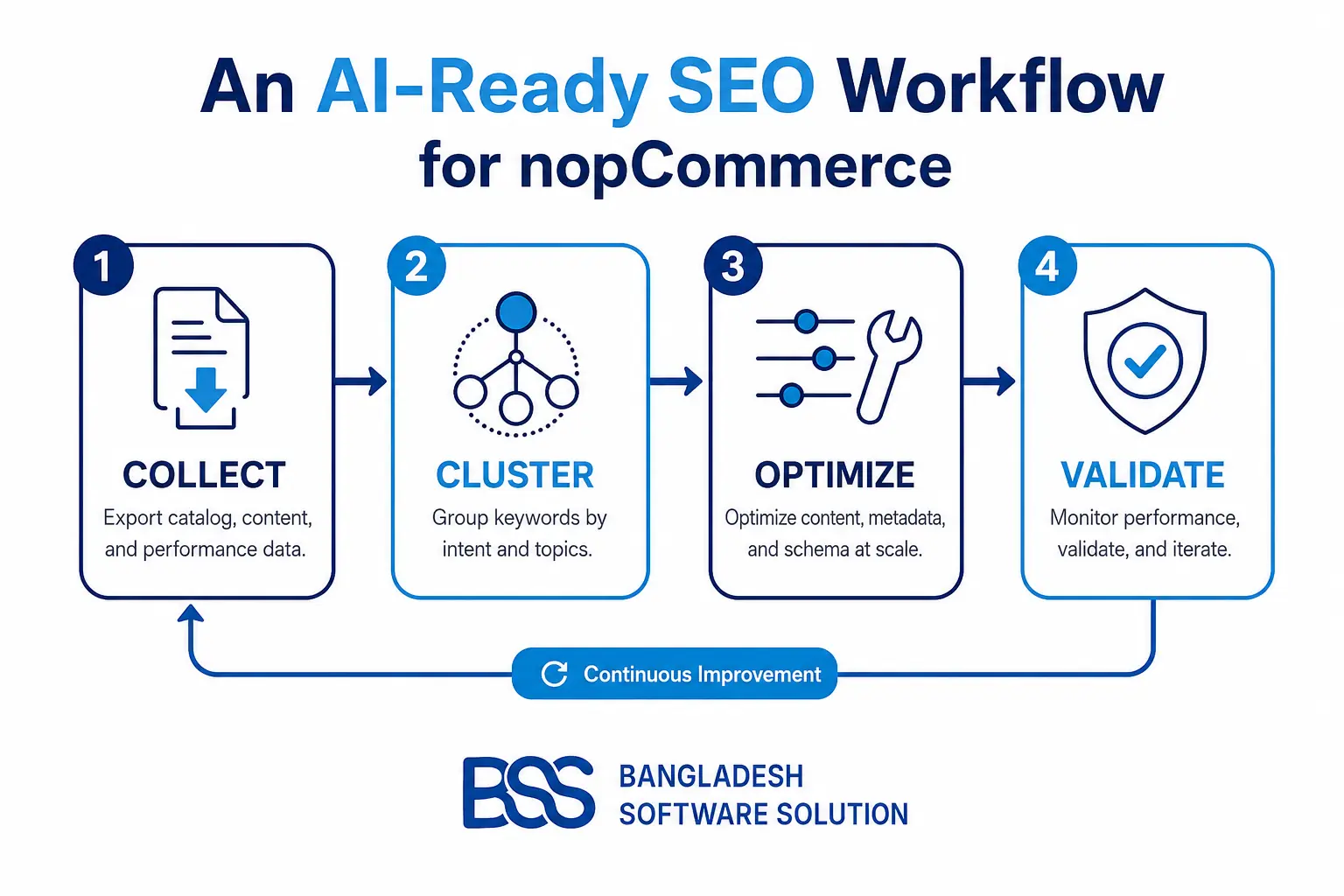
The strongest workflow combines automation with developer and marketer judgement. Here is a simple operating model for a nopCommerce store.
Four-step operating model
- 1Collect — Export Search Console queries, product data, category URLs, reviews, and internal search terms.
- 2Cluster — Use AI to group keywords by intent and match them to category, product, blog, and FAQ pages.
- 3Optimize — Update titles, descriptions, schema, internal links, product copy, image alt text, and page-speed issues.
- 4Validate — Check facts, test rich results, monitor rankings, and compare conversions after changes go live.
Structured Data Is Now a Competitive Advantage
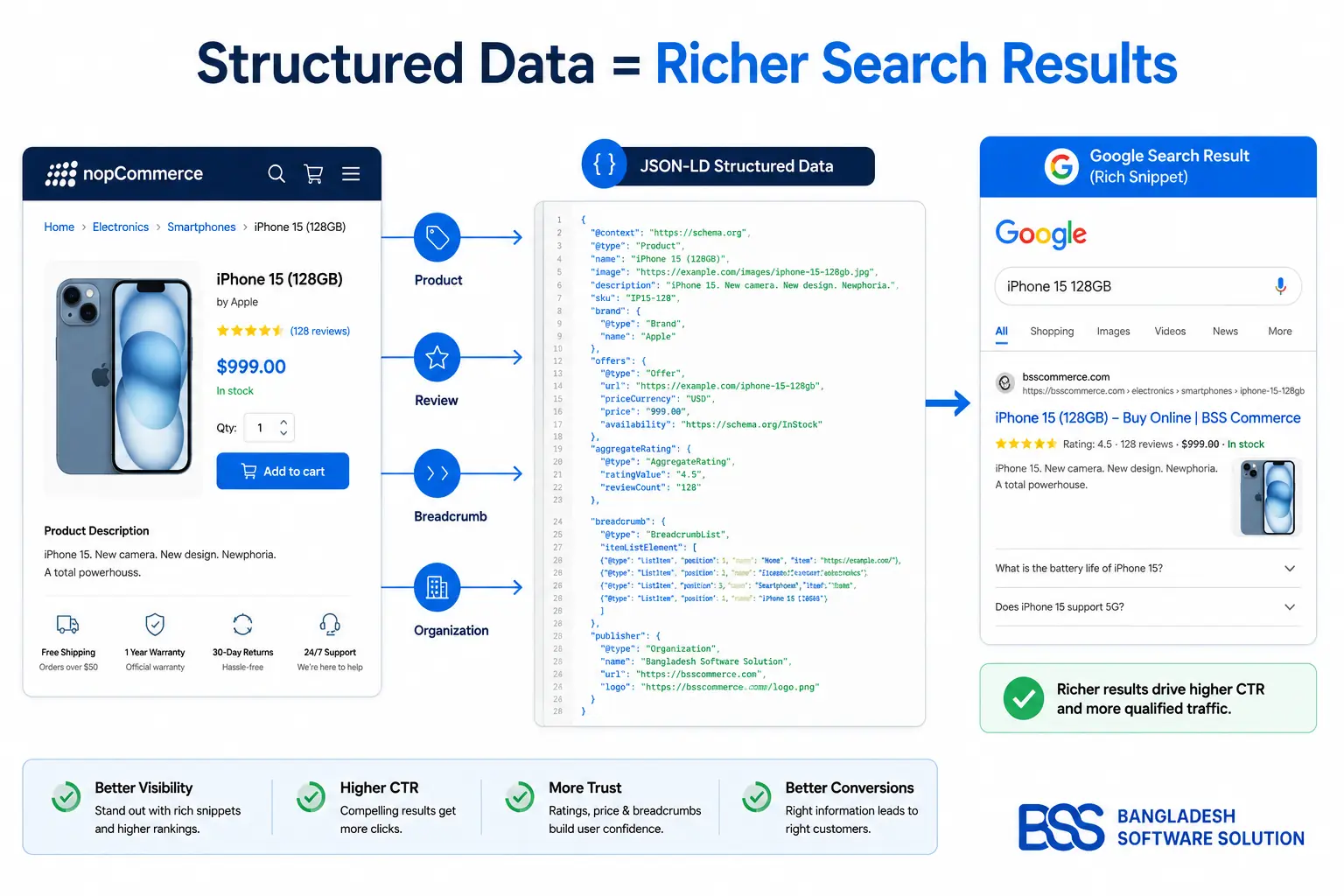
Google explains that structured data helps Search understand page content and can make pages eligible for richer search features. For nopCommerce stores, this means product schema, review data, breadcrumbs, organization details, shipping, returns, and article markup should not be treated as optional decoration.
- Use Product markup for price, availability, images, reviews, and variants where applicable.
- Add Breadcrumb markup so categories and product paths are easier to understand.
- Keep product data consistent between the visible page, structured data, and merchant feeds.
- Re-check schema after plugin updates, theme changes, or custom template work.
Don't hand-maintain schema at scale
Keeping JSON-LD correct across thousands of products by hand is where most stores slip. A dedicated plugin such as BSS Advanced SEO Schema generates and maintains valid markup for products, reviews, breadcrumbs, and organization details automatically — so it stays consistent after every update.
Need a nopCommerce Developer? Hire the BSS Team
From custom plugins and theme work to full-store builds and performance tuning, our dedicated nopCommerce engineers ship production-grade code. Tell us what you need and we'll match you with the right developer.
What AI Should — and Should Not — Write
AI can draft quickly, but ecommerce SEO depends on trust. A product description that sounds polished but contains a wrong material, size, compatibility claim, or delivery promise can hurt both rankings and sales.
| Task | Good AI use | Human review needed |
|---|---|---|
| Blog posts | Outlines, research questions, headings, draft summaries. | Examples, source checks, expert opinion, tone, and final claims. |
| Product pages | Rewrite plain specs into readable copy; suggest FAQ ideas. | Accuracy of features, pricing, dimensions, compatibility, warranty, stock. |
| Category SEO | Cluster keywords; identify content gaps by buyer intent. | Merchandising priorities, internal links, filter strategy, conversion copy. |
| Schema | Generate draft JSON-LD patterns or validation checklists. | Developer implementation, testing, consistency with visible data. |
Practical AI SEO Checklist for nopCommerce Stores
Run through this before publishing new product collections, buying guides, or blog posts.
Content & keywords
- ✓Map each page to one primary search intent.
- ✓Use related keywords naturally — AI SEO, ecommerce SEO, nopCommerce SEO, structured data, product schema, generative AI search, technical SEO, search visibility.
- ✓Add original examples from your store, not generic paragraphs.
- ✓Answer comparison and pre-purchase questions directly.
Technical & trust signals
- ✓Keep URLs clean, canonical tags correct, and internal links useful.
- ✓Compress images and test mobile page speed.
- ✓Add author details and cite reliable sources for data-heavy claims.
- ✓Validate schema with Google's rich-result tools after every deployment.
Frequently Asked Questions
The Bottom Line
AI is not replacing SEO for nopCommerce. It is making weak SEO easier to expose and strong SEO easier to scale. Stores that combine clean technical implementation, accurate product data, structured content, and human expertise will be better prepared for classic search results, AI Overviews, and the next generation of ecommerce discovery.
If you want a head start, our team and tools at Bangladesh Software Solution — including the AI SEO Assistant and Advanced SEO Schema plugins — are built around exactly this workflow.