A retailer arrives with 600 SKUs, three warehouses and a firm budget: “We need the site live for $8,000.” The figure sounds reasonable until the catalog reveals storage variants, compatibility data, serial-number warranties, regional tax rules and a stock feed that updates every fifteen minutes.
The useful answer is not a universal average. It is a cost model tied to what must be designed, configured, integrated and tested. This guide shows how to build that model, then where a specialist theme such as nopGadget can remove work without removing capability.
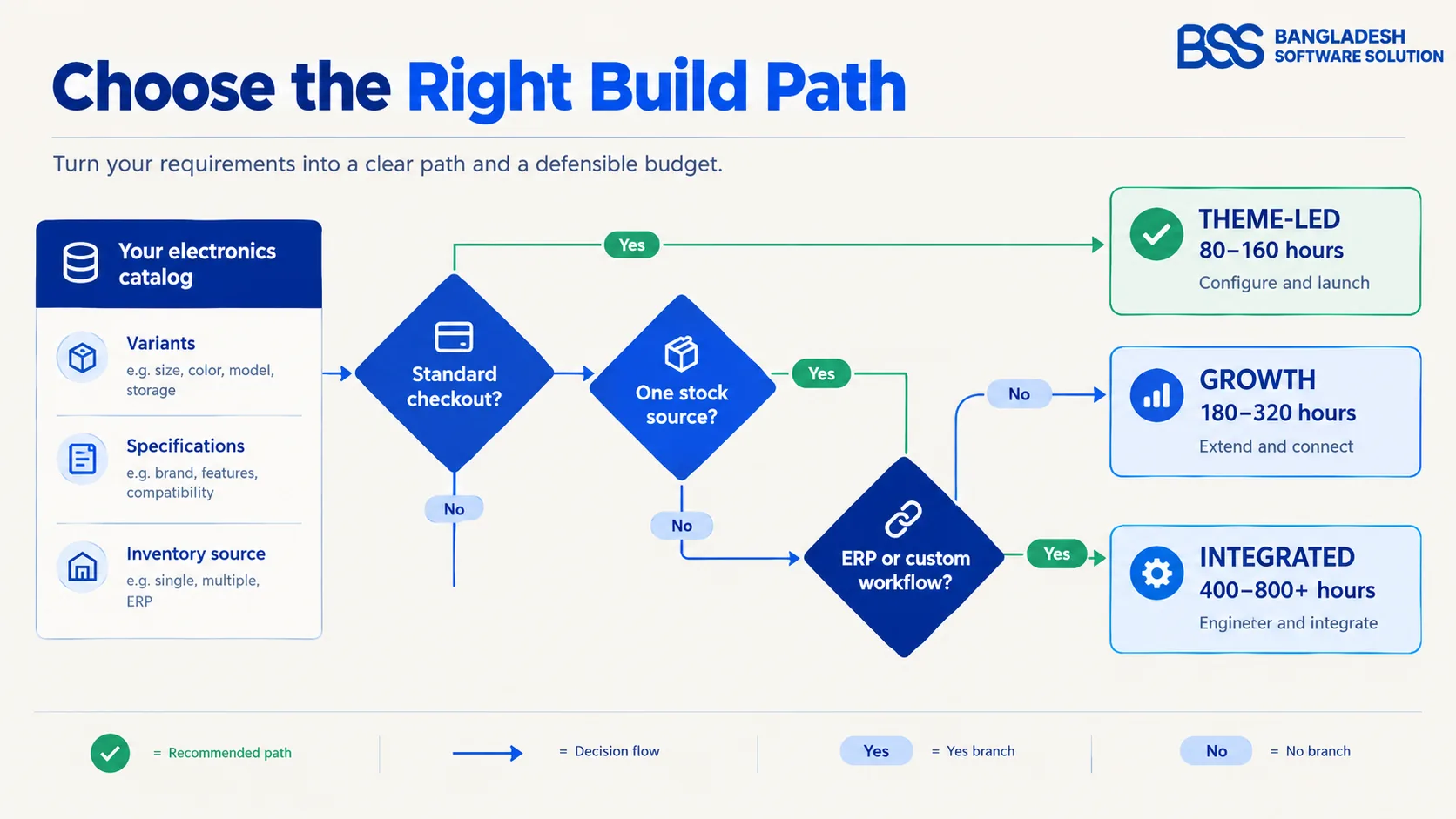
The Short Answer: Three Planning Bands
The figures below are planning examples, not market-price claims. They multiply estimated delivery hours by one illustrative blended rate per region: US $100/hour, UK £75/hour and Canada C$110/hour. Replace the rate with quotations from your shortlisted team.
| Store scope | Hours | USA | UK | Canada |
|---|---|---|---|---|
| Theme-led launch Up to roughly 500 products, standard checkout, one stock source | 80–160 | $8k–$16k | £6k–£12k | C$8.8k–C$17.6k |
| Growth store Large catalog, richer search/filtering, feeds and tailored workflows | 180–320 | $18k–$32k | £13.5k–£24k | C$19.8k–C$35.2k |
| Integrated operation ERP/PIM, multi-warehouse rules, custom pricing or complex automation | 400–800+ | $40k–$80k+ | £30k–£60k+ | C$44k–C$88k+ |
Those rates are deliberately visible. The US Bureau of Labor Statistics puts the 2025 median employee wage for web developers at $92,650; Canada's Job Bank reports a C$38.46 national median hourly wage. A delivery quote is higher than salary because it can include design, project management, QA, infrastructure and business overhead. Comparing hours and roles is more useful than comparing totals alone.
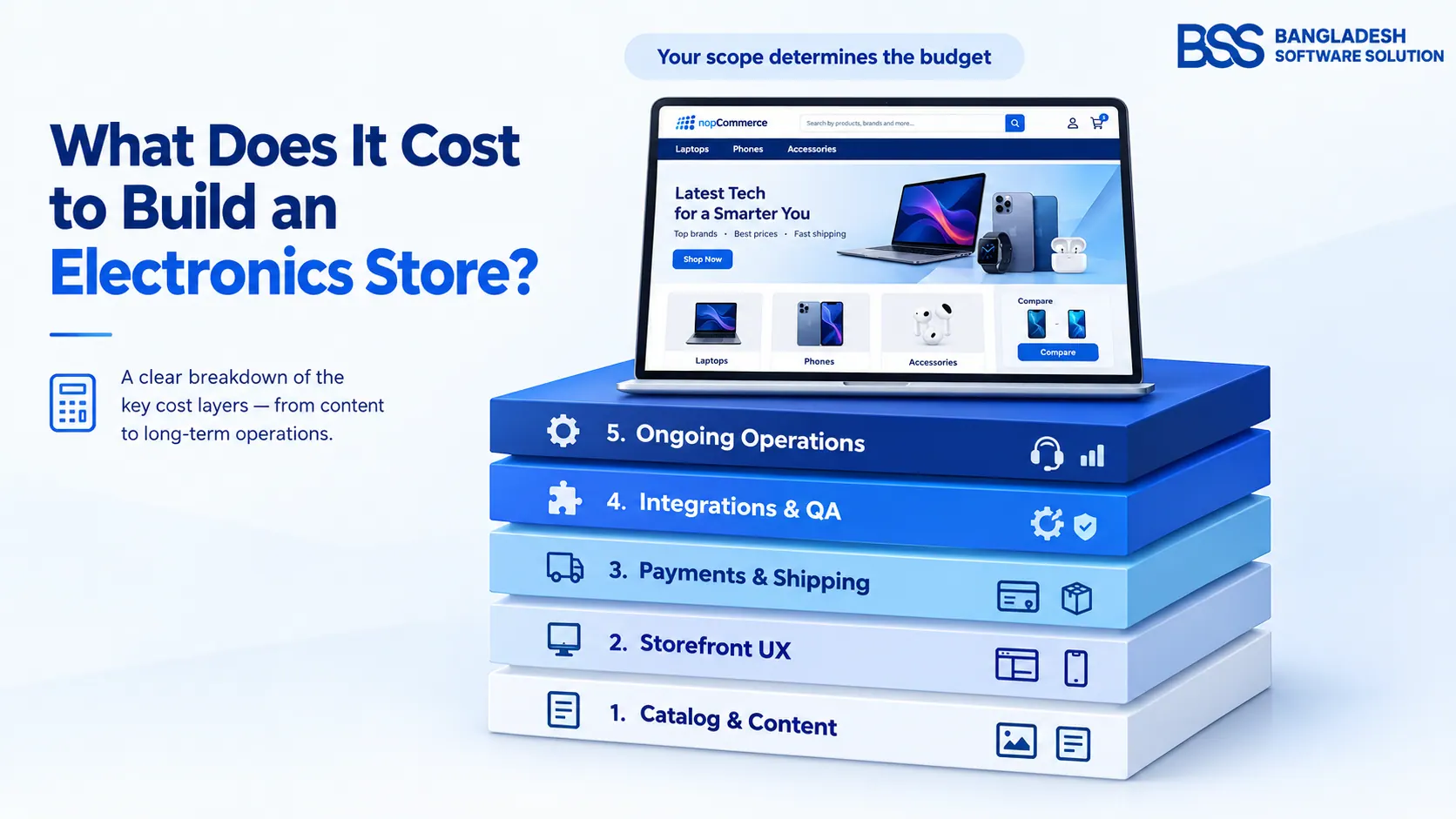
What Actually Consumes the Budget?
For electronics, catalog structure usually matters more than the home-page banner. A phone may have color and storage variants; a charger needs connector and compatibility data; a laptop needs comparable specifications. If that information is inconsistent, the build team spends time cleaning data before it can build filters or comparison.
In BSS scoping work, the expensive surprise is rarely a color change. It is a rule that appeared late: bundle inventory, region-specific prices, back-order logic or a product feed whose fields do not match the store. We therefore estimate discovery and data mapping before promising a build total.
Choose the Launch Model Before the Feature List
Three projects can contain the same features and still carry different risk. A fixed-scope launch works when product data and decisions are ready. A phased launch moves the core catalog first, then adds automation after real orders reveal where it matters. A continuous product model suits retailers whose pricing, inventory and merchandising change every week.
For most first launches, phasing is the safest budget control. Protect search, product data, checkout and fulfilment first. Move loyalty, advanced personalization and nonessential automation into a measured second release instead of forcing them into launch day.
Location Changes the Work, Not the Cost Model
A storefront can share one technical foundation across markets, but tax, checkout, fulfilment and disclosure requirements must be scoped by destination. The examples below show why a quote needs a market column rather than a vague “international” allowance.
Where nopGadget Can Reduce Build Cost
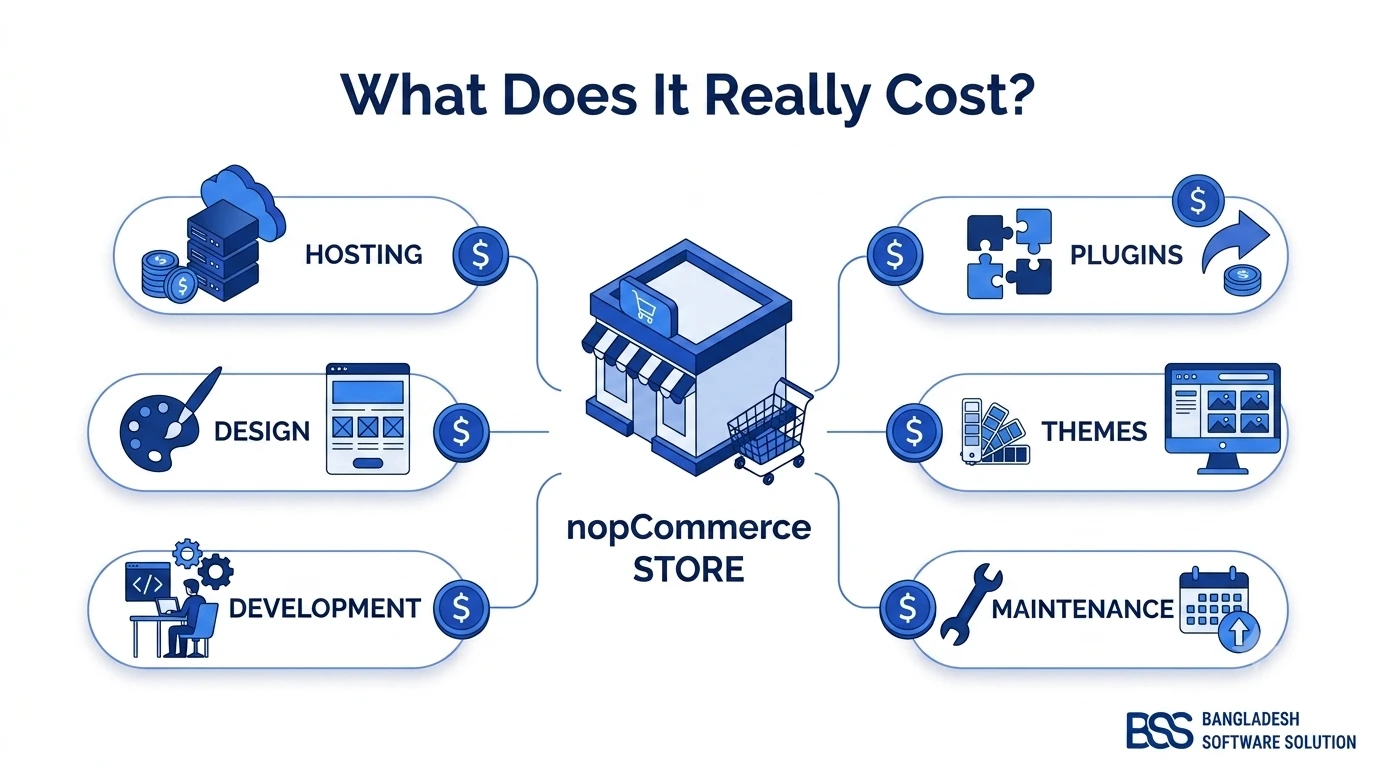
nopCommerce itself is open source and has no platform subscription or transaction fee. The budget moves into hosting, implementation and extensions. Starting from an electronics-specific theme can reduce the hours otherwise spent assembling common storefront functions.
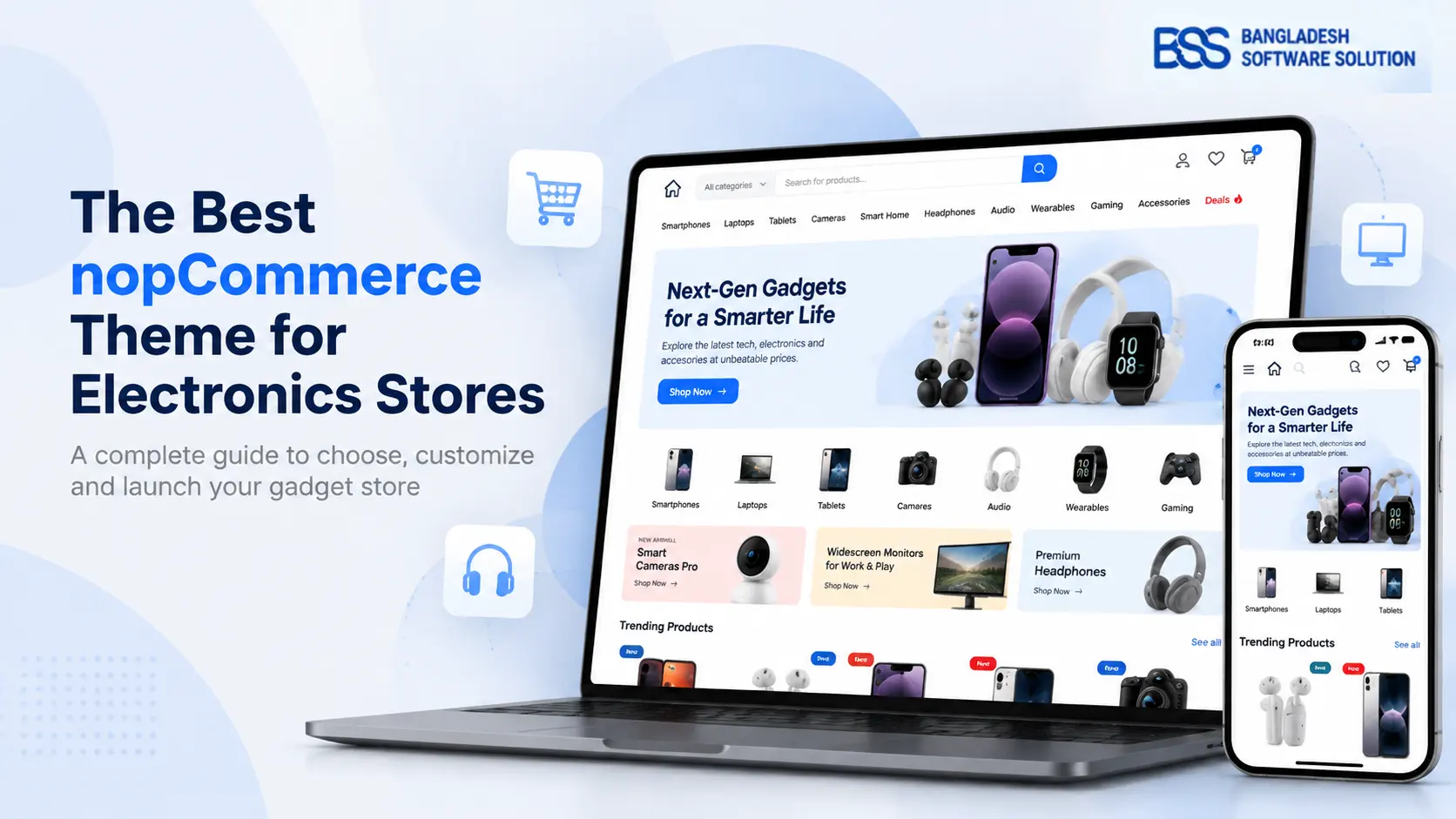
At the time of writing, the nopGadget Theme + 18 Plugin Bundle is listed at $79. Its product page includes Visual Editor, Theme Builder, Advanced Product Compare, AJAX Filter, Quick View, Dynamic Image Gallery, One-Page Checkout, AI SEO Assistant and consent/authentication tools. The saving is not “$79 versus custom development”; it is the number of design, integration and compatibility hours the bundle can genuinely replace after testing.
Price the gap, not the feature list
Mark every requirement as included, configurable, extension, integration or custom. Verify the current product price, supported nopCommerce version, license and bundle contents before purchase.
If the bundled design tools cover most content work, staff can maintain campaigns without repeated template edits. For stores that need it separately, the BSS Visual Editor is currently listed at $19. A payment or shipping plugin may also be inexpensive to license—the real allowance is configuration, sandbox testing and failure handling.
Start With a Theme Built for Technical Catalogs
Evaluate nopGadget against your real products, variants, comparison fields and mobile journey. Its theme and 18-plugin bundle can shorten a launch when the included capabilities match the scope.
How to Compare Two Quotes That Look Nothing Alike
Normalize each proposal into seven lines: discovery, UX, data migration, configuration, custom development, integrations and QA/launch. Then ask what happens when a product feed fails, a payment is captured but the order is not created, or a requirement changes after approval.
A cheaper quote may simply omit catalog cleanup, device testing or post-launch support. A higher quote is not automatically better either. The useful proposal names assumptions, acceptance criteria, ownership and exclusions clearly enough that another team could price the same scope.
A Better Way to Set the Budget
Five numbers to obtain before approving a quote
- 1Products, variants, specification fields, languages and currencies at launch.
- 2Included theme/plugin functions versus configuration, extension and custom gaps.
- 3Hours by discovery, UX, data, development, integration, QA and launch support.
- 4First-year hosting, licenses, maintenance and operational service costs.
- 5A written change process for anything outside the agreed scope.
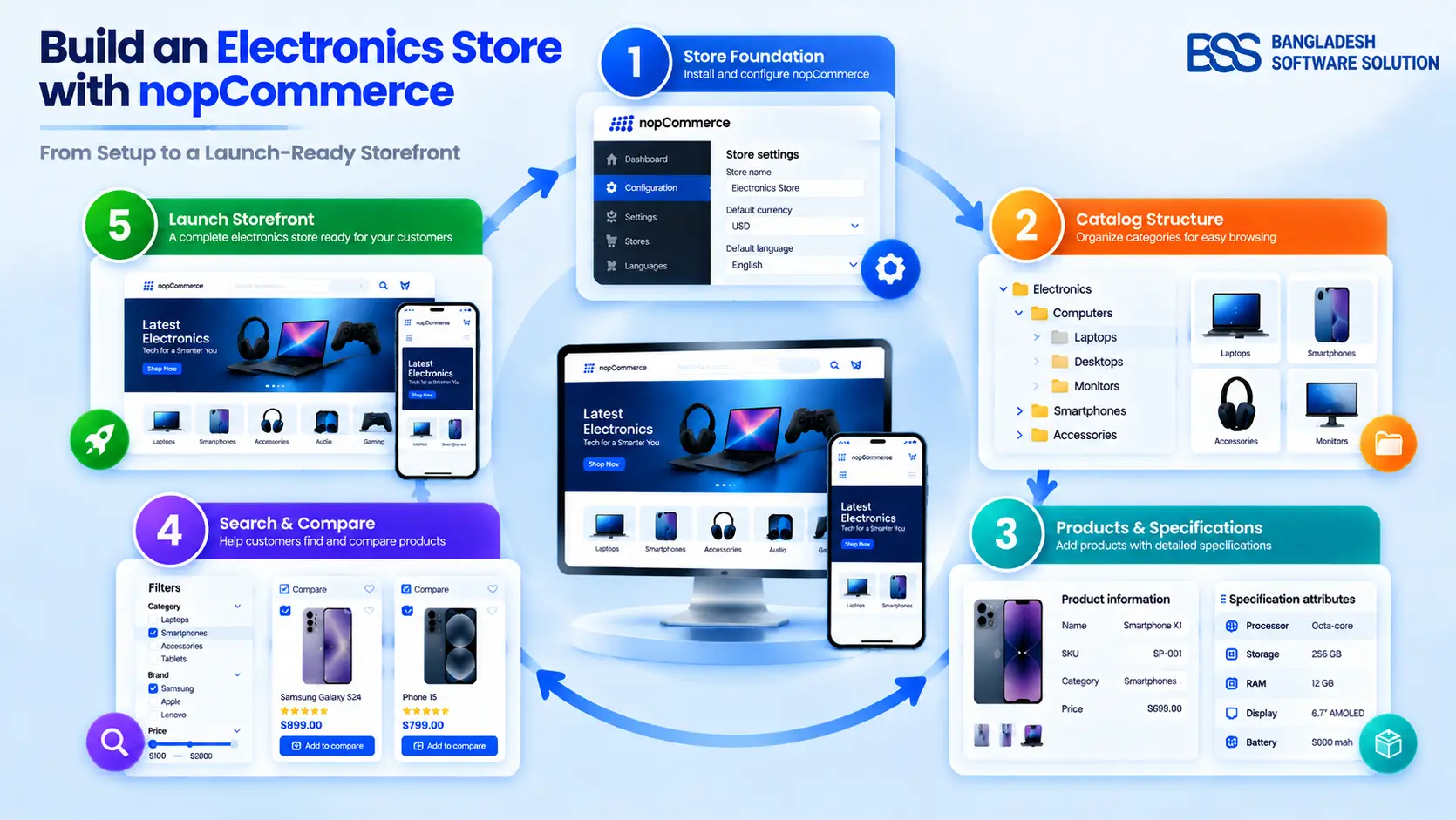
For the implementation sequence behind those hours, continue with the complete electronics-store setup guide.
Frequently Asked Questions
Budget the Operation, Not Just the Website
The retailer with 600 SKUs does not really have an $8,000 website problem. It has a scope decision: simplify the first release, improve the product data, adopt an electronics-focused bundle, or fund the integrations properly.
Start with hours, roles and explicit gaps. Then add first-year operating costs. That produces a budget you can defend—and a store your team can actually run after launch day.