Key takeaways
- A dedicated developer works only on your project and takes direction from you; the company that employs them handles payroll, equipment and replacement.
- It fits ongoing, changing work. Fixed scope suits a fixed-price project, and small fixes suit hourly work.
- Ask for a named person, code in your repository from day one and a written replacement rule before you sign.
Your backlog is longer than your team, and hiring in-house means advertising, interviewing and waiting for a notice period to end. A dedicated developer is the usual answer. It is also the model most often bought for the wrong job.
We offer dedicated developers at BSS, so weigh our view accordingly. This guide explains how the model works, what it costs you in time and attention, and when we tell clients to pick something else.
Short answer: a dedicated developer is a full-time engineer, employed by a software company, who works only on your project as an extension of your team. You set the priorities and review the work. It suits long projects with changing requirements. For a fixed scope or a few fixes a month, there are cheaper models.
Hiring for a nopCommerce store specifically? Our guide to hiring nopCommerce developers covers vetting and contracts for that platform.
Dedicated, Fixed-Price or Hourly: Which Way to Hire
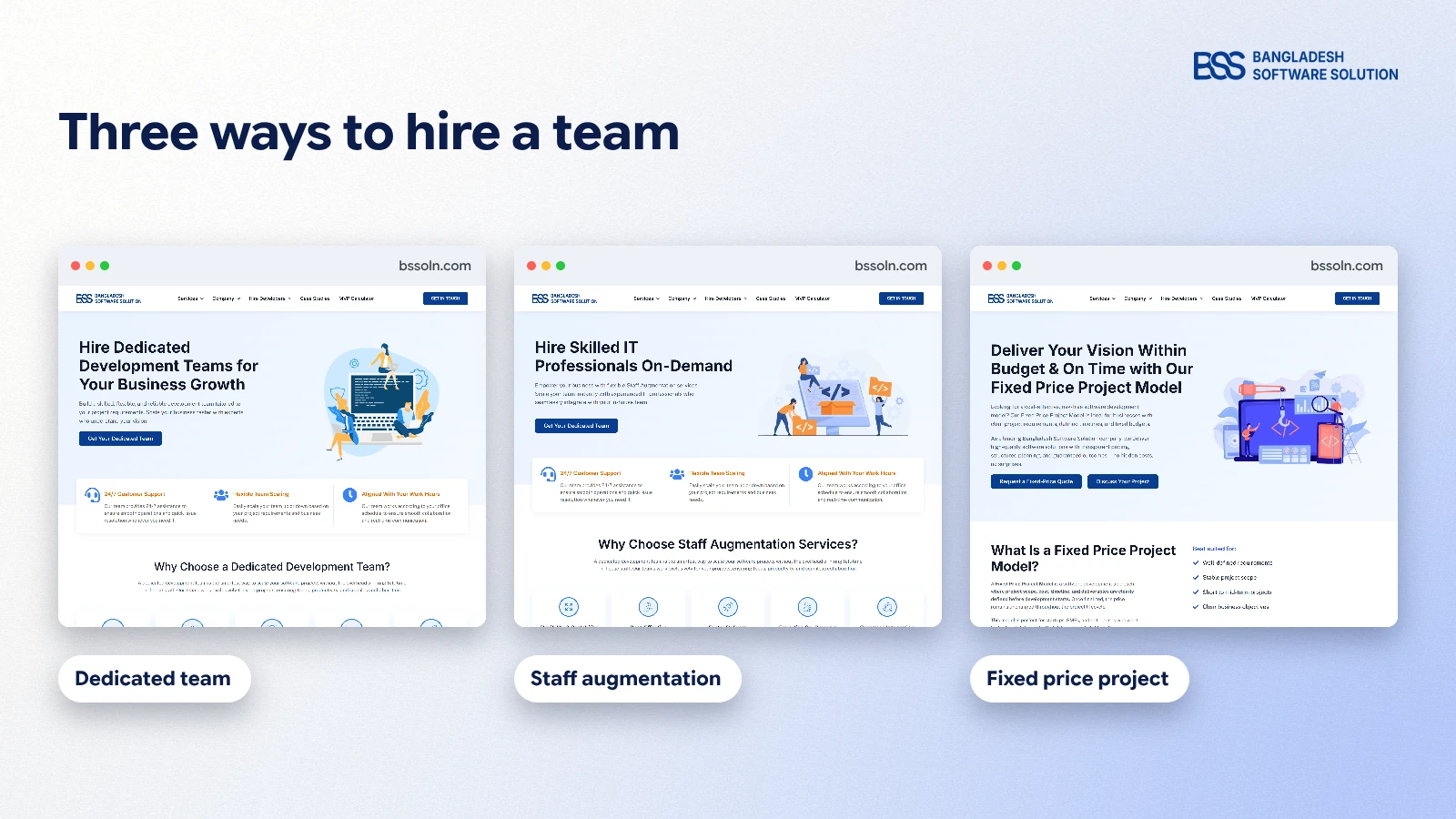
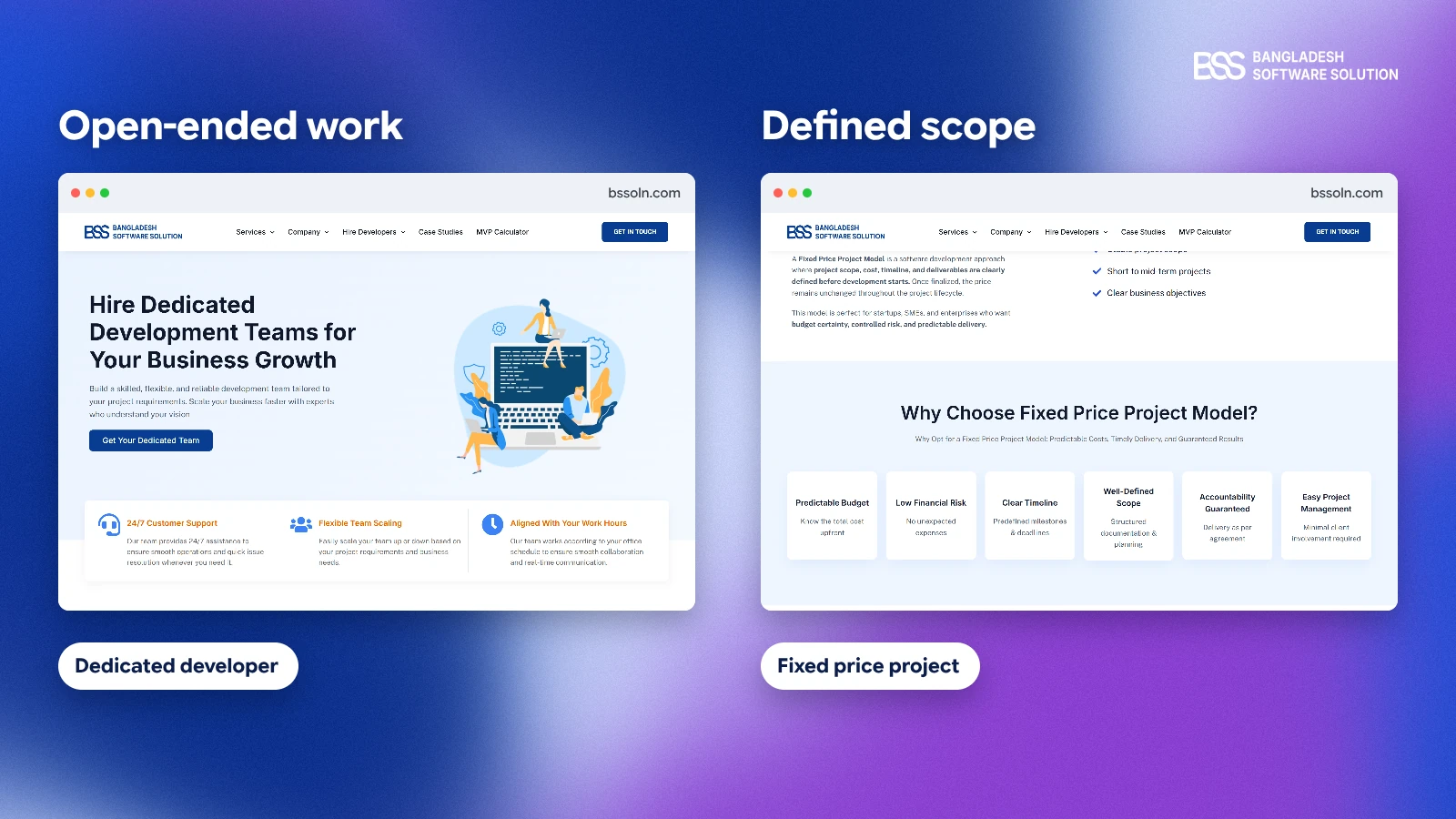
Software companies sell the same engineers in three ways, and the model decides who carries the risk. A dedicated developer is full-time on your project and you direct the work. A fixed-price project agrees the scope, date and price up front, and the company carries the delivery risk. Hourly work bills small tasks as they come.
BSS's own dedicated team page lists three team shapes inside the first model: a full-time team that works only for you, a part-time team that covers specific tasks or phases, and a project-based team assembled for defined deliverables. Pick the shape before you pick the vendor.
| You are… | Your work is… | Start with |
|---|---|---|
| A store with a growing backlog | Ongoing: features, integrations, upgrades, fixes | A full-time dedicated developer |
| A team with a skills gap | Specific tasks or one phase of a project | A part-time or project-based team |
| A business with a clear brief | Defined scope, a date and a budget | A fixed-price project |
| A live store that needs care | A few changes a month and support | Hourly work |
Hourly work bills small tasks as they come: a plugin fix, a layout change, a question that needs an engineer for an afternoon. It suits a live store with occasional changes, because you pay for the time used. It does not suit a roadmap, because nobody holds the context between tasks and every task starts with an explanation.
Staff augmentation sits close to the dedicated model: engineers join a team you already run and take your direction. The difference is who manages. In a dedicated team the vendor often supplies a lead or a tester too; in augmentation you manage everyone yourself. Choose it only when you already have a manager with time.
The next section assumes you chose the first row. If you are still between rows, read when a dedicated developer is the wrong choice first.
Not sure which model fits? Describe the work to the BSS team and we will tell you whether a dedicated developer, a fixed-price project or hourly work suits it.
Talk to an expertHow a Dedicated Team Works, Step by Step
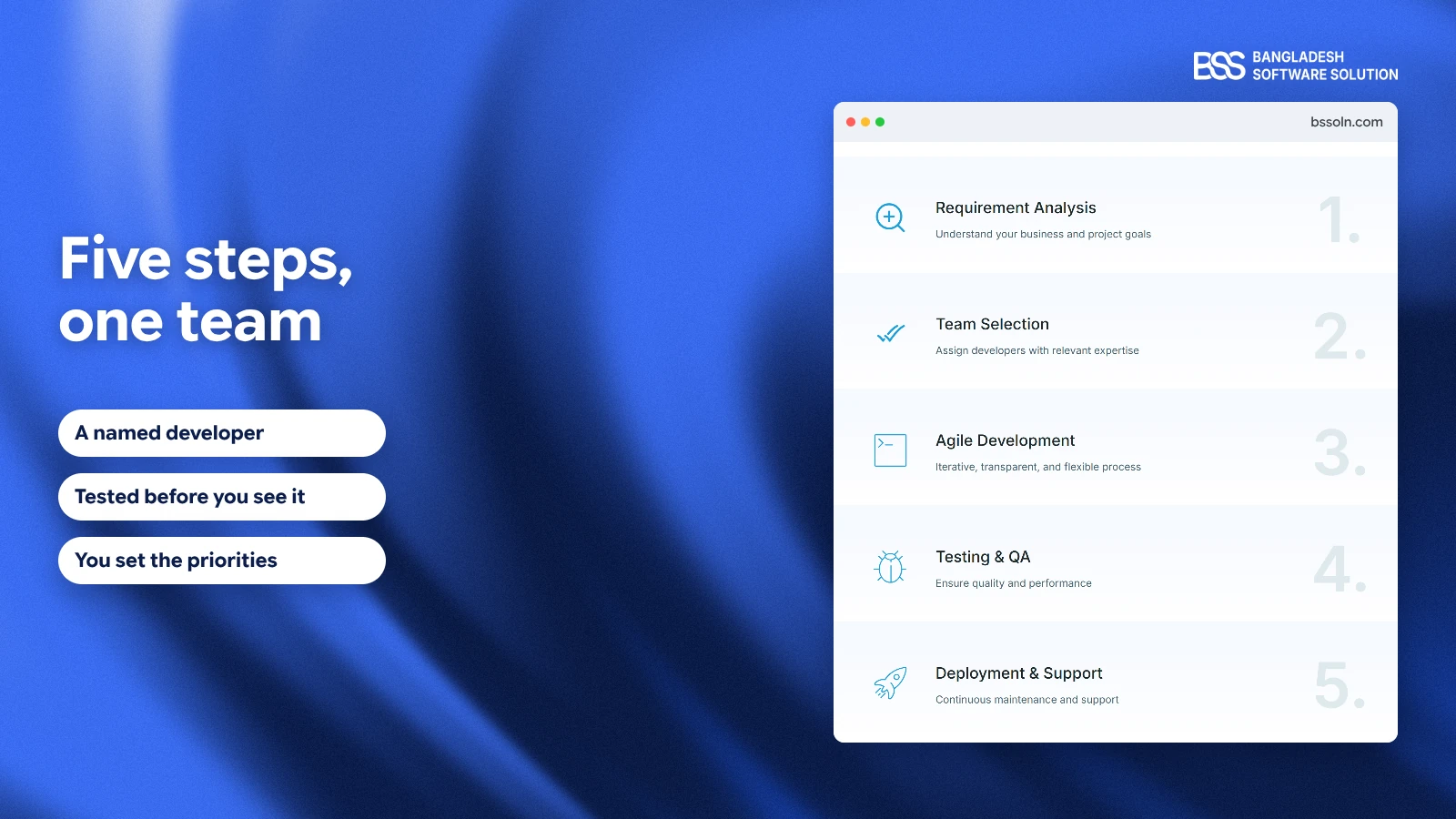
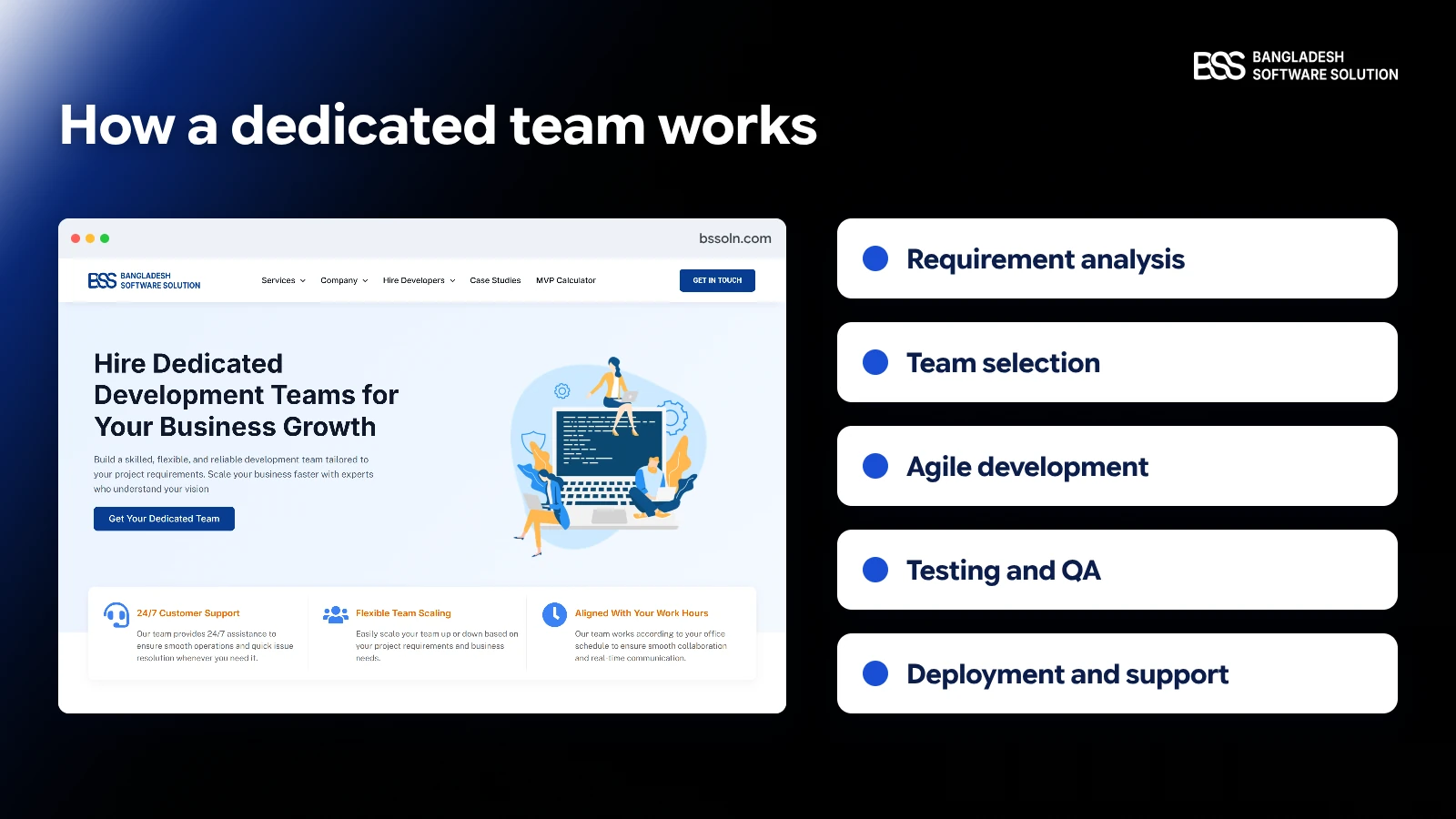
BSS describes its dedicated process in five steps. The steps are common to most vendors, so use them as a checklist for anyone you talk to, and notice which ones a vendor skips.
- Requirement analysis. You explain the business goal and the work; the vendor turns it into scope. Bring your backlog, your repository access and the name of the person who will make decisions.
- Team selection. The vendor assigns developers whose skills match the work. Ask for the person's name and a short call with them before you start.
- Agile development. Short cycles, visible progress and regular reviews. You see the work as it happens, not at the end.
- Testing and QA. Someone other than the developer checks the work before you see it.
- Deployment and support. The work reaches your live store, and someone owns the fixes that follow.
Matching the person to the work
A developer who knows your stack saves the first month. Say which platform and version you run, and ask who has shipped on it.
BSS builds on .NET, nopCommerce, WooCommerce and Shopify. Tell us your stack and we will say who fits.
Hire .NET developersWhat good reporting looks like
You should never have to ask what happened this week. A short written note covers it: what was finished, what is next, and what is blocked and on whom. Add a link to the changes, so a technical colleague can look without asking.
Agree the format in week one and keep it small. A long report that nobody reads is worse than three lines that everyone does, and a vendor who resists a weekly note is telling you how the rest of the work will go.

The teams that get the most from a dedicated developer give them a real problem in week one, a small fix to a live store, rather than a long onboarding. A shipped change tells you more about the fit than any interview. Our dedicated team page sets out the process we follow.
What your side has to supply
A dedicated developer is not a finished service. You need one person who can say what matters most this week, review the result and answer questions the same day. Without that person, a good engineer drifts or builds the wrong thing quickly.
In the first week, set up three things: access to the repository and a staging copy, a task board both sides read, and a fixed time for a short daily or twice-weekly check-in. Everything else can wait.
What Drives the Cost, and How to Compare Quotes
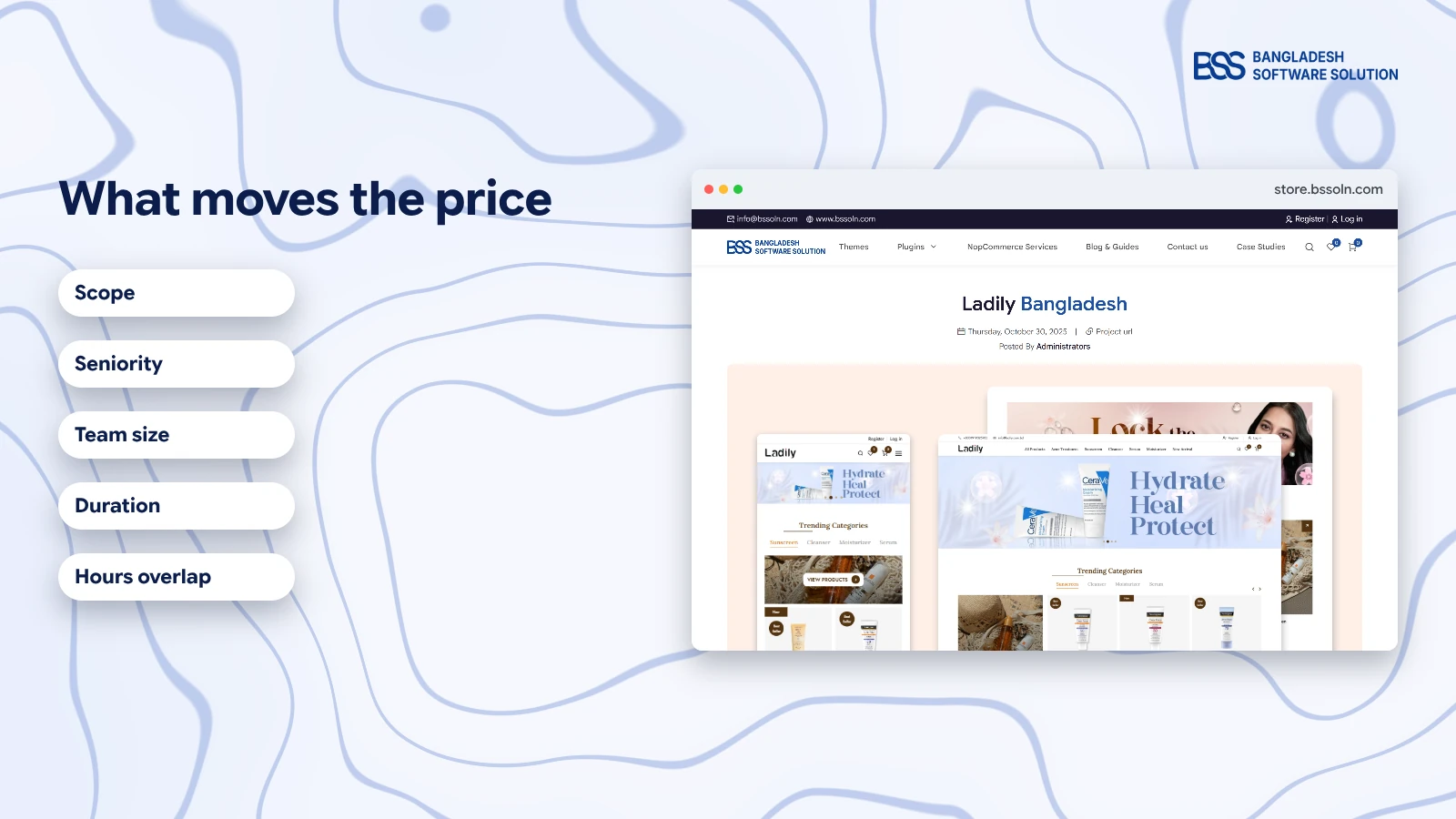
We do not publish a rate, and you should be wary of any page that quotes one without asking what you need. A number with no scope behind it compares nothing. The price of a dedicated developer moves with five things.
- Scope. A clear backlog costs less to manage than a vague one, because less is built twice.
- Seniority. A senior engineer costs more per month and often needs less review.
- Team size. One developer, or a developer with a tester and a designer part of the time.
- Duration. Longer commitments usually carry better terms than a month-to-month trial.
- Hours overlap. The more of your working day the team shares, the more it can ask and show.
Questions that expose a thin quote
- Is testing included, or does a tester cost extra?
- Who manages the developer day to day, and is that time in the price?
- What happens to the price if the scope changes in month three?
- Which tools and licences does the developer need, and who pays?
- What is the notice period if you want to stop?
A vendor with clear answers has priced the work. A vendor who says it depends on everything has priced a number they hope you accept.
Month to month or a longer term
A month-to-month start lets you test the fit with little commitment, and most reasonable vendors will offer it. A longer term usually earns better terms because the vendor can plan around you. Start short, judge the first few weeks, then commit for longer if the work is going well.
If the project is a mobile app or an integration on nopCommerce, the API is the first piece of scope you can buy instead of build.
To compare quotes, give every vendor the same written scope and ask the same questions: who is named, what is included, what happens on a sick day, and what notice either side must give. A cheaper quote that leaves out testing or management is the same price later.
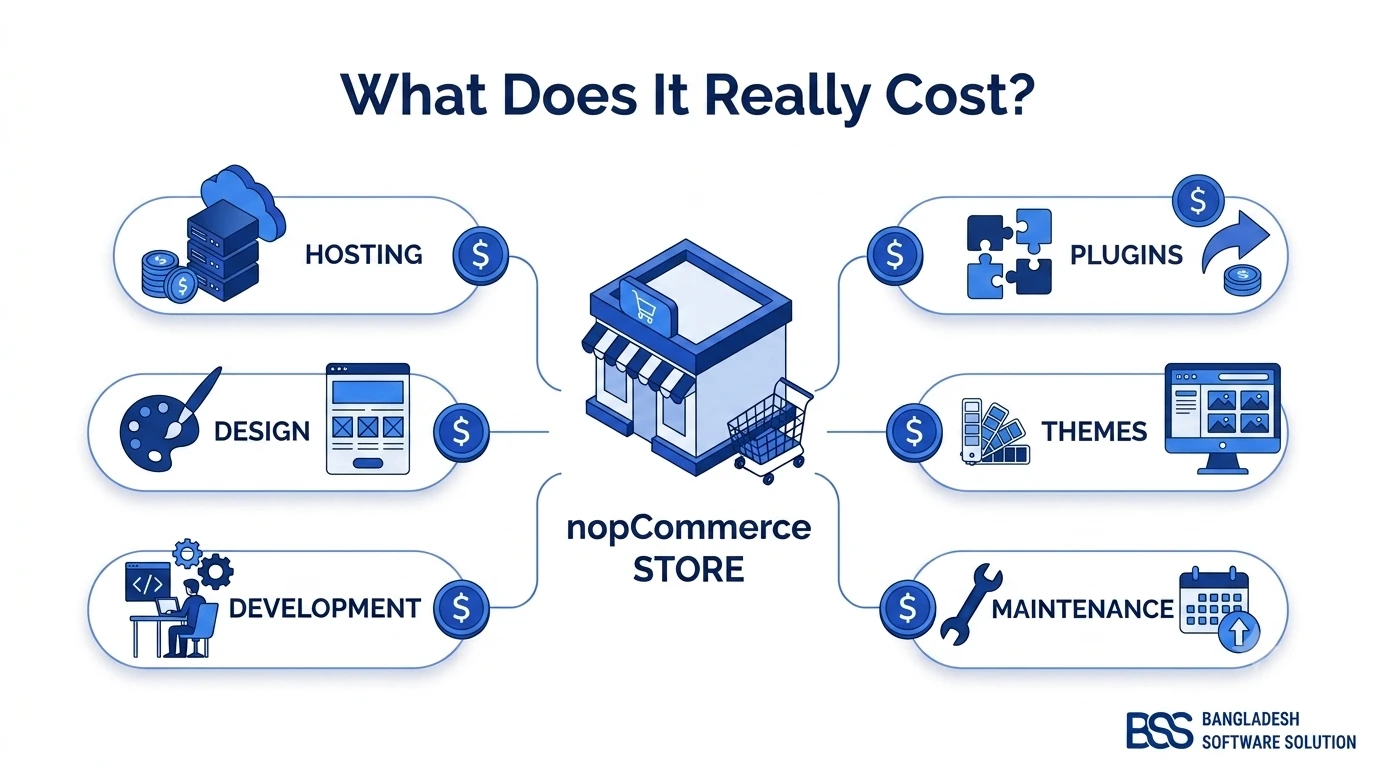
Our guide to what a nopCommerce store costs shows how developer time sits next to hosting, themes and plugins in a real budget.
When a Dedicated Developer Is the Wrong Choice
A dedicated developer is the wrong answer more often than vendors admit. These are the cases where we send clients to another model.
- The scope is fixed and short. A defined project with a date and a budget is what a fixed-price model is for, and it moves the delivery risk to the vendor.
- You have a few small fixes a month. Paying a full-time salary for an hour a week wastes money. Hourly work or a support plan fits.
- Nobody on your side can direct the work. A dedicated developer needs priorities and reviews. Without them, start with a project that comes with its own management.
- You do not yet know what to build. Pay for a short discovery or a prototype first, then decide how to staff the build.
- You need a rare skill for two weeks. A project-based or part-time team covers a phase without a long commitment.
A simple test
Try to write the work as a list of tasks with an end date. If you can, it is a project, and a fixed-price model fits. If all you can write is a direction, such as "keep improving the store", it is ongoing work, and a dedicated developer fits.
Most stores are a mix. Keep the ongoing work with a dedicated developer and buy the one-off projects separately, so neither distorts the other.
Hire in-house yourself
- Write the role and advertise it
- Interview and test candidates
- Handle payroll, equipment and cover
- Replace them if it does not work out
Or BSS provides the developer
A named engineer from the team that builds these themes and plugins, with the employment side handled by BSS and the direction left to you.
See the dedicated team modelWorking With a Team in Bangladesh: Hours, Communication and Contracts
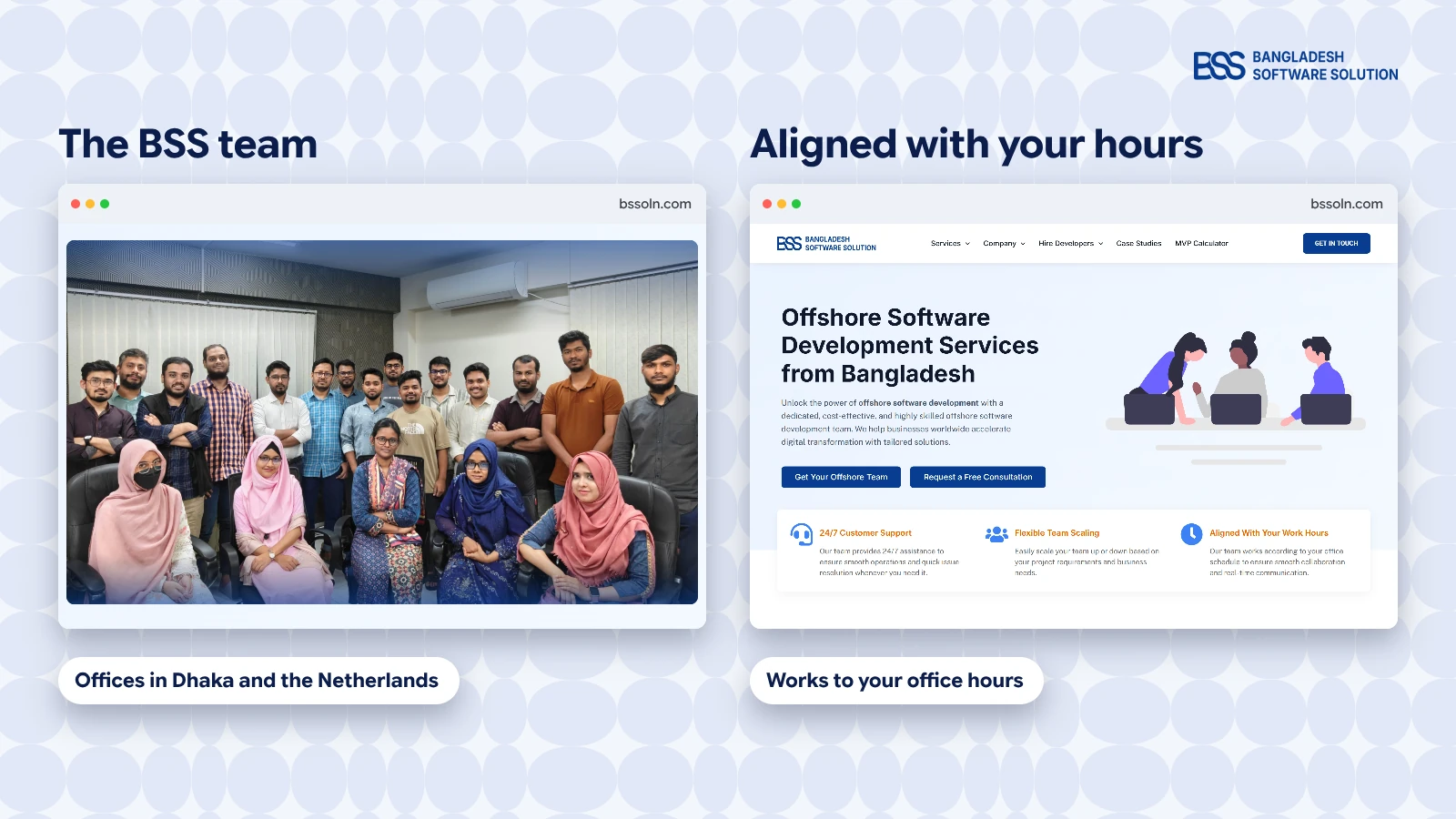
BSS has offices in Dhaka and in the Netherlands, and works with clients in Europe. The questions a remote team raises are the same wherever the team sits, and they are easy to settle before you start.
Agree the hours first. BSS's offshore page says the team works to your office schedule, so name the hours you need covered and the days you want a live call. Put the rest in writing.
Communication that works across time zones
Overlap matters more than distance. Two or three shared hours a day are enough for a standup and the questions that cannot wait, and the rest of the day the developer works without interruption. Write decisions down, so the next morning starts with the answer and not a question.
Use one place for tasks and one for conversation, and keep both readable by you. If you can open the board at any hour and see what is happening, the time difference stops mattering.
Ask before you sign
- Who is the developer? A named person, not a pool.
- Who owns the code? You, from the first commit, in a repository you control.
- What if it is not working? A written replacement rule and a notice period for both sides.
- What is covered? Testing, project management and tools, or only the developer's time.
- Which hours overlap? The days and hours you can reach them live.
- How is confidential data handled? A signed NDA and access limited to what the work needs.
- How do you report progress? Weekly notes or a board you can read yourself.

Built by BSS · OLA Sportswear, Poland
B2B and B2C on one nopCommerce store
English and Polish, three currencies, B2B approval and ERP inventory sync.
Read the case study
Ask any vendor, us included, to put the replacement rule in writing. The question shows you how they think about a developer who is not a fit, and nothing else in the contract is as revealing. You can start that conversation on the BSS contact page.
A dedicated developer from the team behind these themes and plugins
BSS provides .NET and nopCommerce engineers on a dedicated, fixed-price or hourly basis. Tell us the work and we will say which model fits, including when the answer is not a dedicated developer.
Frequently Asked Questions
Final Thoughts
Back to the backlog that outgrew your team. A dedicated developer works when the work is ongoing, you can direct it and you want the person to learn your store. It fails when the scope is fixed, the work is occasional or nobody owns the priorities.
Choose the model first, then the vendor, and ask for a named person, your code in your repository and a written replacement rule. If you want a second opinion on which model fits, the BSS team will give one, even when the answer is a different model.
Tell us the work and the hours you need covered. The BSS team will say which model fits and who could do it.
Talk to an expert