You post a single job listing — "nopCommerce developer needed for custom checkout work" — and by the next morning you have 40 replies. Half the profiles claim "expert in nopCommerce, Magento, Shopify, WooCommerce, and a dozen other platforms." A few quote a price that barely covers a week of hosting. One replies within the hour with a portfolio link that no longer resolves.
Hiring a nopCommerce developer for the first time — or trying again after a bad one — puts you in an unusual spot: you're evaluating technical skill you may not have yourself, on a platform most generalist developers have only glanced at. nopCommerce is a serious, ASP.NET Core commerce platform with its own architecture and plugin system, and the gap between someone who has touched it and someone who actually knows it is wide enough to sink a launch date.
This guide is the vetting process we wish every store owner had before their first nopCommerce hire: what the term should actually mean, how to tell real experience from a résumé keyword, what a fair price looks like, and the specific questions that separate a safe hire from an expensive lesson.
What "nopCommerce Developer" Actually Means
nopCommerce isn't a page builder or a WordPress-style plugin marketplace — it's an open-source, ASP.NET Core commerce platform written in C#, with its own layered architecture and a plugin/widget system that most generalist ".NET developers" have never actually opened. That distinction matters more than it sounds: a developer who's comfortable in ASP.NET Core MVC in general can absolutely write code that runs against nopCommerce — but "runs" and "safe to ship on a live store" are not the same bar.
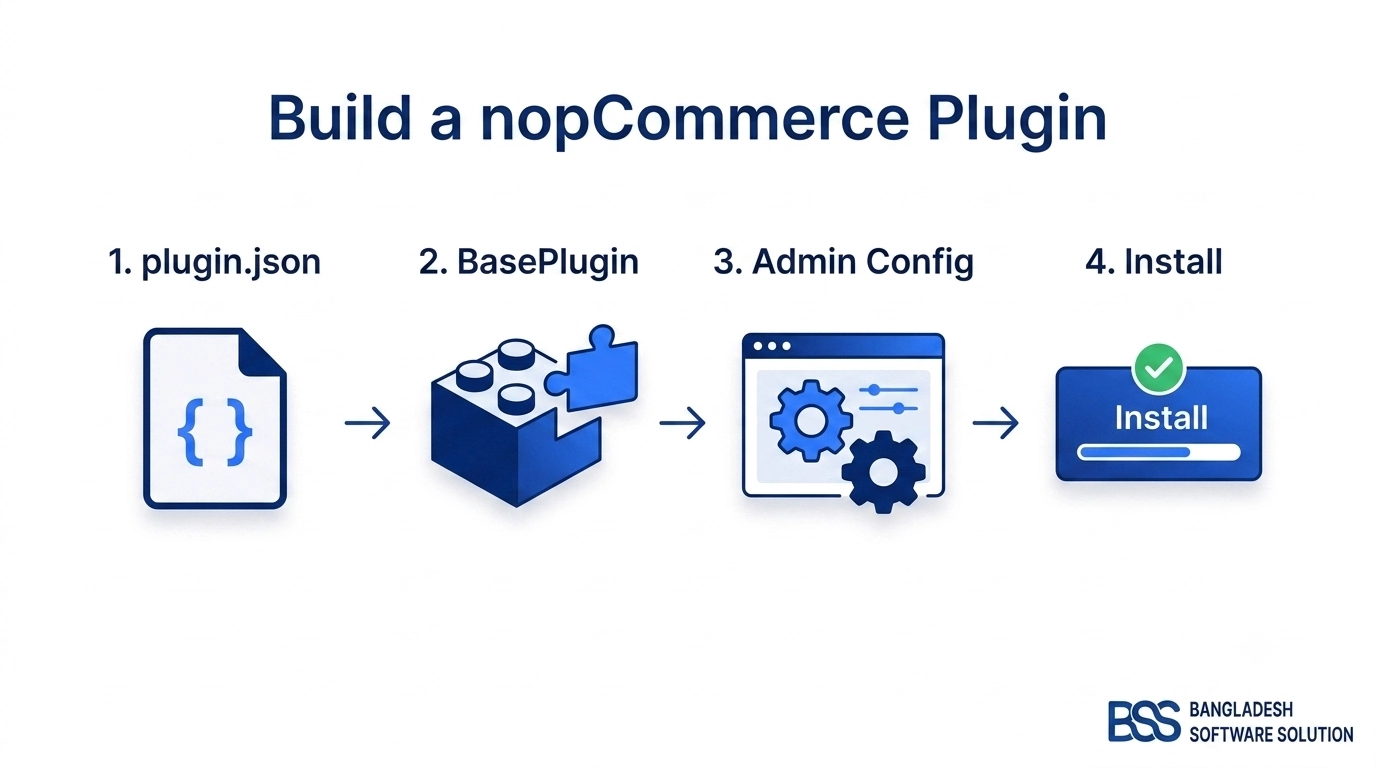
Key fact: nopCommerce plugins hook into the platform through the IPlugin interface, dependency injection, and Entity Framework Core migrations — not simple template edits. A developer who can't describe that pipeline in their own words probably hasn't shipped one.
We walked through that exact pipeline end-to-end in our own guide to building a nopCommerce plugin from scratch — worth a skim if you want a feel for what real nopCommerce development looks like under the hood.
Three things a real nopCommerce developer should be fluent in

In-House Hire, Freelance Marketplace, or a Specialized Agency?
Once you know what you're actually looking for, the next decision is where to look. Each path trades cost, speed, and risk differently — and the right answer depends more on your project's shape than on which option is "best" in the abstract.
| Hiring path | What it looks like | The honest trade-off |
|---|---|---|
| DIY / general marketplace freelancer | An Upwork- or Fiverr-style generalist who lists nopCommerce among several platforms. | Lowest sticker price, but high risk — you're doing the vetting alone, with no accountability if they disappear mid-project. |
| Full in-house hire | A dedicated nopCommerce developer on payroll, working only on your store. | Deepest long-term ownership, but medium-to-high cost — salary, benefits, and hiring time are hard to justify for a single project or seasonal work. |
| Specialized nopCommerce agency | A dedicated team that already ships nopCommerce work daily, with a track record you can check. | Lower risk — pre-vetted skill and backup coverage — at a higher hourly rate than a lone freelancer. |
For most stores, the honest answer is a hybrid: lean on a specialized nopCommerce team for anything touching architecture, checkout, or plugins, and reserve in-house hiring for stores large enough to keep a developer fully occupied year-round.
The cheapest nopCommerce hire is rarely the cheapest project. It's usually the first of two.
BSS Engineering
How to Vet Technical Skill — Without Being Technical Yourself
You don't need to read C# to run a good technical interview. You need the right questions, and you need to actually check the answers instead of taking them on faith.
Watch out
A polished portfolio page is easy to fake with screenshots. A live, running nopCommerce store — one you can actually click through, add to cart, and check out on — is much harder to fake, and it's the single best signal you can ask for.
Ask for proof, not promises
- Live store URLs, not screenshots — ask to see two or three real nopCommerce stores they built or shipped plugins for, and actually visit them.
- Specific deliverables, not platform name-drops — "what plugin, what widget zone, what problem did it solve" beats "five years of nopCommerce experience."
- A staging environment and version control — anyone who can't describe how they test changes before they hit your live store is telling you how the next incident will happen.
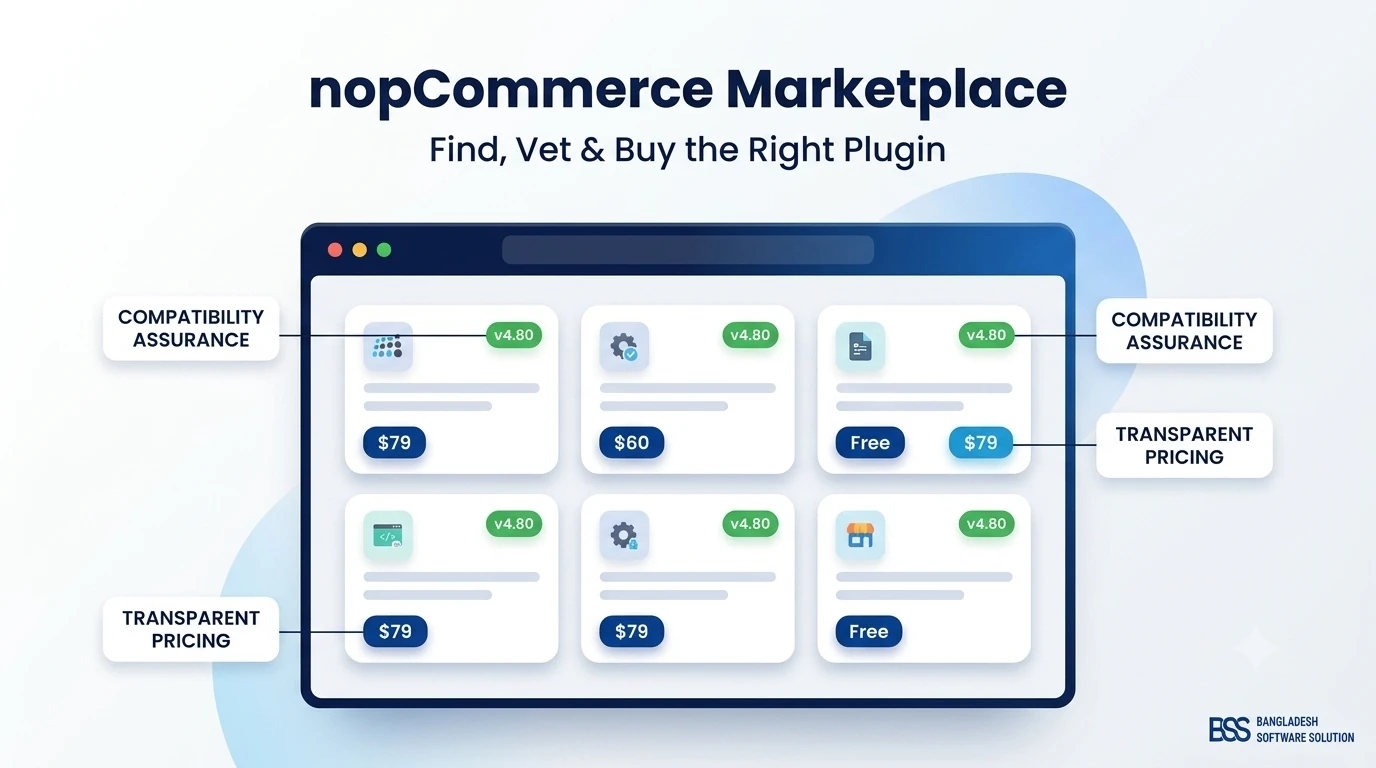
If you already vet plugins before installing them on your own store, the instinct is the same one to apply here — our guide to vetting the nopCommerce Marketplace walks through exactly what to check before you trust someone else's code.

Pricing Models and the Red Flags That Actually Matter
Price is the easiest thing to compare and the least reliable thing to decide on. A quote dramatically lower than every other bid you received isn't a discount — it's a missing scope item you haven't discovered yet.
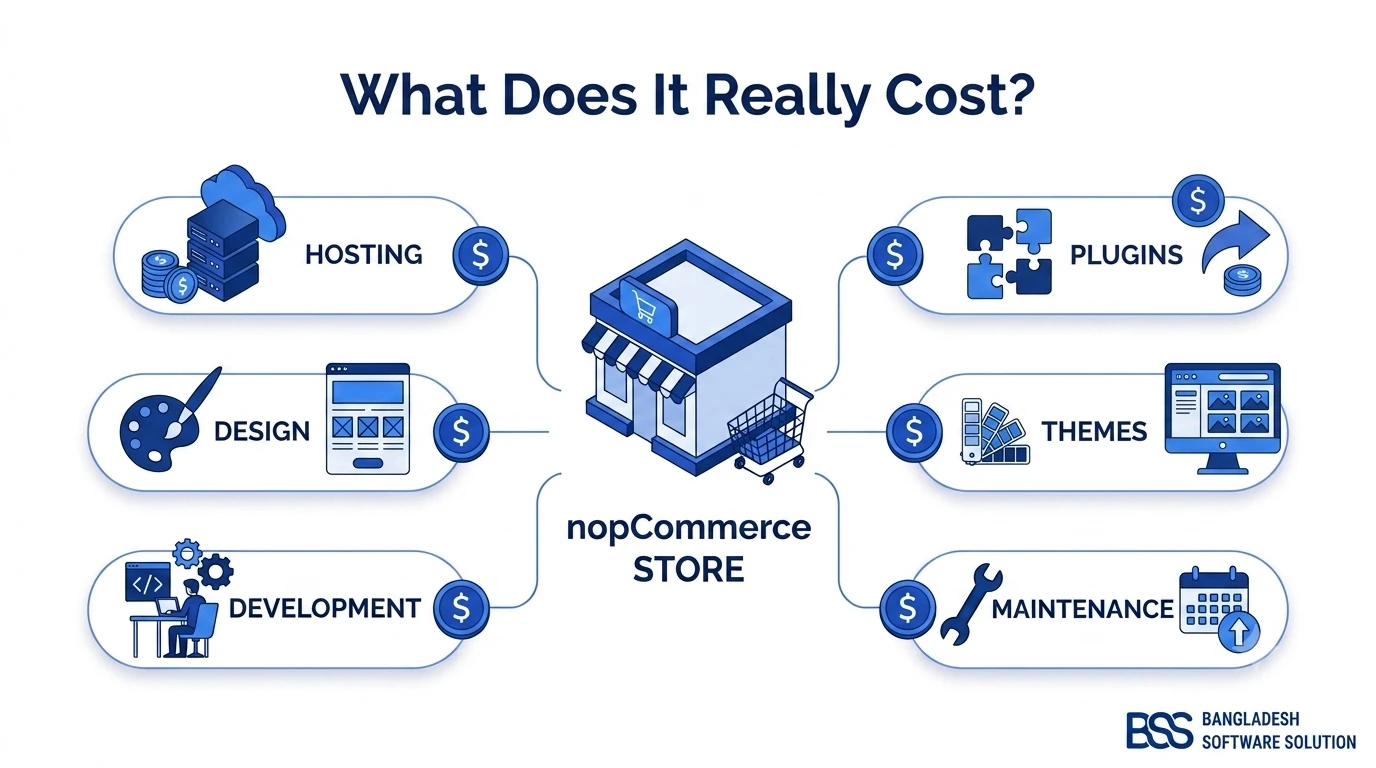
A retainer is really just hourly billing with a reserved block of time — useful once you know roughly how much ongoing work you generate each month. If you want real budget ranges instead of rules of thumb, we broke down what a nopCommerce build — and the ongoing costs most first-time budgets miss — actually costs in a separate guide.
Red flags that predict a failed project
- A quote with no breakdown — line items you can question, not just a single number.
- No questions back — a developer who never asks about your traffic, your existing plugins, or your upgrade history hasn't thought about your project yet.
- Payment entirely up front — some deposit is normal; 100% before any work starts is a risk transfer, not a pricing model.
- Vague ownership of code — confirm in writing that you own the custom code and the repository, not just a working build.
Process, Security, and What Happens After Launch
The interview tells you whether someone can do the work. The contract — and the first 90 days after launch — tells you whether they'll still be reachable when something breaks.
Before work starts, confirm three things in writing: a staging environment separate from your live store, access to a version-controlled repository (not just a zip file at the end), and a milestone schedule you can independently test against. None of this is an unusual ask — a developer who's done this before will already expect it.
Security doesn't end at launch, either. Ask specifically how they patch, monitor, and harden a store once it's live, not just how they built it. If you want the exact checklist we run internally, we published our full nopCommerce security hardening process.
This is also why we think a developer's own shipped products are worth more than a portfolio slide. Our engineering team builds and maintains its own installable nopCommerce theme-and-plugin bundles — NopGadget and NopFashion among them — running in production on real stores today, not screenshots in a pitch deck.
Skip the Vetting. Our nopCommerce Team Already Passes the Checklist.
Every question in this guide is one our own engineers answer daily — real live stores, milestone-based delivery, staging environments, and support that doesn't end at launch. Tell us what you're building and we'll match you with the right nopCommerce developer.
The Hire-Ready Checklist
Print this, or keep it open in a tab while you review candidates. Run through it before a contract gets signed, not after.
Run through this before you sign anything
-
Ask for two or three live nopCommerce stores they built or shipped work for — and actually visit them.
-
Confirm they can name the specific plugins, widgets, or theme work they delivered — not just "nopCommerce experience."
-
Get a staging environment and a version-controlled repository written into the agreement.
-
Ask how they patch and monitor a store after launch, not just how they build one.
-
Get a fixed-scope quote broken into milestones you can independently test.
-
Confirm in writing that you own the final code and the repository.
-
Ask what happens if the project pauses or ends early — is there a handoff process, or does the work leave with them?
Frequently Asked Questions
Final Thoughts
Go back to that inbox with 40 replies. The names that once looked interchangeable now sort themselves: the ones who can point you to a live store instead of a screenshot, describe a specific plugin instead of a platform name-drop, and answer "what happens after launch" without hesitating.
That's the hire worth making — whether it's a specialist you found yourself or a team like BSS Engineering that already lives inside nopCommerce's architecture every day. Run the checklist above, ask the uncomfortable pricing questions early, and treat real, live proof as non-negotiable. The extra week it takes to vet properly is far cheaper than the project you'd otherwise have to redo.