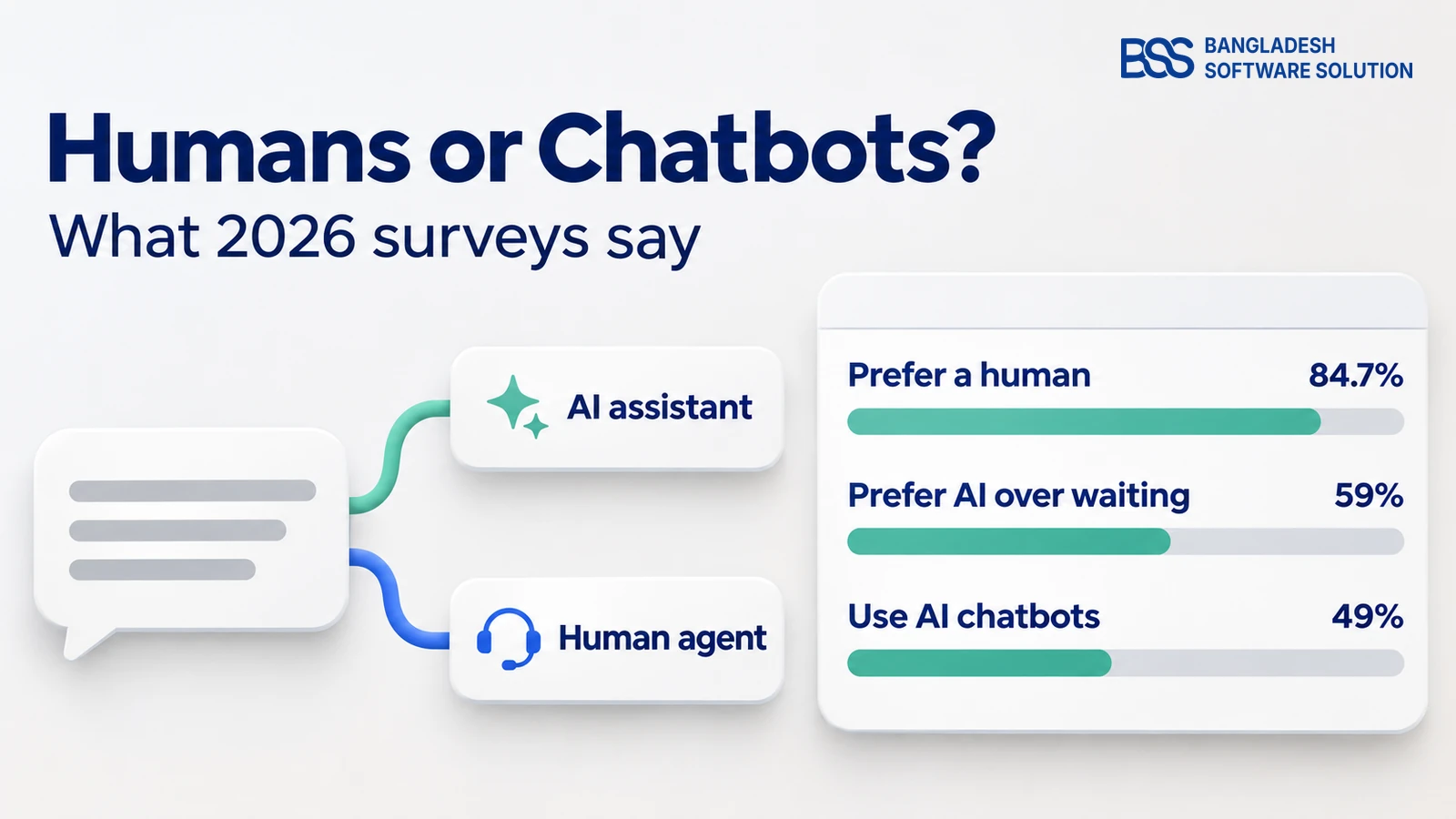
Two headlines landed in the same week. One said 84.7% of customers would rather deal with a human than an AI agent. The other said 59% prefer AI support over waiting in a queue for a person.
If you run an online store and you're deciding whether to add a chatbot, that's confusing. So which is it? Do customers want humans, or don't they?
We build chat plugins for nopCommerce at BSS, so we hear this question a lot. We read the surveys behind the headlines, from 2024 to late 2026, and checked who was asked and what. The honest answer is more useful than either headline.
What the Surveys Actually Say
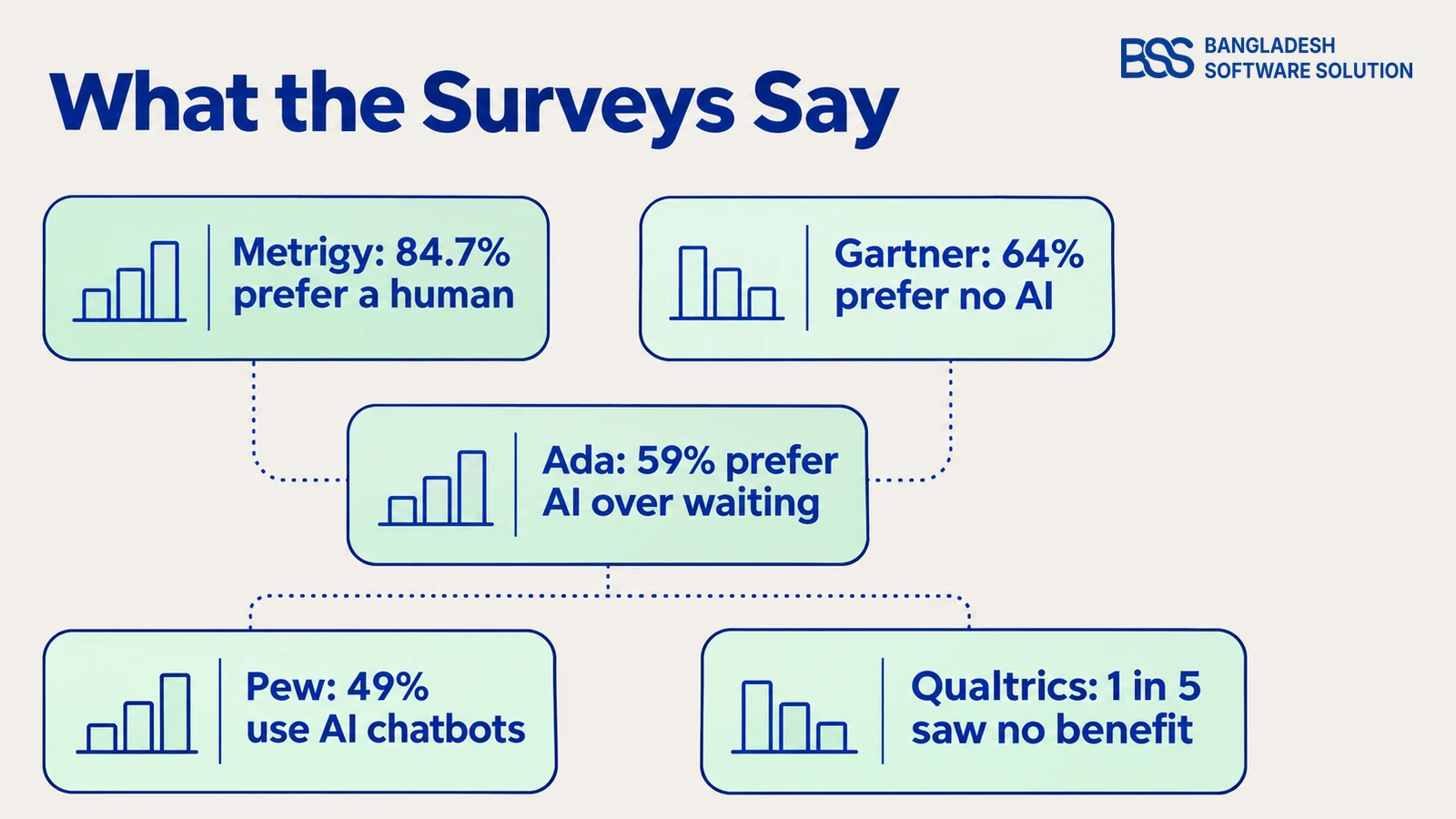
Let's start with the numbers themselves. Here are the main surveys on chatbots vs human customer service, with when they ran and who they asked.
| Survey | Published, sample | Headline finding |
|---|---|---|
| Metrigy | February 2026, 503 consumers | 84.7% prefer a human; 80.1% still would, even if the AI was sure to fix the issue |
| Gartner | July 2024, 5,728 customers | 64% would prefer companies didn't use AI for customer service |
| Ada, with NewtonX | March 2026 | 59% prefer always-on AI support over waiting in a queue |
| Pew Research Center | June 2026, 5,119 US adults | 49% use AI chatbots, up from 33% in 2024 |
| Qualtrics XM Institute | October 2025, 20,000+ consumers in 14 countries | Nearly 1 in 5 who used AI for customer service saw no benefit |
| 8x8 | October 2025, UK consumers | 83% prefer a human customer service agent |
At first glance, humans win easily. Yet Pew's Americans and AI 2026 report shows that about half of US adults now use AI chatbots, and Ada found most people would take a bot over a queue.
Five9's November 2026 study of US patients points the same way: 58% were open to AI in some form, but only 9% preferred it outright.
People aren't against chatbots. Something else is going on.
One honest note on the title: few surveys are dated 2026 alone. Qualtrics calls its report the 2026 Consumer Experience Trends report, but it ran in late 2025, and Gartner's work is from 2024. We've kept every date visible so you can judge.
Planning chat for your store? Tell us what your customers ask most, and the BSS team will help you decide what a bot should handle.
Talk to the BSS teamWhy the Answers Look So Different
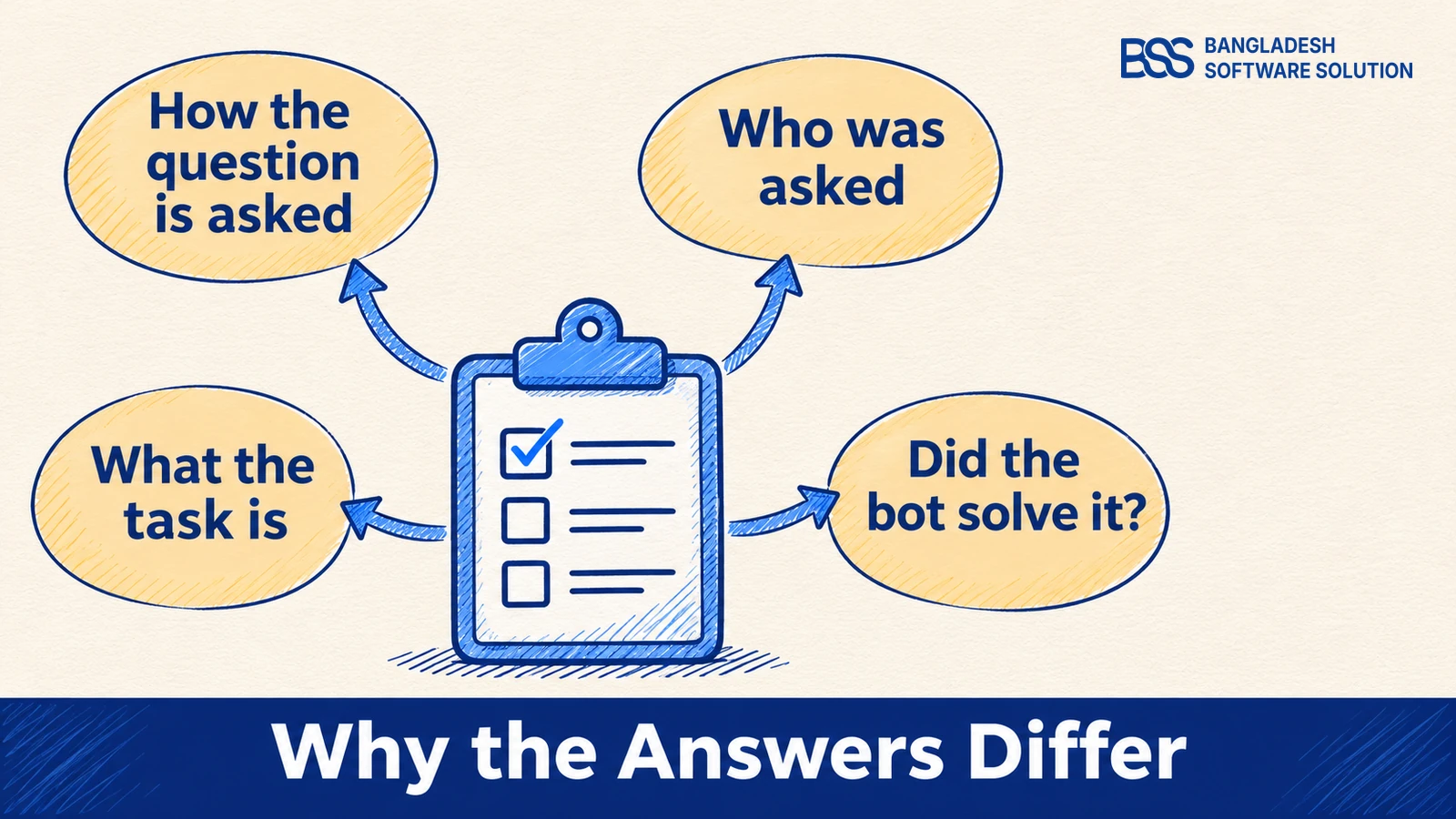
Once you read past the headlines, the surveys stop arguing with each other. They're just asking different questions.
Who was asked matters too. In the 8x8 study, 83% of UK consumers preferred a human, yet more than 30% said they'd choose a company that lowered prices by using AI. The same person can hold both views.
So the real finding isn't "humans good, bots bad". It's that people like bots that work, for tasks that suit a bot, as long as a person is still within reach.
How to read a chatbot survey
Before you quote any of these numbers in a meeting, run three quick checks. First, who paid for it? Ada, Five9, 8x8, MaxContact and Zendesk all sell customer service software, so their research is worth reading, but not as the last word.
Second, what exactly was asked? A yes-or-no "do you prefer a human" question will always favour people.
Third, who answered? A UK phone survey, a US patient study and a 14-country panel won't agree, and they shouldn't be expected to.
What Customers Actually Dislike About Chatbots
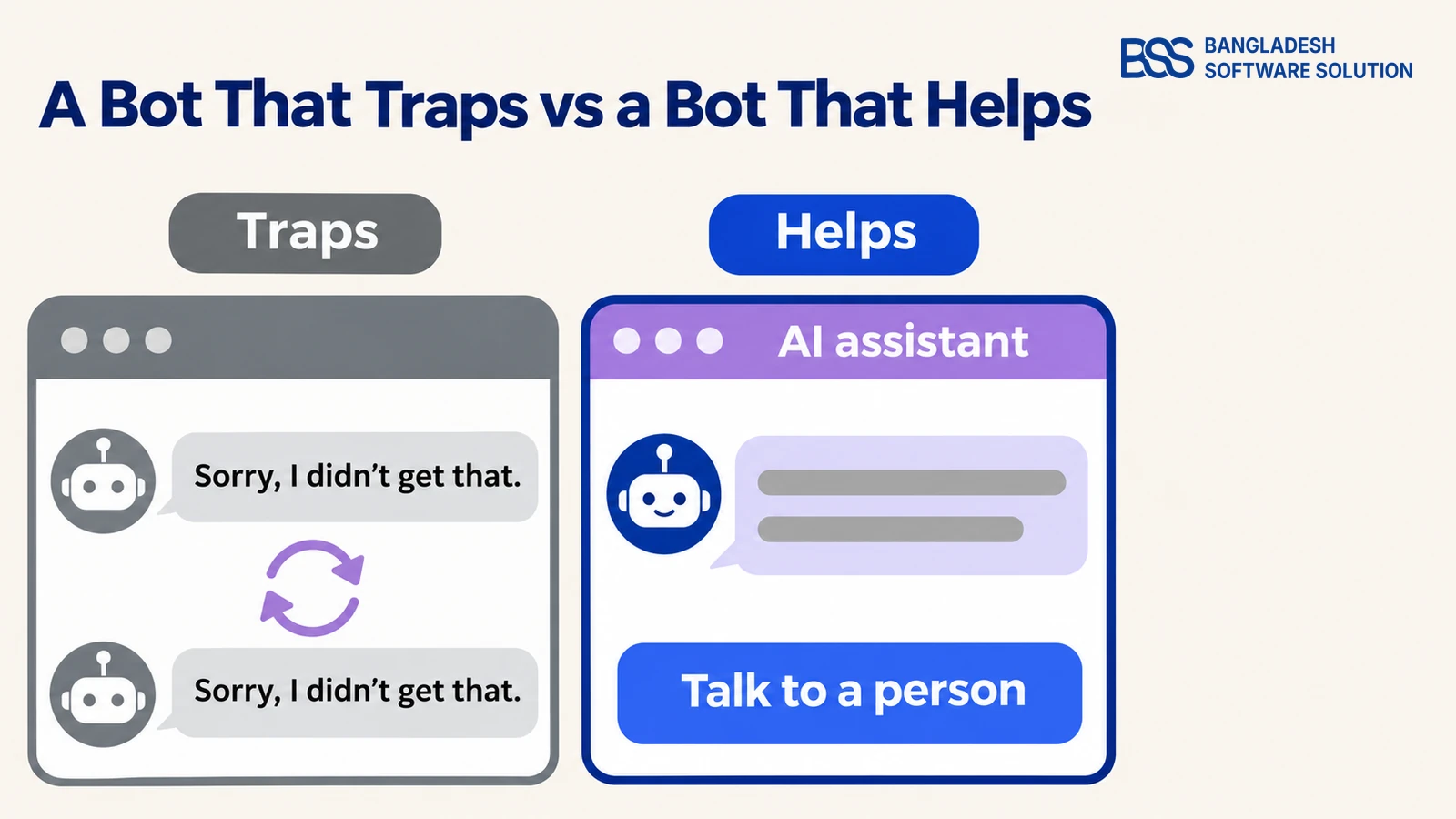
If the surveys agree on one thing, it's this: people don't hate chatbots. They hate getting stuck with one.
In Gartner's 2024 survey, the top worry about AI in customer service was that it would get harder to reach a person, at 60%. Next came AI giving wrong answers, at 42%. And 53% said they would consider switching to a competitor if a company used AI for service.
The Qualtrics 2026 Consumer Experience Trends report found that AI customer service fails at almost four times the rate of AI use in general. Half of consumers also worried that AI would stop them from reaching a human.
Privacy is the quieter worry. Qualtrics found 53% fear misuse of their personal data, up 8 points in a year. Among Americans who don't use chatbots, Pew found 79% are concerned about their personal information.
Trust in the answers is the other gap. In the same Pew report, 76% of non-users said they don't trust chatbots to give accurate information. A wrong answer about a refund or a delivery date costs you more than no answer at all.
Customers don't reject the bot. They reject the dead end. Give them an easy way to a person and most of the resistance goes away.
BSS Engineering

When we built AI chat for nopCommerce, the handover to a live agent was the feature we tested hardest, because the surveys and our own testing pointed the same way. Our comparison of chat and AI chatbot options covers how different tools handle it.
Where Customers Are Happy to Use a Bot
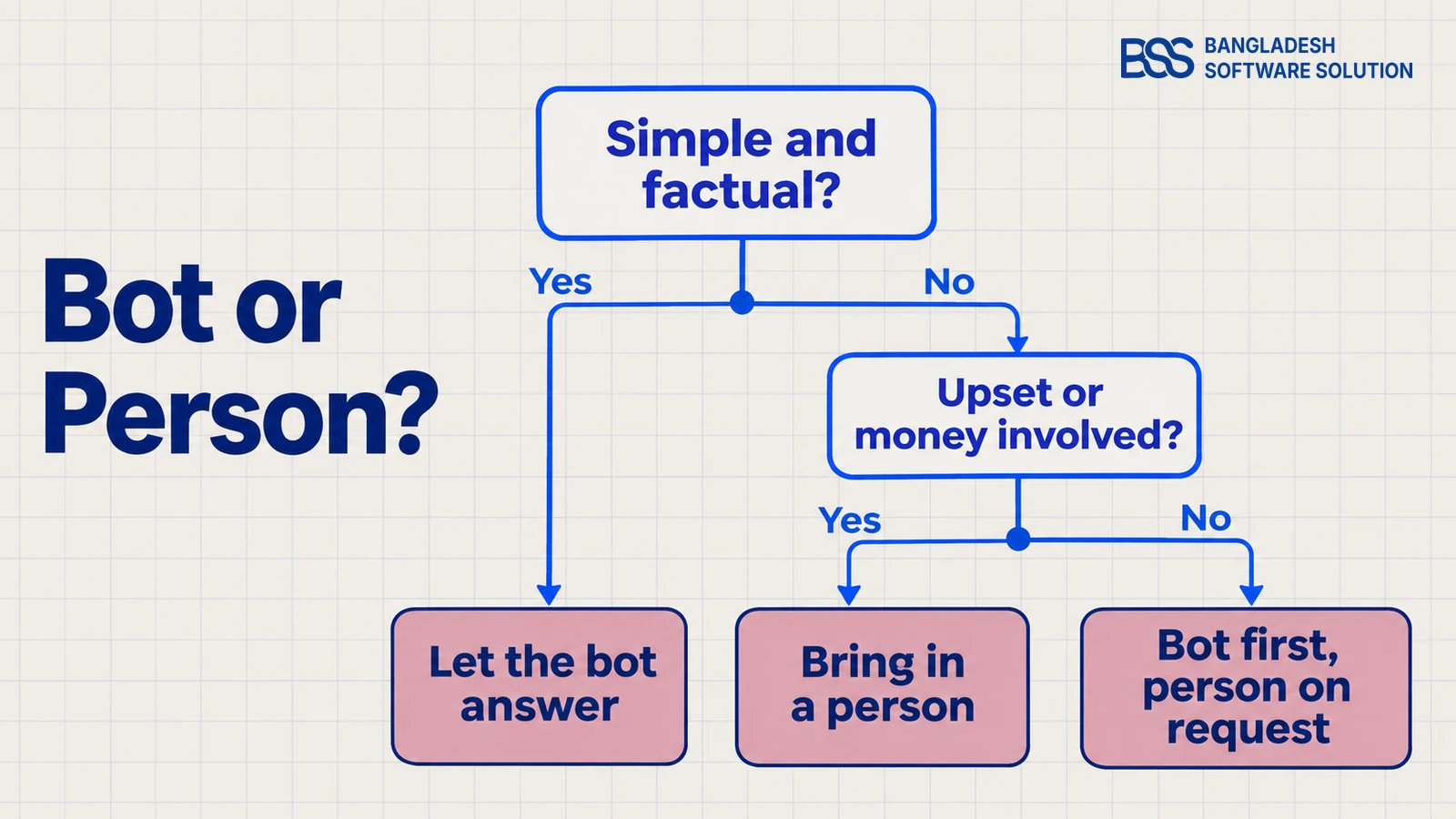
Now the good news for store owners. The same surveys show clear areas where people are glad to get a quick automated answer.
In Metrigy's study, 46% said they'd use AI agents in select situations. The most useful jobs were sending them to the right person (50.4%), shipping and order confirmations (49.6%) and scheduling (46.9%).
Speed matters too. Zendesk's CX Trends 2026 report says 74% of consumers now expect customer service to be available 24/7 because of AI. That's a big ask for a small store team, and it's where a bot earns its place.
Attitudes are also shifting. Pew found chatbot use among US adults rose from 33% in 2024 to 49% in 2026, and Metrigy found 48% of consumers feel positive about AI agents overall, against 37% negative.
Where a person still matters most
On the other side, people want a human for anything emotional, urgent or about money. MaxContact found half of UK consumers don't want AI handling complex account problems, and 49% feel the same about financial discussions.
For an online store, that maps neatly onto everyday work. Order status, shipping times and return policy suit a bot. A damaged parcel, a refund dispute or an angry customer needs a person.
- Good for a bot: where's my order, delivery times, return policy, sizes, stock, store hours.
- Needs a person: damaged items, refund disputes, payment problems, complaints, large or custom orders.
Even young shoppers aren't asking for more AI. In the 8x8 study, only 7% of 16 to 24 year olds said they preferred AI help. That's why a bot works best as the first step, not the only one.
What This Means for Your Online Store
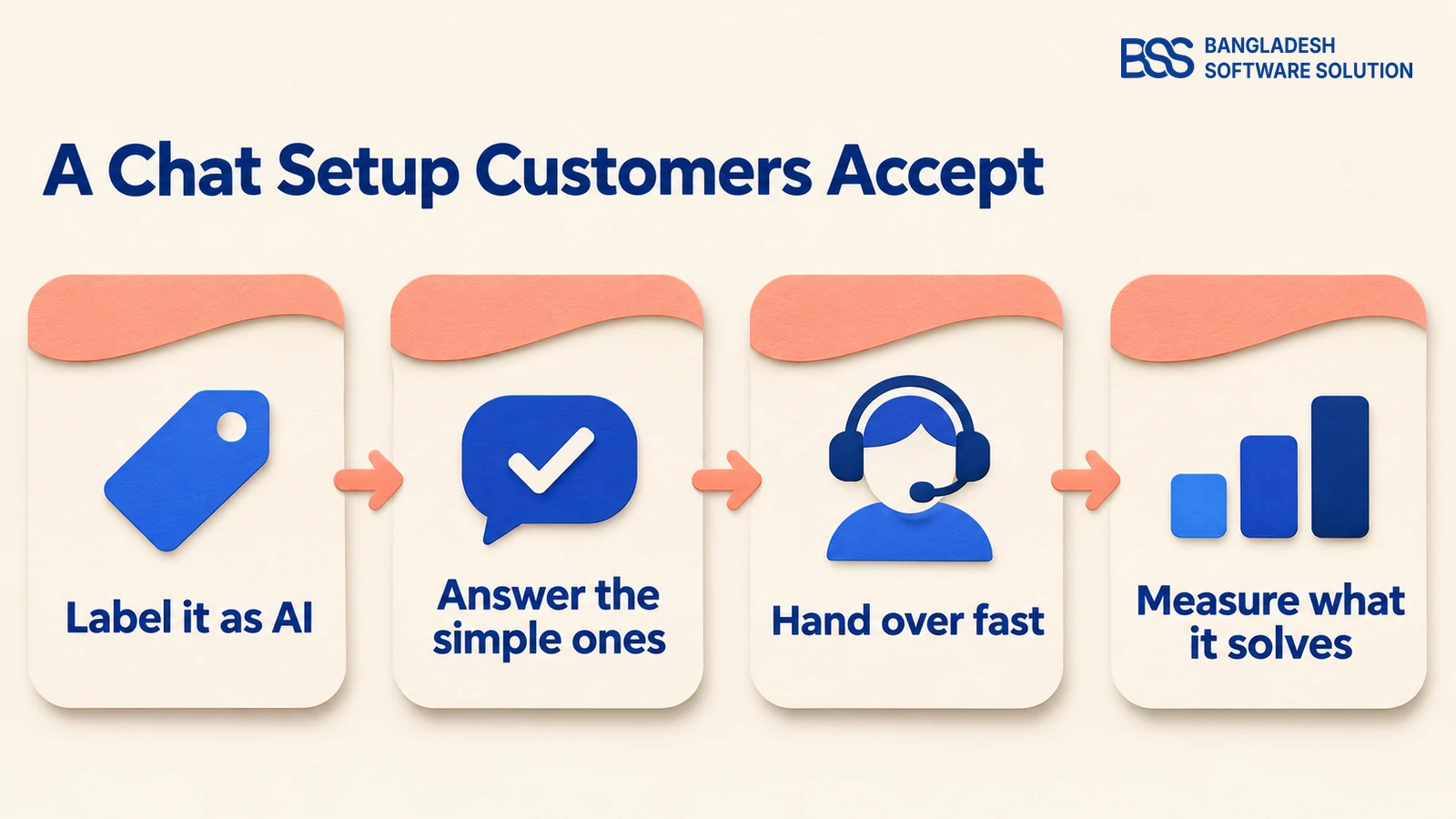
Put it all together and the advice is simple. Use a bot for the simple, factual questions, and make a person easy to reach for everything else.
Be open about it, too. Salesforce's State of the AI Connected Customer report says 72% of customers think it's important to know whether they're talking to an AI agent. MaxContact found 88% of UK consumers say being told matters.
A chat setup customers accept
-
Label the chat clearly as an AI assistant from the first message.
-
Let the bot handle order status, delivery, returns and product questions using your real store data.
-
Show a "Talk to a person" option in every conversation, not only after three failed tries.
-
Send complaints, refunds and payment problems straight to a person.
-
Each month, check how many chats the bot solved, how many it handed over and how many ended in an order.
Start small. Switch the bot on for your three most common questions, watch the results for a month, then add more. A bot that does three things well earns more trust than one that tries everything and gets stuck.
AI answers and keyword Q&A for the simple questions, with a live agent able to take over any conversation inside your nopCommerce admin.
View the plugin
The stores that get this right decide what the bot won't do before launch. If you'd like help setting those rules and connecting chat to your order data, you can hire a .NET developer from BSS for the setup.
Want Chat That Customers Actually Like? Work With the BSS Team
From deciding what a bot should handle to connecting it with your orders and setting up a clean handover to your team, our engineers build customer service features for nopCommerce stores.
Frequently Asked Questions
Final Thoughts
So, back to those two headlines. Both were true. Customers prefer a human when the problem is hard, personal or about money, and they're happy with a bot when it's quick, correct and lets them reach a person.
For your store, that means a bot for the easy questions, a person for the hard ones, and a clear label on which is which. Get that balance right, and the survey numbers start working in your favour.
Tell us how your customers reach you today. We'll help you decide where a bot helps and where your team should stay in charge.
Book a free consultation