Key takeaways
- An ecommerce build needs more than C#: databases, payment and shipping integrations, security and a plan for upgrades.
- Decide first whether you are building from scratch or starting on an ASP.NET Core platform such as nopCommerce. It changes who you hire.
- Test candidates on the work your store will need, such as a plugin or an integration.
- Pick the engagement model by the shape of the work: a dedicated developer, a fixed-price project or hourly support.
You have a store to build, a budget approved, and a requirement from your team that it runs on .NET. Job boards return thousands of profiles that say ASP.NET, and agency lists rank companies without saying what they would build for you. What none of those lists tells you is which developer can ship an online store.
We hire and work as ASP.NET Core developers on ecommerce builds every week, mostly on nopCommerce. This guide is what we would tell a friend who has to make this hire: what the build needs, the platform decision to settle first, the skills worth testing and the ways to engage a developer.
What an Ecommerce Build Needs From an ASP.NET Core Developer
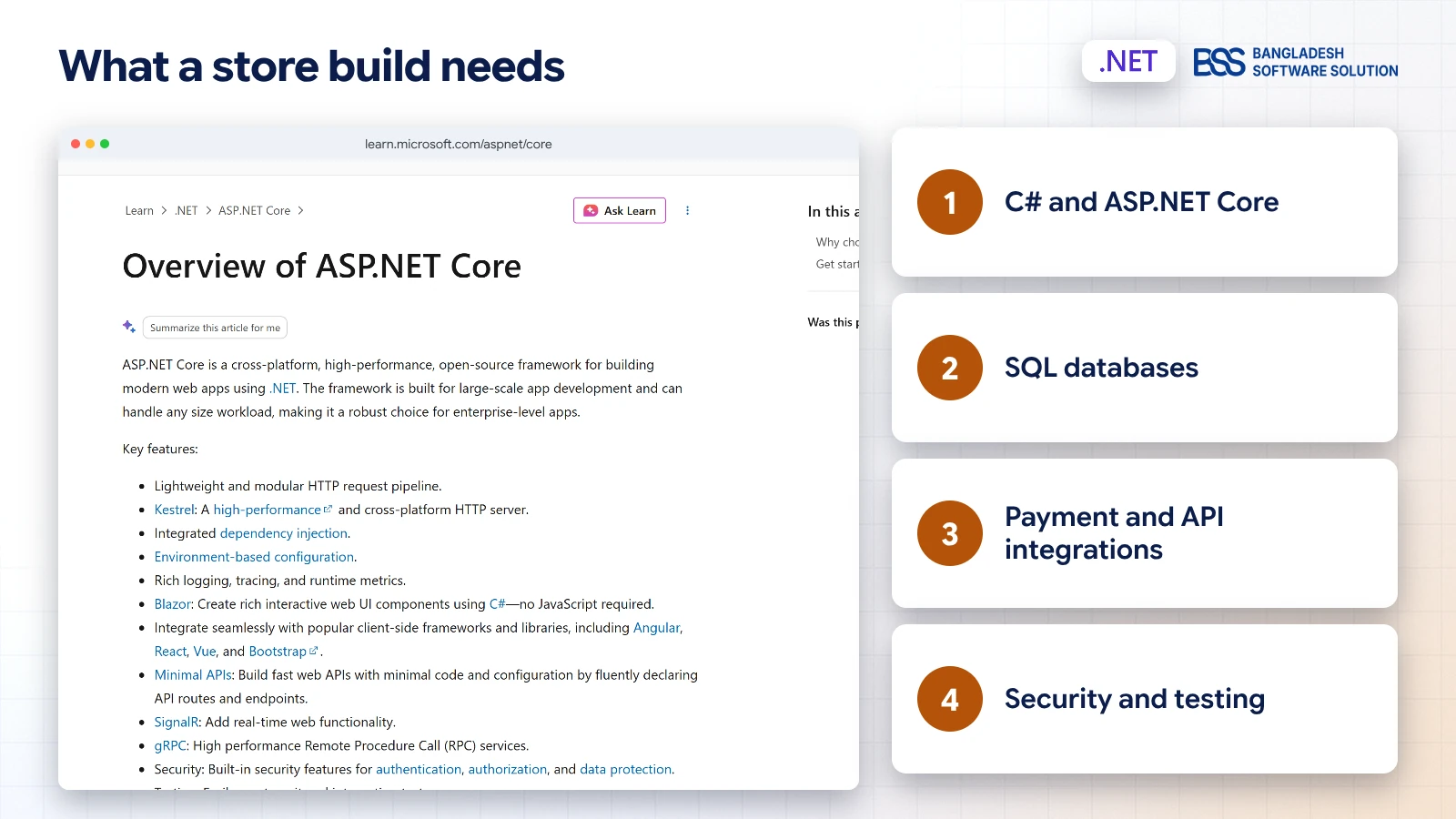
ASP.NET Core is Microsoft's cross-platform, open-source framework for building web apps on .NET. It gives a developer the request pipeline, dependency injection, configuration and security features.
It does not give you a catalog, a cart or a checkout. Someone has to build those, or bring a platform that already has them.
For an online store, the developer you hire needs four kinds of skill:
- C# and ASP.NET Core. Controllers, views or Razor pages, dependency injection, and the habits that keep a large codebase readable.
- SQL databases. Product, order and customer data that has to stay correct under load, with queries that do not slow the catalog down.
- Payment and API integrations. Payment gateways, couriers, ERP and accounting systems, each with its own API and sandbox.
- Security and testing. Authentication, data protection, and tests that catch a broken checkout before your customers do.
A developer strong in only the first is a good hire for an internal tool. A store needs all four, or a team that covers them between its members.
Need ASP.NET Core developers for a store build? BSS engineers work in .NET ecommerce every day.
Hire .NET developersBuild From Scratch or Start on a Platform
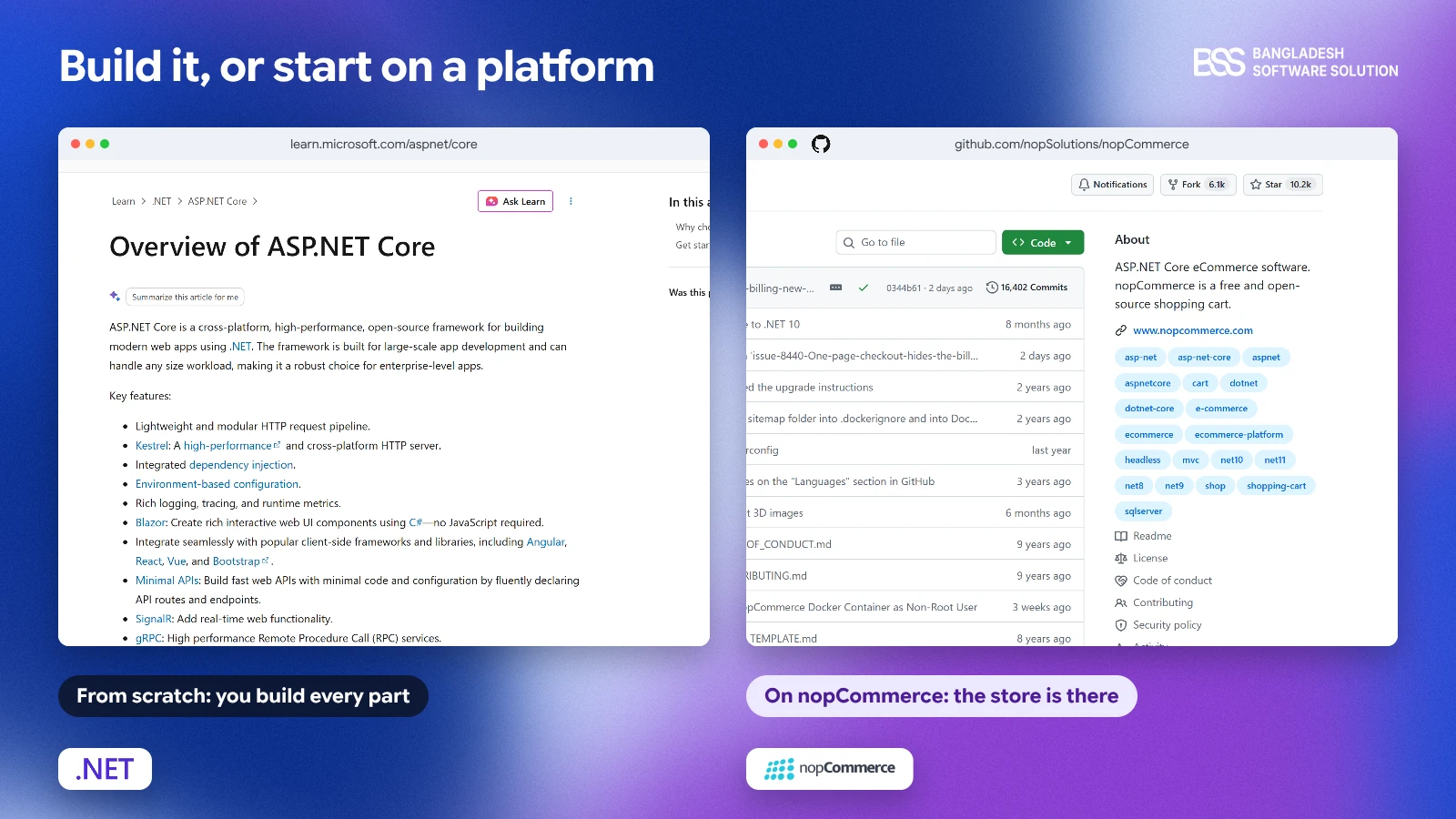
Settle this before you write a job description, because it decides the kind of developer you need. A store built from scratch on ASP.NET Core means writing the catalog, cart, checkout, admin, tax and shipping rules yourself. That suits a business whose selling model no platform fits, and it costs months of development before the first order.
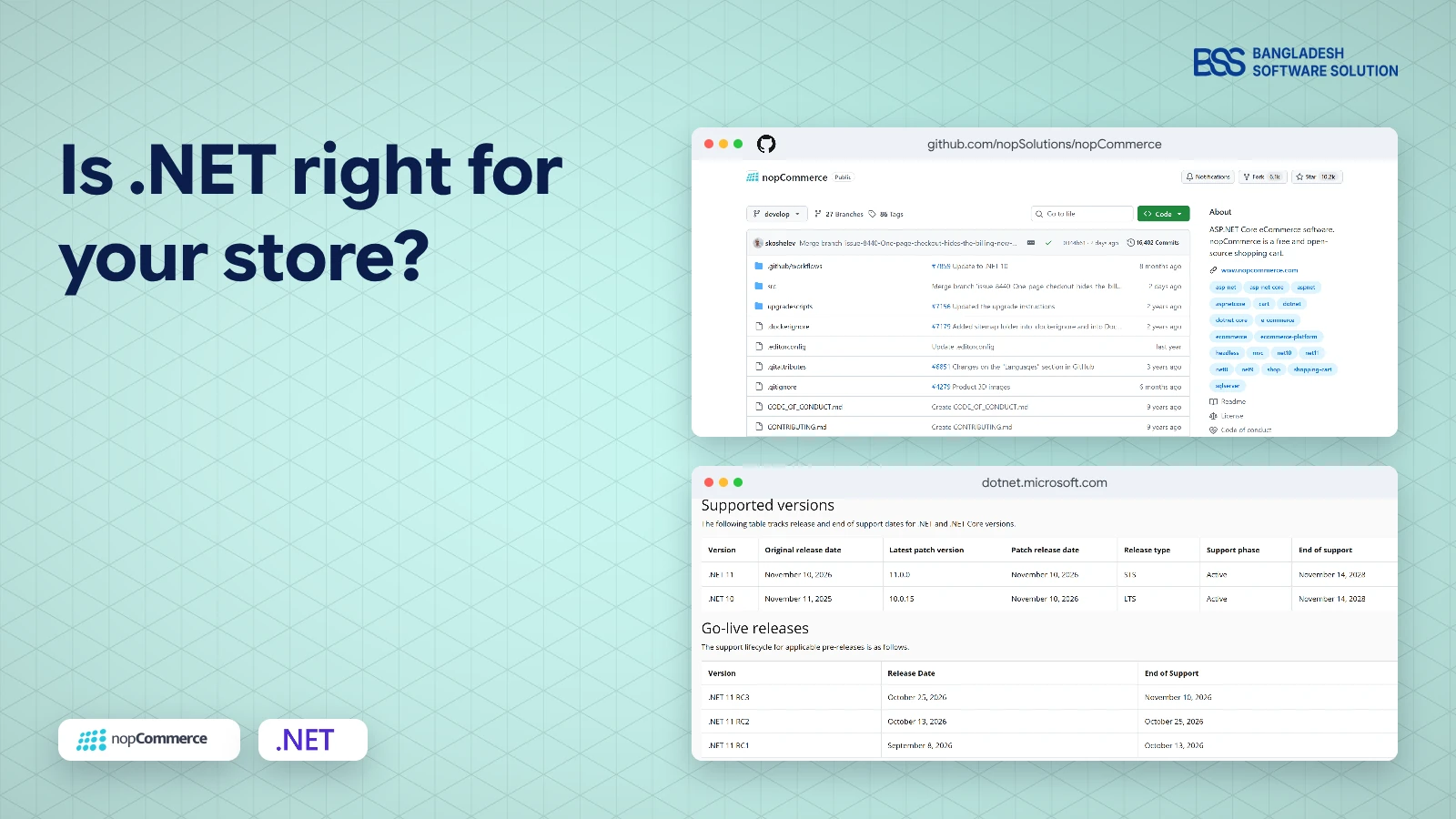
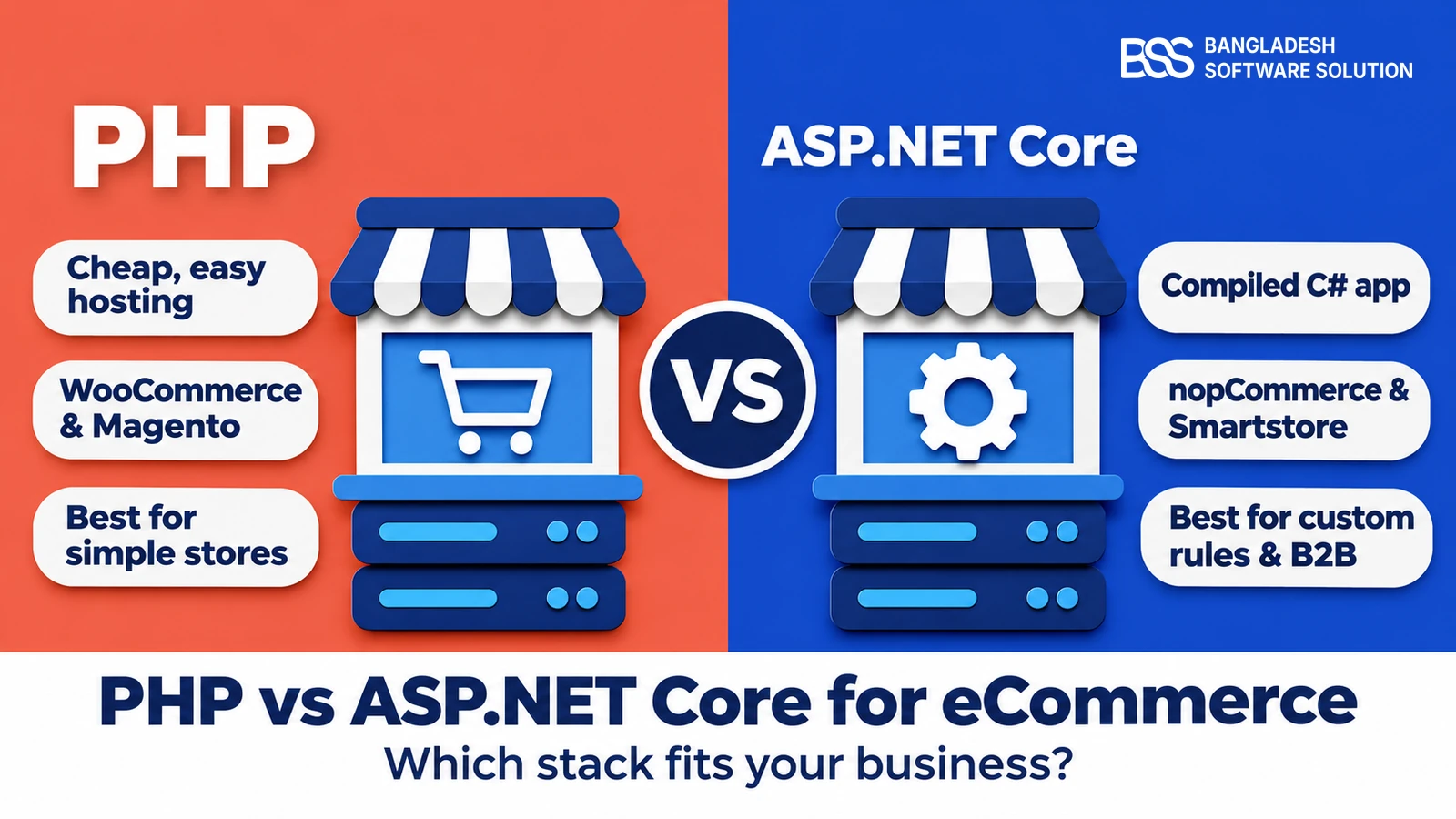
Starting on an ASP.NET Core platform such as nopCommerce means the store already exists. nopCommerce is open source, runs on ASP.NET Core and supports SQL Server, MySQL and PostgreSQL. Your developers then spend their time on what makes your store different: plugins, integrations and the theme.
The hire changes with the choice. From scratch, you need architects who can design a domain model; on a platform, developers who know its plugin system and its upgrade path.
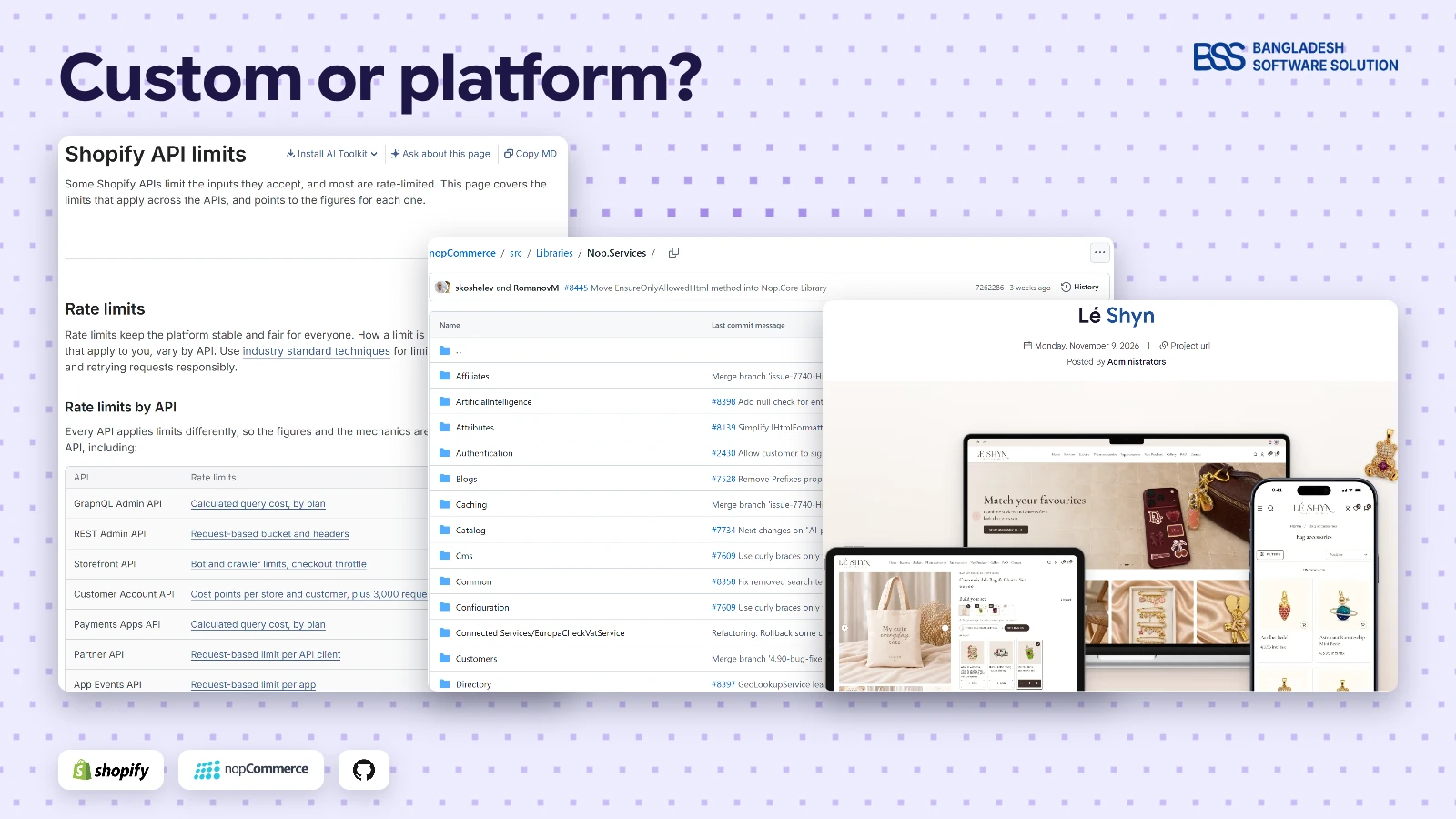
Our comparison of custom development and a platform covers the decision in more depth.

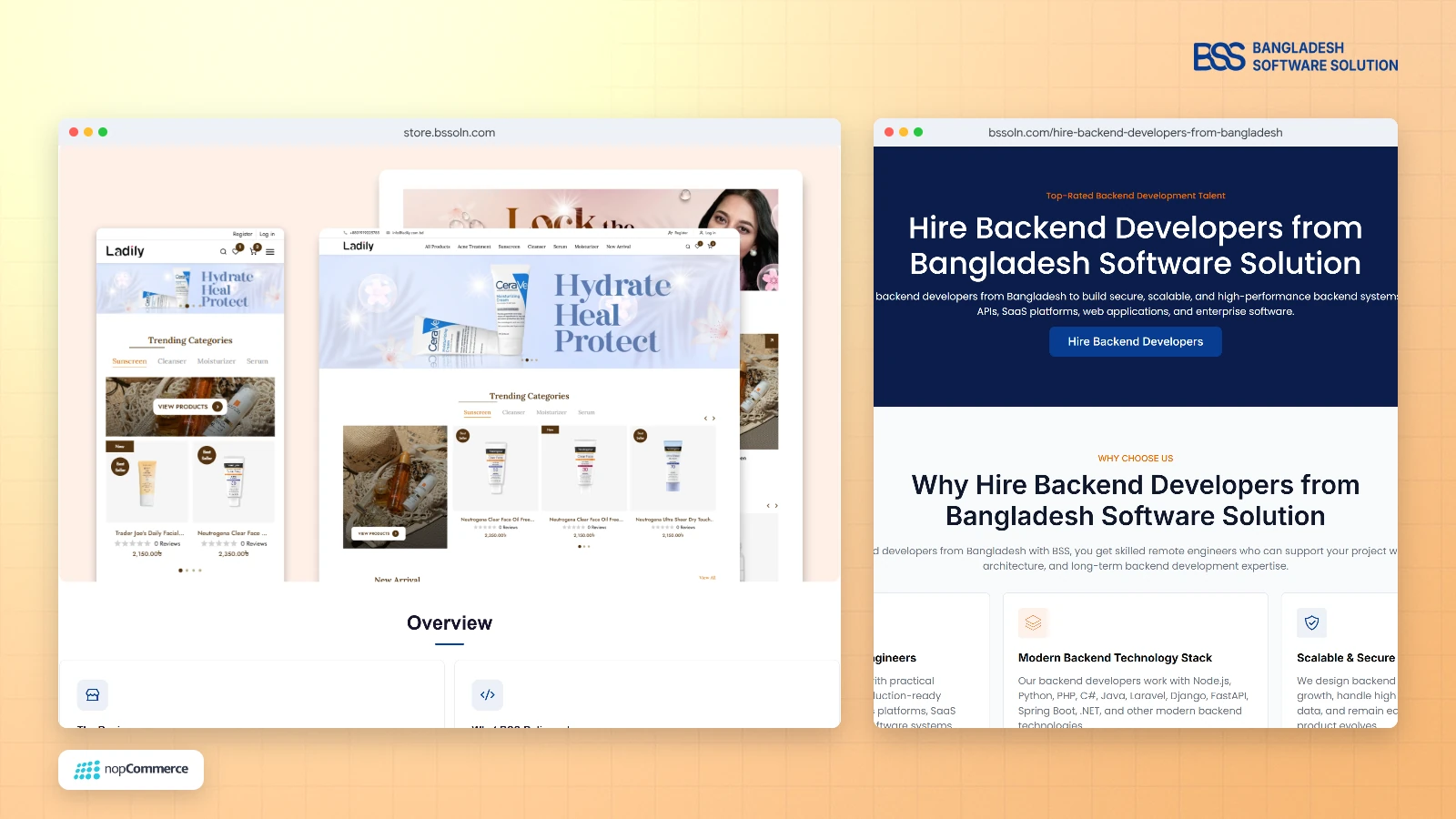
Most clients who come to us asking for a custom .NET store end up on nopCommerce with custom plugins, because their unusual requirement is one part of the store, not the whole of it. We say so in the first call, and our nopCommerce services start from there.
Skills to Test Before You Hire
A CV tells you which frameworks a developer has used. A short, paid task tells you whether they can do your work. Make the task look like your first month on the project.
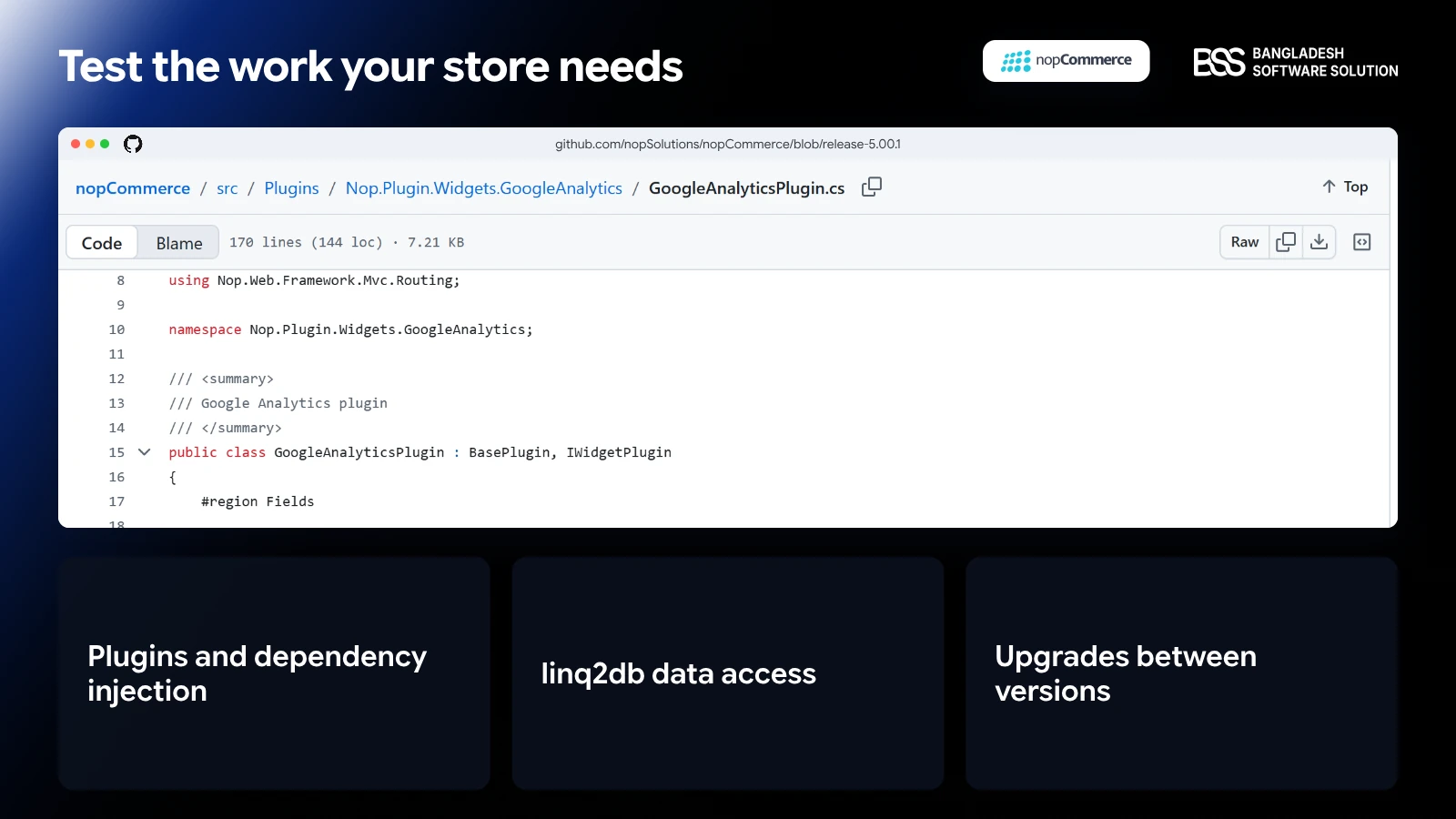
- Plugins and dependency injection. On nopCommerce, almost every change is a plugin registered through the platform's startup classes. Ask the candidate to explain how a plugin adds a service and a route, or to build a small one.
- Data access. nopCommerce uses linq2db and FluentMigrator for its database layer, not Entity Framework. A developer who knows only Entity Framework can learn it, but should say so.
- An integration. Give them a sandbox API, such as a payment or shipping provider, and ask for an order to pass through it with errors handled.
- Upgrades. Ask how they would move a plugin from one nopCommerce version to the next. The answer shows whether they have maintained code, not just written it.
If your store needs a mobile app or another front end, this plugin gives a nopCommerce store a ready set of frontend API endpoints, so your developers start from working endpoints instead of writing them.
Also ask about the front end. nopCommerce renders its store with Razor views, and a theme is a set of views, styles and scripts on top of the platform. A store that needs a custom design needs someone who is comfortable there, or a separate front-end developer.
Read the code they hand back as closely as the result. Names, error handling and tests tell you what the next two years of maintenance will feel like. Our guide to hiring a nopCommerce developer has a longer checklist for platform work.
Dedicated, Fixed-Price or Hourly: How to Engage a Developer
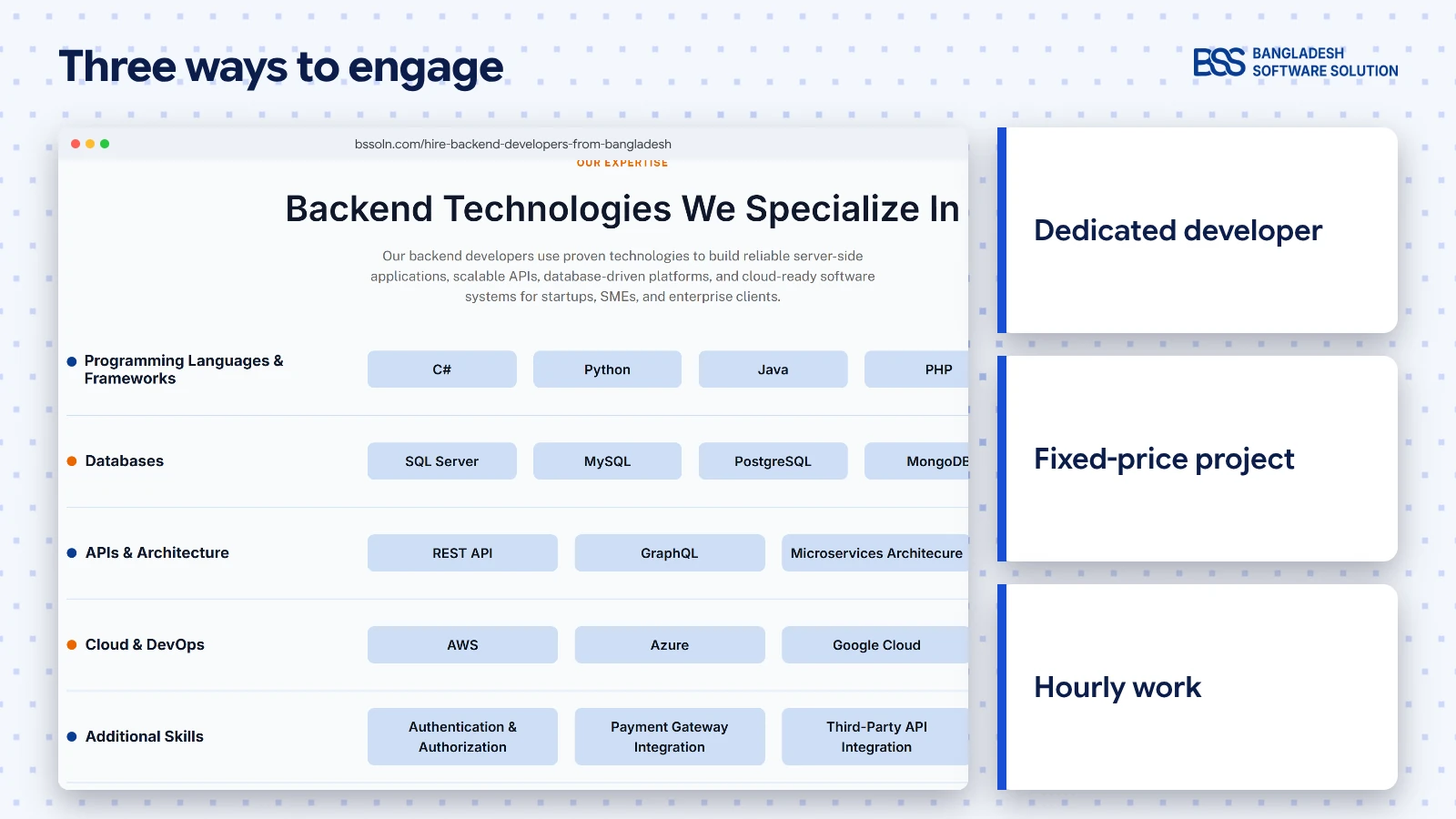
There are three common ways to engage an ASP.NET Core developer, and each fits a different shape of work.
| Model | How it works | Fits best when |
|---|---|---|
| Dedicated developer | A developer works full-time on your project and joins your team's routine. | The store is a long build or has a steady stream of changes. |
| Fixed-price project | An agreed scope is delivered for an agreed price. | The work can be written down in full before it starts, such as a plugin or a migration. |
| Hourly work | You pay for the hours worked on each task. | Small changes, bug fixes and support after launch. |
What a hire costs depends less on the model than on the work. Integrations with older systems, a large catalog, several languages and currencies, and a custom checkout all add time whatever the contract says. Ask every candidate for an estimate against the same written list, so the numbers can be compared.
Many store builds use two of these in turn: a fixed-price project for the launch, then a dedicated developer or hourly support for what follows. Whichever you choose, put the code in a repository you own from the first day.
We offer all three models for .NET work. If the build is long, you can hire a dedicated .NET developer who works on your store full-time and reports to your team.
Where to Find ASP.NET Core Developers, and How to Check Them
Time zones matter more than most buyers expect. A developer who overlaps your working day by a few hours can join reviews and answer questions the same day; one who does not turns every question into a day's delay. Agree the overlap before you sign.
You can find ASP.NET Core developers in three places: freelance marketplaces, job boards for a direct hire, and development companies. Each works; they differ in how much of the checking falls on you.
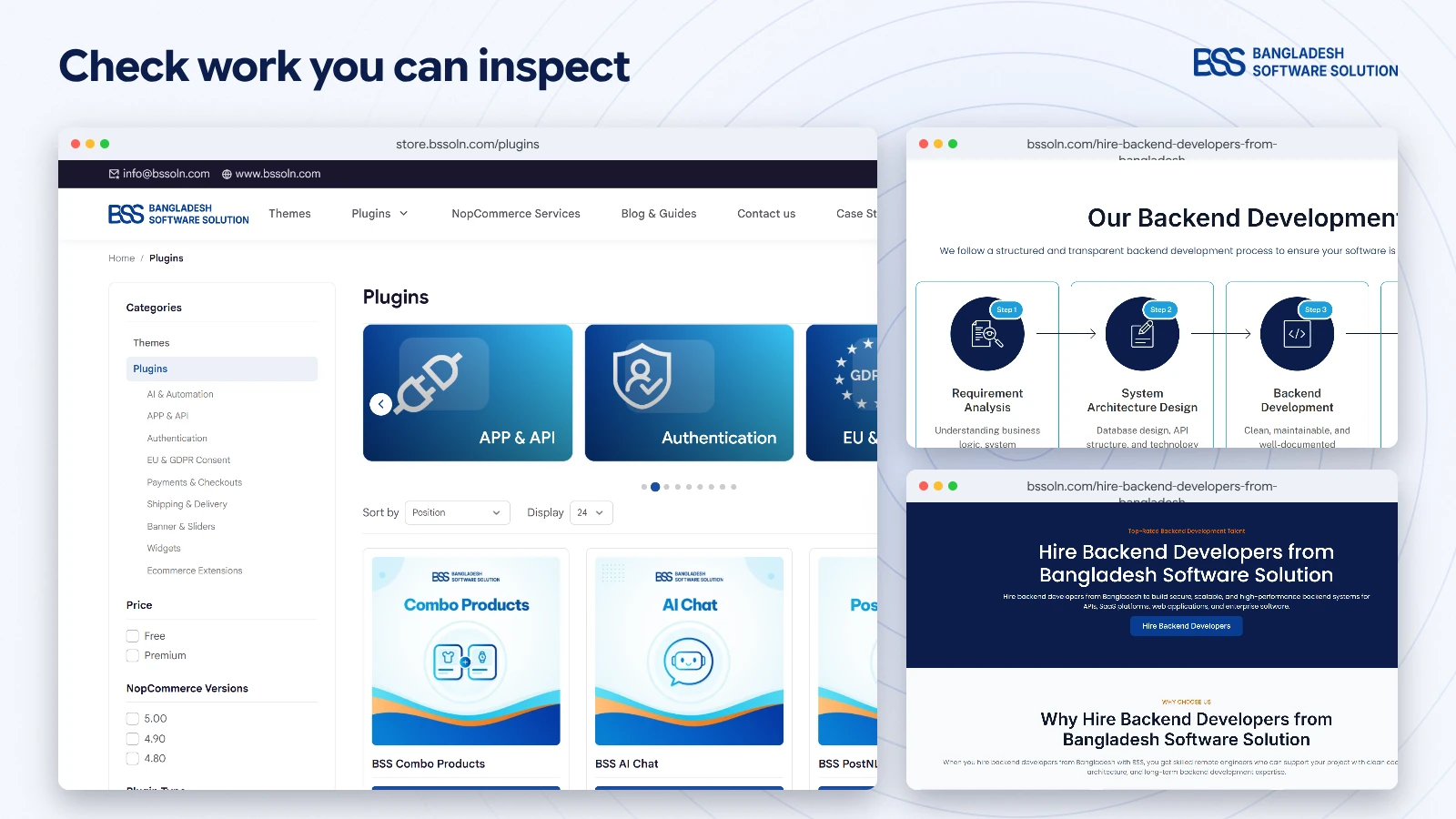
Whichever route you take, ask to see work you can inspect: a live store they built, a plugin they publish, or code in a public repository. A team that ships its own products has work you can install and read before you sign anything.
Before you sign
- Look at a live store or a shipped plugin they built.
- Run a short, paid task that matches your first month of work.
- Agree that the code lives in a repository you own.
- Ask who handles upgrades and security fixes after launch.
- Confirm the hours you overlap for calls and reviews.
Our team builds the nopCommerce themes and plugins listed on this store, and we are an Official nopCommerce Partner. If that is the kind of work you need, our themes and their bundled plugins are a fair place to judge it.
Hire ASP.NET Core developers who build stores
Our engineers build nopCommerce plugins, themes, integrations and full store builds in C# and ASP.NET Core. Tell us about the store and we will suggest the model and the people that fit.
Frequently Asked Questions
Final Thoughts
Back to the store with the approved budget. Before posting a job, the team decides to start on nopCommerce, writes down the three integrations the store needs and turns one of them into a paid test task.
With that, the hire becomes a comparison of real code against a real requirement. Pick the engagement model that fits the work, keep the repository in your own hands, and plan for the upgrades that come after launch.
Tell us what the store needs. We will suggest the engagement model and the developers that fit.
Talk to an expert