It is month three of a store that should be paying for itself. Orders are steady and the team likes the admin, but the monthly app invoice keeps growing: one plugin for loyalty points, another for shipping rules, and a checkout change that a developer now has to make. Somewhere in that spreadsheet you start to wonder whether a different platform would have cost less from the start, and someone mentions that the serious option is a .NET platform.
At BSS we build and maintain stores on nopCommerce, a .NET platform, so we see this decision from the inside. When a client asks us to compare platforms, the first question we ask is who will change the store after launch, because that answer settles more than the feature list does.
This guide covers what a .NET platform actually changes for a store owner, where it wins, where a hosted platform is the better choice, and what to settle before you commit. By the end you should know which group your store falls into.
What a .NET Platform Actually Changes
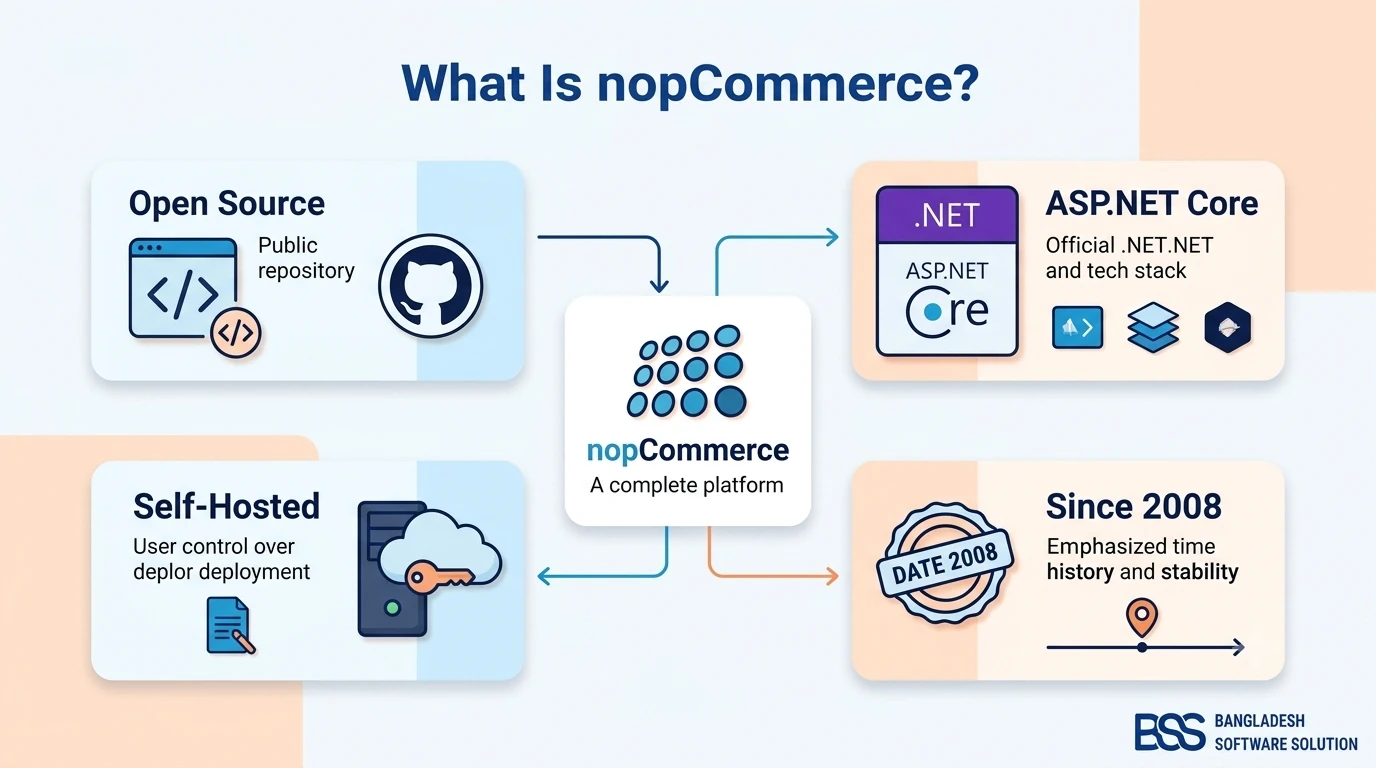
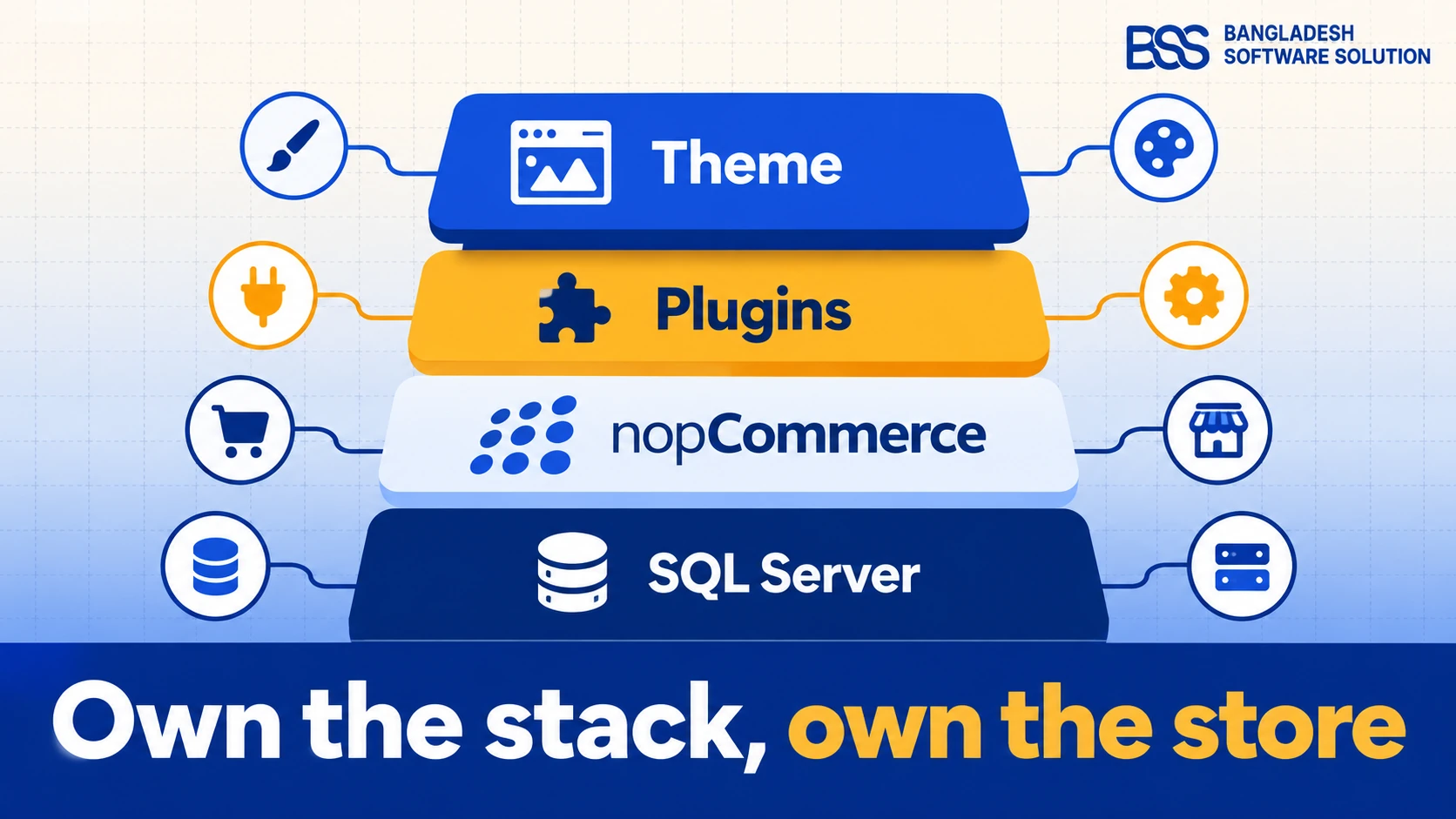
.NET is Microsoft's development framework, and according to Microsoft's .NET documentation it runs on Windows, Linux and macOS. nopCommerce is built on ASP.NET Core, so a store on it is a web application written in C#, not a template sitting on someone else's servers. Its Community Edition is free to install, run and sell through under nopCommerce's own licensing terms.
Key fact: You own the code. Features the store needs are built or installed as plugins that run on infrastructure you control, so the recurring cost is hosting and maintenance rather than a fee for each feature.
The trade-off is that someone has to maintain that code. A platform with no licence fee still needs a developer who knows the stack.
Three things change in practice when a store moves from a hosted platform to a .NET one. Each one shows up the first time you need a change.
The version matters as well. According to the nopCommerce documentation, the 4.80 and 4.90 releases target .NET 9, so a store you start today sits on a current runtime and an upgrade path you should plan for from the first week.
Where a .NET Platform Wins, and Where It Loses
Connecting a store to an ERP, a courier and a bespoke pricing rule is where hosted platforms start to strain, because each integration becomes a request to a vendor or a listing in an app store. On a .NET platform the same integration is code in your own repository. That is the real strength, and it is also why a .NET build is not automatically cheaper. The build is a project, and a project costs time before it saves any money.
The table sets out the three routes most owners compare. We build on all three at BSS, so read it against your own store, not against the strongest case for any one of them.
| Route | Strongest when | Main trade-off | Speed to first sale |
|---|---|---|---|
| Hosted platform (Shopify) | The catalog is standard and the team wants to start selling this month. | App fees grow with each custom need, and custom logic is limited to what the platform allows. | Fastest to start |
| Open-source on WordPress (WooCommerce) | The store is content-led and the team already runs WordPress. | Plugin quality varies, so each add-on needs review before it goes live. | Quick, with plugins |
| .NET platform (nopCommerce) | The integrations are heavy, the catalog is large, or the team already works in C#. | You carry the build cost and the upgrade cycle, and the code is only as good as the team that maintains it. | A project, scoped first |
The four questions below are the order in which the choice becomes clear. Work through them in sequence, because each answer narrows the next.
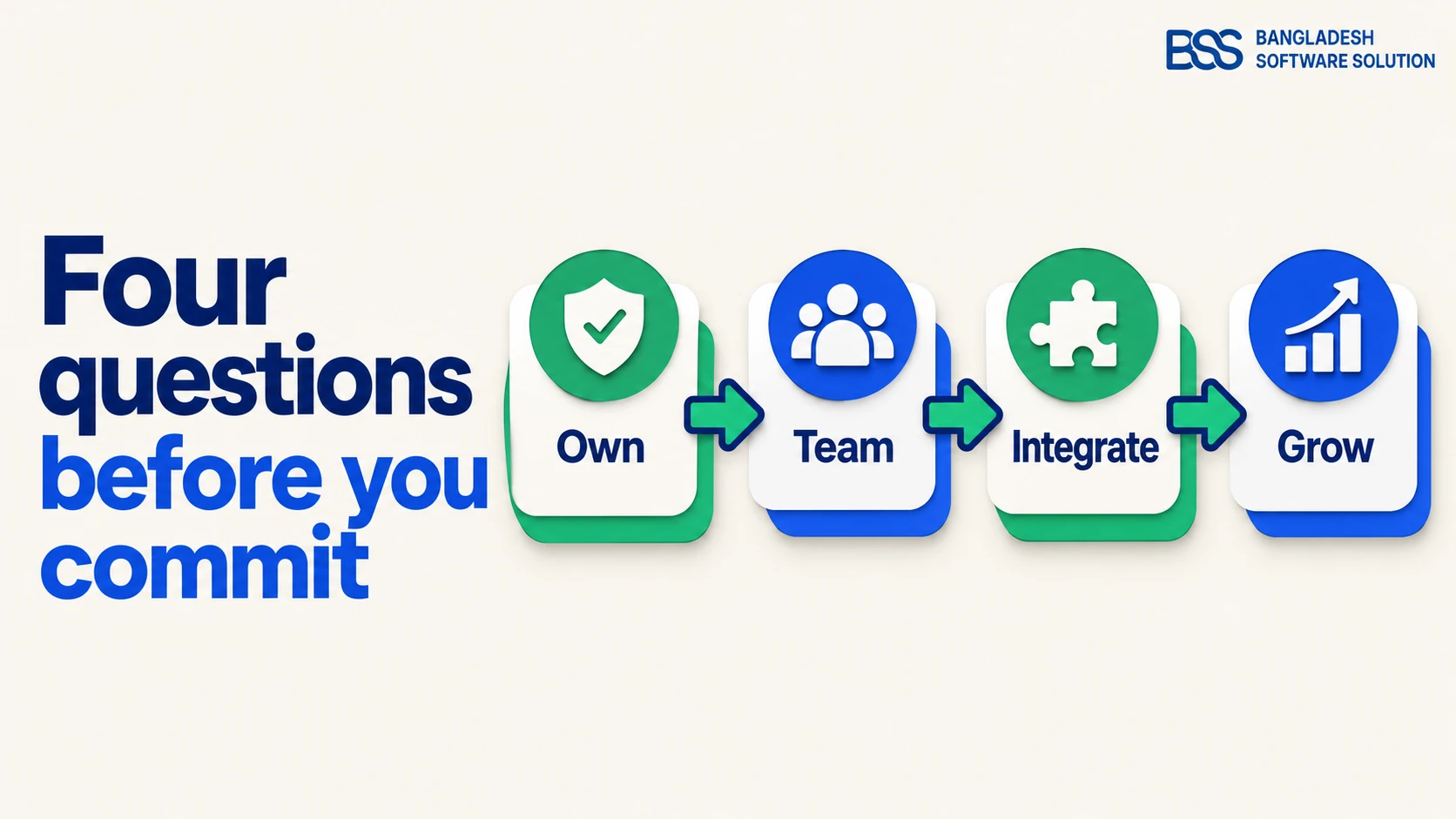
The question is not which platform has more features. It is who will change the store two years from now, and whether they can.
BSS Engineering
This is the point where many owners bring in a developer: when the integrations need code and the team has nobody to write it. You can hire a .NET developer from BSS for the build and keep your own team on the catalog and the marketing.
Checking Whether a .NET Platform Fits Your Store
Before you shortlist vendors, settle a few questions with the people who will run the store. Most poor platform decisions skip this step and discover the answer on the first invoice.
Watch out
A fixed build cost is easier to plan than an open-ended app bill, but only if the scope is written down. Ask for the integration list in writing before you accept any quote, and check which items are included.
Questions to settle before you choose
-
Who maintains the code after launch, and do they know C# and ASP.NET Core?
-
Which integrations are non-negotiable: ERP, payments, couriers and accounting?
-
Does a plugin already cover each one, and who supports it after the first year? If your courier is Steadfast, the BSS Steadfast Shipping plugin connects it to checkout, so check it before you commission custom work.
-
How often will the store need upgrades, and who runs each one? A common surprise on the upgrades we run is a plugin that compiled last week and no longer loads.
If that list is longer than your team can build, this is where the work turns hard. BSS handles the full setup, from store configuration and integrations to launch, so the first months run without a developer on payroll.
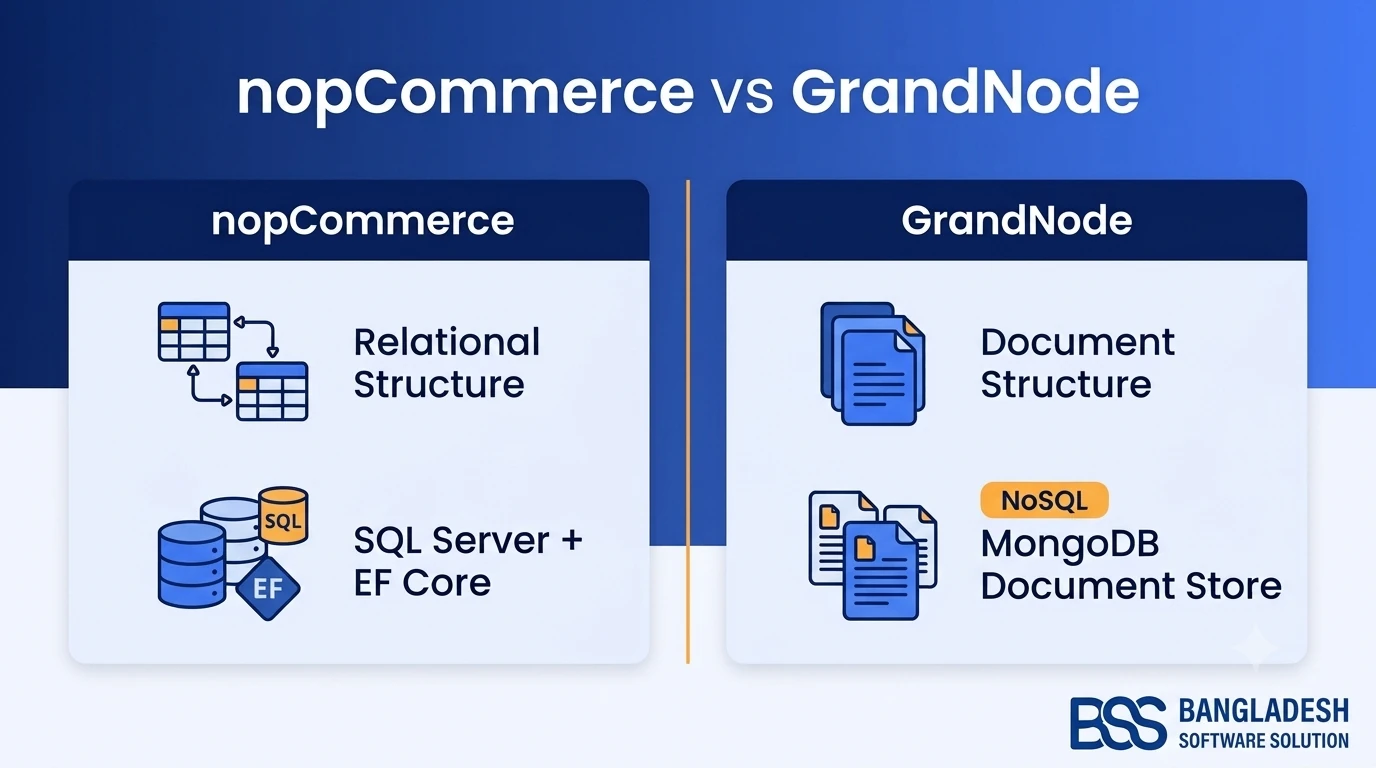
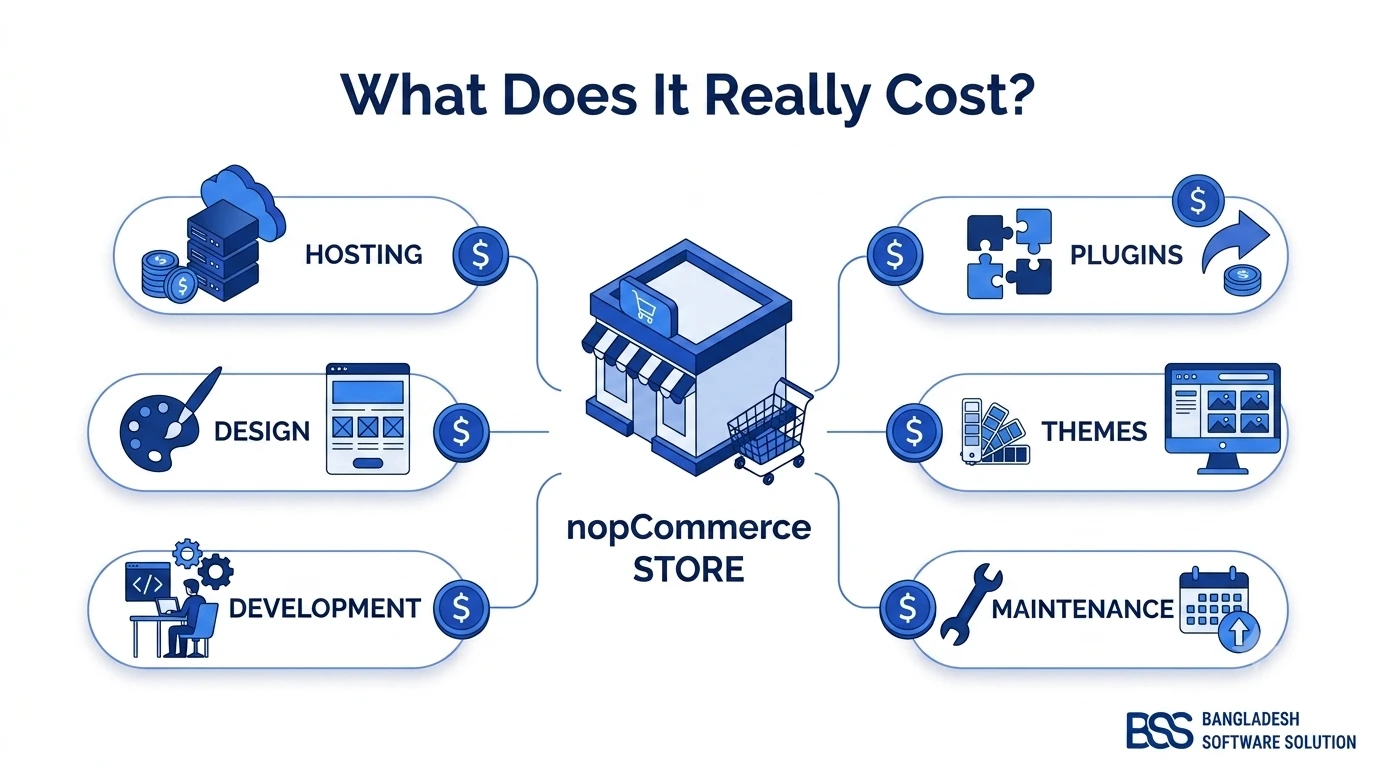
If the shortlist has come down to two .NET options, our nopCommerce and GrandNode comparison looks at the architecture behind the choice. For the budget side, what a nopCommerce store costs to build separates the parts that vary from the parts that do not.
Need a .NET Developer for Your Store? Hire the BSS Team
From custom plugins and checkout work to full store builds and upgrades, our dedicated nopCommerce engineers ship production-grade C# code. Tell us what you need and we'll match you with the right developer.
Frequently Asked Questions
Final Thoughts
Back to the store from the opening. The owner lists the integrations and finds that two of the three app fees cover needs a single custom plugin could meet. Before deciding, they ask a developer to price that plugin against a year of app invoices, and they write the scope down first.
For that store the answer is a .NET build with a named maintenance partner, and the shipping rules move into a plugin the team owns. A store with a standard catalog and no custom logic would reasonably stay on a hosted platform, and that is an equally good result. The point is to decide on who maintains the code, not on the feature list alone.
If you are at that point, talk to the BSS team about your integration list. It is the fastest way to find out which of those two outcomes fits your store.