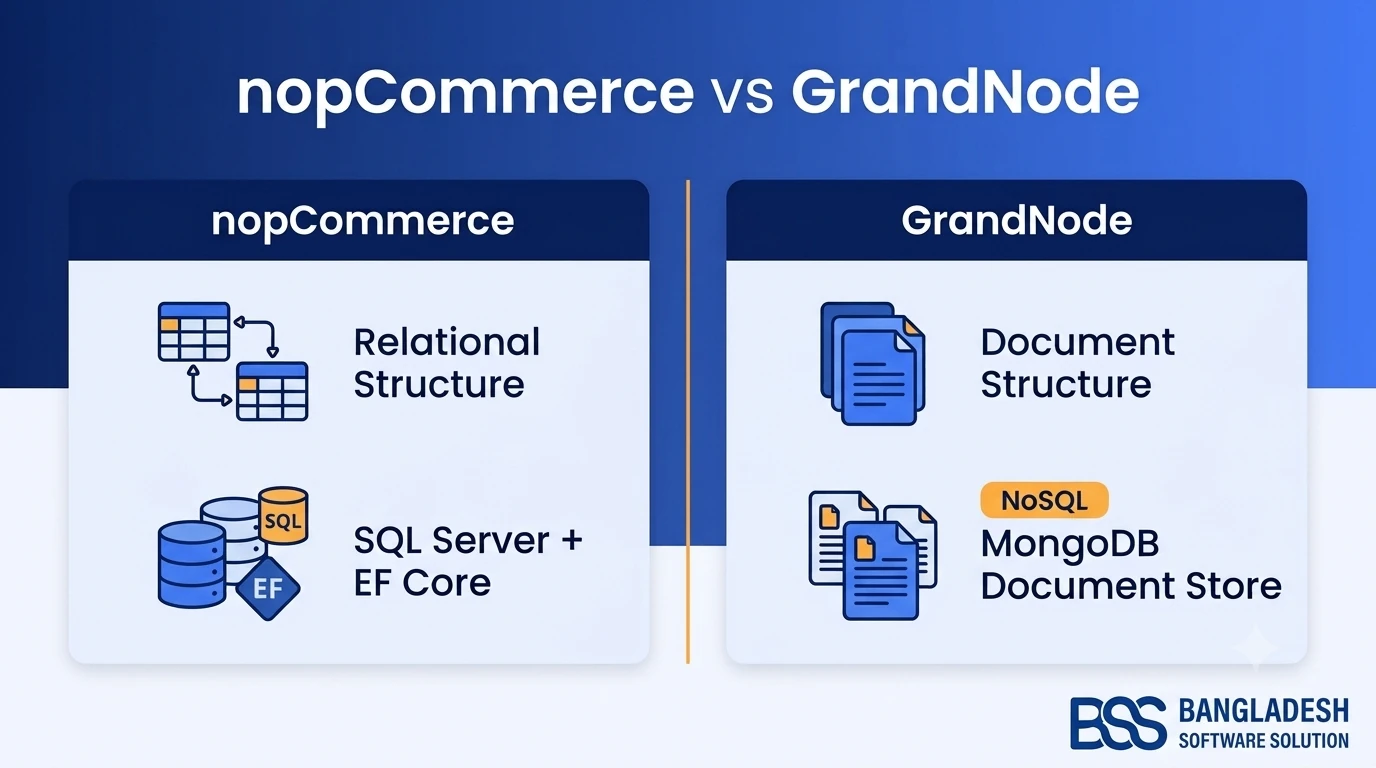
If you've narrowed a new .NET commerce build down to nopCommerce vs GrandNode, you've already ruled out the SaaS platforms and the PHP-based options — a reasonable move if source-code ownership and a Microsoft-stack team are non-negotiable for the project. What's less obvious going in is that these two platforms, despite sharing a runtime and, originally, a codebase, solve the core problem of "how do we store and query commerce data" in almost opposite ways.
In our deployments at BSS, we get asked this exact question by two very different kinds of teams: agencies scoping a new client build, and in-house engineering leads replatforming off a system that's outgrown its data model. Both groups usually arrive assuming this is a "which one has more features" comparison. It isn't — it's an architecture decision that will shape your hosting bill, your hiring pool, and your plugin options for years.
This guide walks through how nopCommerce and GrandNode actually differ under the hood, where each one is the stronger choice, and what total cost of ownership looks like once you're past the demo store.
What Is nopCommerce, Exactly?
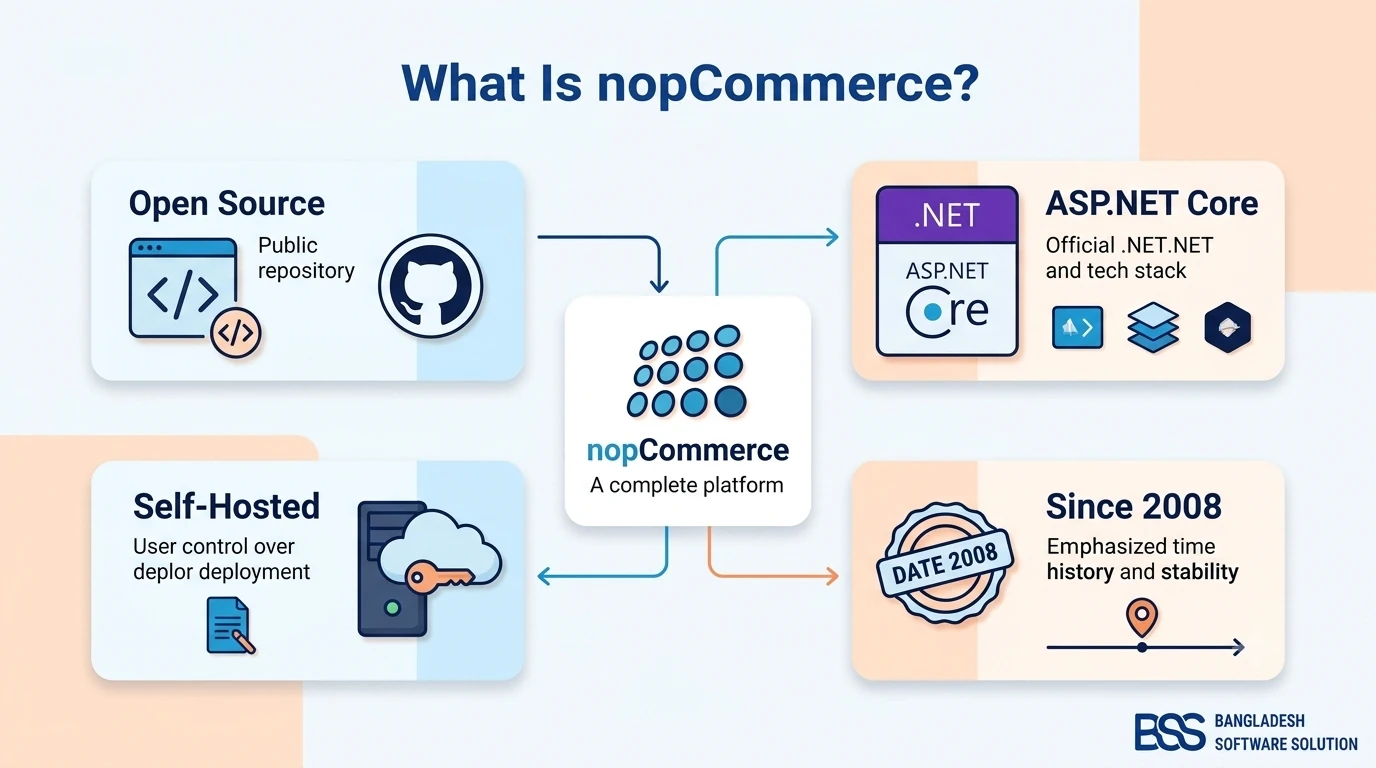
nopCommerce has been in active development since 2008, making it one of the longest-running open-source commerce platforms on the .NET stack. As of version 4.80, it runs on .NET 9 and uses Entity Framework Core in a code-first pattern — your product catalog, orders, and customers live in a conventional relational database, SQL Server by default, with community-supported drivers for MySQL and PostgreSQL.
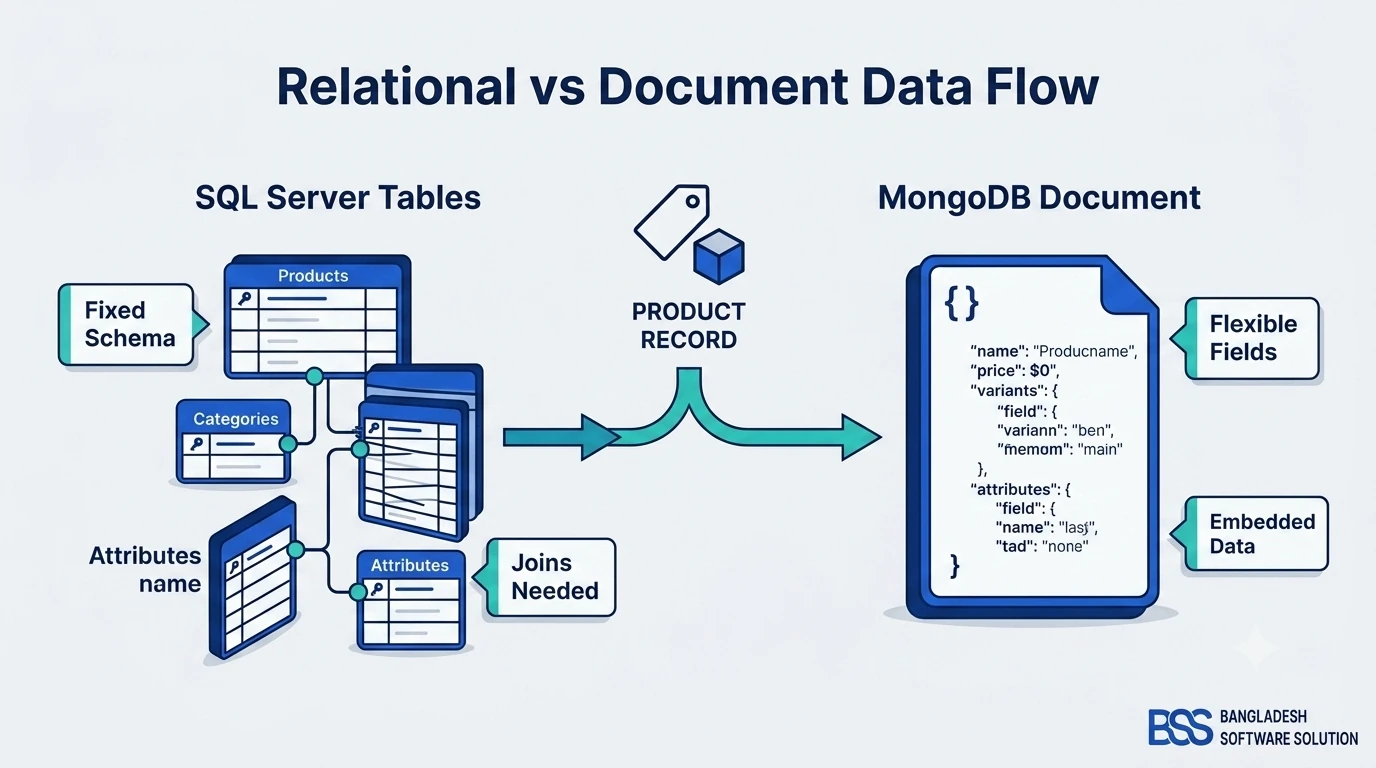
Key Fact: nopCommerce's data layer is relational and schema-defined. Every entity — product, order, customer, discount — maps to a fixed table structure that Entity Framework Core generates directly from your C# model classes.
That predictability is exactly why it pairs so cleanly with reporting tools, BI dashboards, and ERP integrations that already expect a conventional SQL schema.
If you want the fuller platform primer — install requirements, admin structure, and who it's built for — we've covered that separately in What Is nopCommerce? A Beginner's Guide. For this comparison, the part that matters most is the plugin architecture: nopCommerce plugins are compiled .NET assemblies that hook into a well-documented event and widget-zone system, and the official marketplace is large enough that most common integrations — payment gateways, shipping carriers, tax engines — already exist as a drop-in install.
What Is GrandNode, and How Did It Diverge From nopCommerce?
GrandNode's origin story is directly relevant here: per the project's own published history, its first release was literally a migration of nopCommerce onto MongoDB, built because the team found a full SQL Server instance too heavyweight for the kind of lean, document-oriented store they wanted to run. Ten releases and four years later, GrandNode's own maintainers describe the codebase as having diverged too far to still call it a fork — and GrandNode 2 makes that clear.
GrandNode 2 rebuilds the platform around a CQRS-style architecture — commands and queries routed through separate, mediator-driven pipelines — a headless-capable API layer, and MongoDB, with documented support for AWS DocumentDB and Azure CosmosDB as drop-in alternatives. Per GrandNode's own GitHub documentation, the current release targets .NET Core 9.0, so you're not sacrificing the modern .NET runtime to get the document-database model.
Architecture Showdown: Relational vs Document Database
This is the decision that cascades into everything else, so it's worth being precise about what actually changes underneath your application code.
What This Means for Caching and Performance
Both platforms cache aggressively by default, but the underlying story differs. nopCommerce leans on a conventional application-and-database caching split — we've written a full breakdown in our nopCommerce caching guide covering Redis, memory, and static cache layers. GrandNode's document model means fewer joins to cache around in the first place, but you're trading that for MongoDB-specific operational skills your team may not already have on staff.
Pro Tip: Test With Your Real Catalog Shape, Not a Demo Store
A common mistake we see when teams evaluate these platforms is benchmarking against the seeded demo catalog, which is small and uniform on both sides. Load your actual product data — including your messiest, most attribute-heavy category — into a trial instance of each before deciding. That's where the relational-vs-document trade-off actually shows up.
nopCommerce vs GrandNode, Feature by Feature
Use this as a working checklist rather than a scorecard — the "better" column depends entirely on which row matters most for your project.
| Decision Area | nopCommerce | GrandNode |
|---|---|---|
| Data layer | Relational (SQL Server, EF Core) | Document (MongoDB, DocumentDB, Cosmos DB) |
| Plugin & theme ecosystem | Larger marketplace — most common integrations exist off the shelf | Smaller catalog; more custom development for niche integrations |
| Multi-store / multi-tenant | Supported, configured on a shared schema | Native design goal from the ground up |
| Headless / API access | Available via a Web API extension | Built in as a first-class layer |
| Hosting requirements | Standard: IIS/Windows or Linux + SQL Server | Needs a MongoDB-compatible service alongside the .NET app |
| Learning curve for .NET teams | Lower — conventional EF Core patterns most .NET developers already know | Steeper — requires MongoDB modeling and query experience |
| Community & documentation | Larger, more mature forums, docs, and third-party guides | Smaller but active community; documentation is thinner in places |
| Best fit | Conventional stores, B2B catalogs, teams that want ecosystem depth | Highly variable catalogs, headless/composable builds, multi-tenant SaaS-style deployments |
Our nopCommerce marketplace guide goes deeper on vetting and buying plugins if the ecosystem row is the deciding factor for your team — it's usually the row that matters most once a store is live and you're fielding "can we integrate with X" requests every quarter.
Choosing the Right Platform for Your Store
To solve this efficiently, the best approach is to score your project against a short list of concrete signals rather than a vague "which one feels more modern" gut check.
Run Your Project Through This Checklist
-
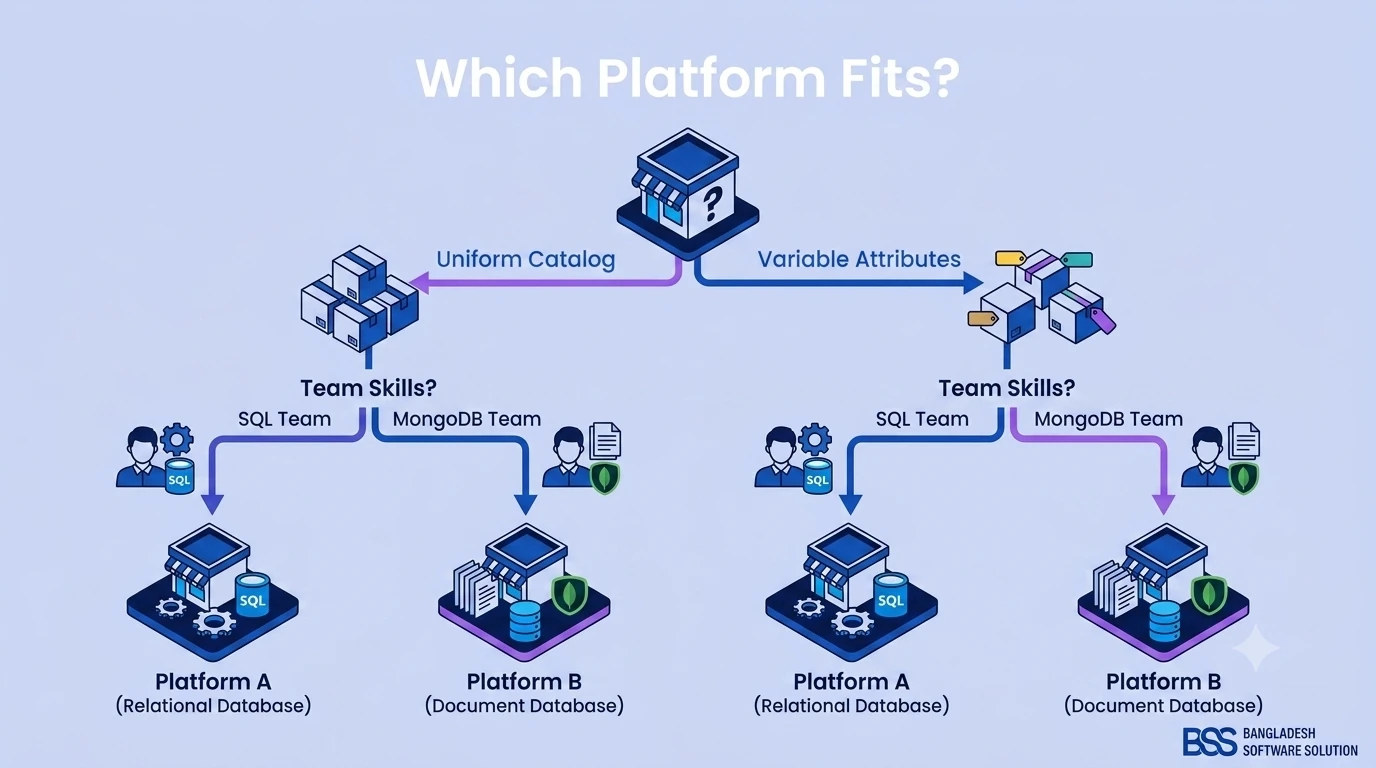
✓Catalog shape: if most products share the same attribute set, nopCommerce's relational model is simpler to maintain. If attributes vary wildly by category or vendor, GrandNode's document model earns its keep.
-
✓Team's existing skills: a team fluent in EF Core and SQL Server will ship faster on nopCommerce. A team already comfortable with MongoDB won't lose time on GrandNode's data layer.
-
✓Multi-store or multi-tenant needs: if you're standing up separate storefronts for multiple brands or clients from one deployment, GrandNode's native multi-tenant design saves real engineering time.
-
✓Third-party integration count: the more off-the-shelf payment gateways, shipping carriers, and tax plugins you need, the more nopCommerce's larger marketplace works in your favor.
-
✓Headless or decoupled frontend plans: if a React, Vue, or mobile-first frontend calling a commerce API is the end goal, GrandNode's API-first layer needs less retrofitting.
-
✓Hiring and long-term support: a larger nopCommerce talent pool and community make it easier to backfill a role or get an unusual bug answered quickly.
Already Leaning nopCommerce? Let BSS Build It Right the First Time
Once you've weighed the trade-offs, the harder part is execution — clean plugin architecture, a performant catalog, and a store that doesn't need a rebuild in two years. Our nopCommerce engineers handle everything from platform setup to custom plugin development, so you launch on solid architecture instead of retrofitting it later.
Migration Paths and Total Cost of Ownership
Neither platform charges a core license fee — that part of the "open source" pitch holds for both. Where total cost of ownership actually diverges is hosting and staffing.
nopCommerce's SQL Server dependency is well-trodden ground: shared hosting, IIS, and managed SQL Server instances are commodity services that most .NET-friendly hosts already offer. GrandNode adds a MongoDB-compatible service to the stack — self-hosted, or a managed option like Atlas or Azure Cosmos DB — which is a well-supported but genuinely separate line item and skill set from a typical ASP.NET hosting setup.
If you're migrating an existing nopCommerce store rather than starting fresh, moving to GrandNode means re-modeling every relational table as a document schema — not a drop-in port. We break down what a realistic build budget looks like on the nopCommerce side in How Much Does a nopCommerce Store Cost to Build?, and the same budgeting discipline applies to a GrandNode build: get a concrete quote against your actual catalog and integration list before comparing sticker prices.
Frequently Asked Questions
Final Thoughts
Neither platform is objectively "better" — they were built to answer different questions. nopCommerce answers "how do we run a conventional store with deep integrations and a large support ecosystem," while GrandNode answers "how do we run a flexible, API-first, multi-tenant catalog without fighting a rigid schema."
For most teams building a standard B2B or B2C storefront on the .NET stack, nopCommerce's ecosystem depth and lower learning curve make it the safer default — which is also where our own engineering practice is deepest. If your project genuinely needs GrandNode's document-first, multi-tenant architecture, that's a legitimate call too; just budget for the steeper MongoDB learning curve going in, not after launch.
Whichever direction you're leaning, get the architecture decision reviewed before you write the first line of custom code — it's far cheaper to change your mind on paper than after six months of development.