The warning sign is rarely traffic. It is the spreadsheet beside the store: one tab translating supplier specifications, another correcting stock, and a third explaining which app owns each checkout rule. The storefront still works, but every new product line makes it harder to operate.
That is the right moment to compare Shopify alternatives—not because Shopify cannot scale, but because your operating model may need a different kind of control. For electronics sellers, the real test is how a platform handles technical product data, variants, compatibility, inventory, search and back-office integration together.
What “Scalable” Means for an Electronics Store
A platform is scalable when catalog and order complexity can grow without multiplying manual work. Before comparing names, test five things: structured specifications; variant and bundle logic; faceted search and comparison; warehouse-aware availability; and reliable ERP, PIM, marketplace and service integrations.
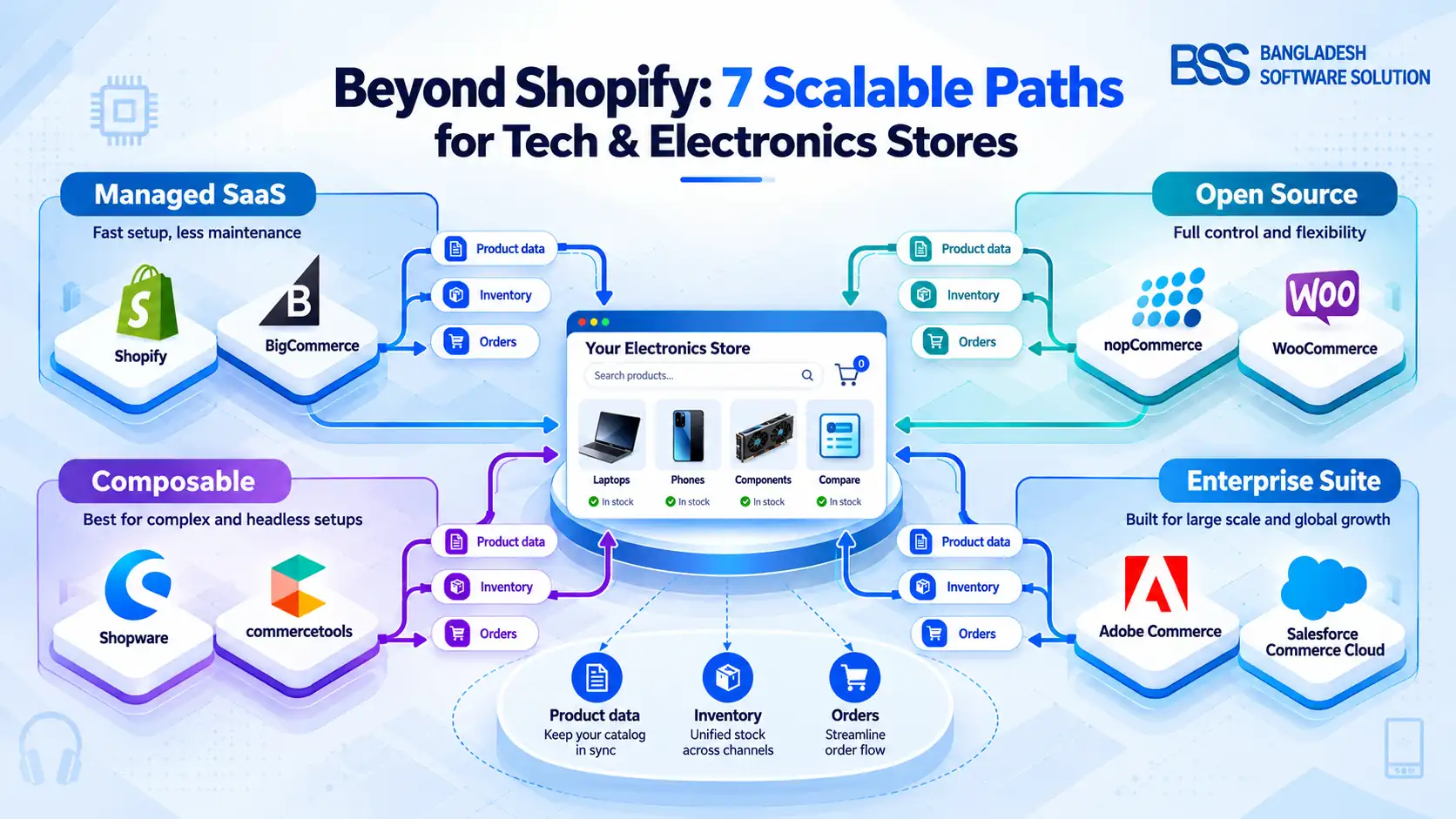
Also decide who should own the infrastructure. Managed SaaS reduces operational responsibility. Open-source platforms exchange that convenience for code, database and hosting control. Composable platforms provide APIs and services, but require a team capable of assembling and operating the storefront.
Seven Credible Shopify Alternatives, Compared
| Platform | Strongest fit | Why it scales | Main trade-off |
|---|---|---|---|
| nopCommerce | Custom B2C/B2B stores on .NET | Open source; multi-store, multi-warehouse, attributes and plugin architecture | Your team owns hosting, updates and engineering |
| BigCommerce | Managed mid-market commerce | Open SaaS model, Multi-Storefront and B2B options | Deep requirements remain plan and integration dependent |
| WooCommerce | Content-led WordPress businesses | Open ecosystem and dedicated high-performance order storage | Extension quality and hosting discipline shape results |
| Adobe Commerce | Complex enterprise and B2B catalogs | Company accounts, shared catalogs, customer pricing and rich merchandising | Higher implementation and operational overhead |
| Shopware | Experience-led B2C/B2B commerce | API-first core, rules, automation and modular B2B capabilities | Feature availability varies by edition and plan |
| commercetools | Composable, multi-channel programs | Store-context APIs project locale, price and inventory by channel | You must assemble and run the customer experience |
| Salesforce Commerce Cloud | Large Salesforce-centered organizations | Commerce APIs, catalog models, inventory tools and enterprise services | Best justified when the wider Salesforce ecosystem matters |
Where Each Alternative Earns Its Place
- nopCommerce: a strong fit when product rules and integrations are genuinely proprietary. The source, database and hosting remain under your control, while attributes, warehouses and multiple storefronts provide a useful commerce foundation.
- BigCommerce: the closest operational substitute for teams that still prefer SaaS. Its value is reducing infrastructure work while offering multi-storefront and B2B paths beyond a simple direct-to-consumer setup.
- WooCommerce: sensible when editorial content and WordPress are central to acquisition. High-Performance Order Storage improves the order-data foundation, but plugin compatibility, hosting and performance engineering remain part of the operating model.
- Adobe Commerce: built for organizations that can justify a substantial commerce program. Company accounts and shared catalogs support complex B2B pricing, although implementation skill and ongoing platform care should be budgeted from the start.
- Shopware: worth examining when merchandising, rules and B2B workflows need to evolve together. Its advanced search and B2B components are attractive, but buyers should map required capabilities to the correct edition before estimating cost.
- commercetools: appropriate when commerce is one service inside a broader digital architecture. Its APIs can project products by store, locale, price and supply channel; the storefront and orchestration are still your responsibility.
- Salesforce Commerce Cloud: strongest when customer, service, marketing and commerce already converge inside Salesforce. Its APIs and catalog tools are capable, but the business case should depend on ecosystem value—not brand recognition alone.
How the Shortlist Changes by Operating Model
In BSS discovery sessions, the decisive question is often not “Which platform has this feature?” It is “Where will this rule live, and who can change it safely?” An app-dependent feature, a core capability and custom code create very different maintenance obligations.
Why nopCommerce Deserves a Place on the Electronics Shortlist
nopCommerce is particularly credible when the store needs direct control over specifications, pricing, checkout rules, warehouse behavior or integrations—and the business already works with Microsoft technologies. Its official feature set includes multi-store, multi-vendor, product attributes and multi-warehouse support without turning the core platform into a subscription.
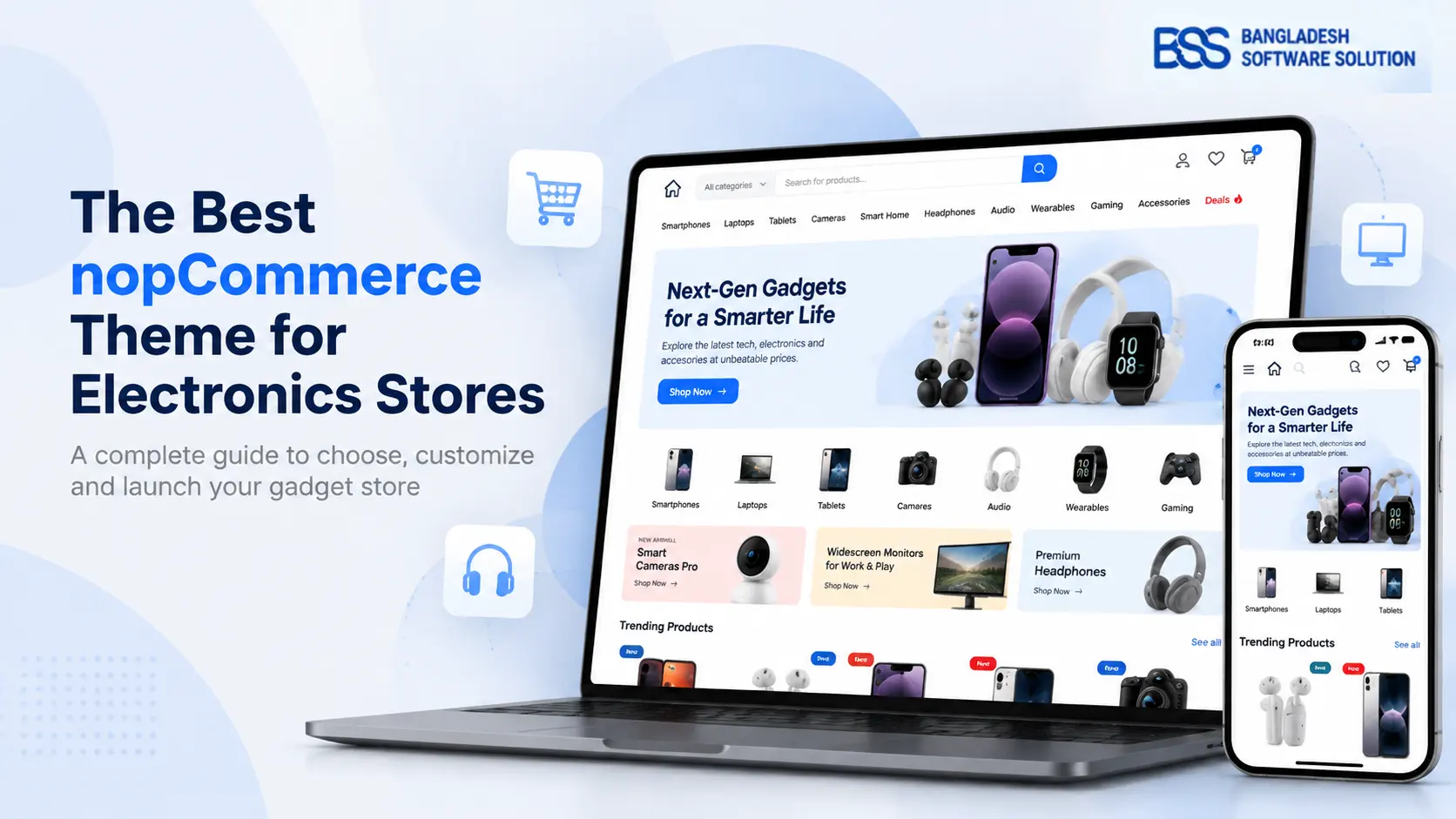
The platform still needs a capable storefront. The nopGadget Theme + 18 Plugin Bundle addresses electronics-specific discovery with Advanced Product Compare, AJAX Filter, Quick View, Product Box, Dynamic Image Gallery and One-Page Checkout. Its Visual Editor and Theme Builder also reduce routine design dependence.
Do not compare a bare platform with a finished Shopify store
Compare the complete operating stack: theme, search, product data, integrations, hosting, monitoring, upgrades and the people responsible for each one.
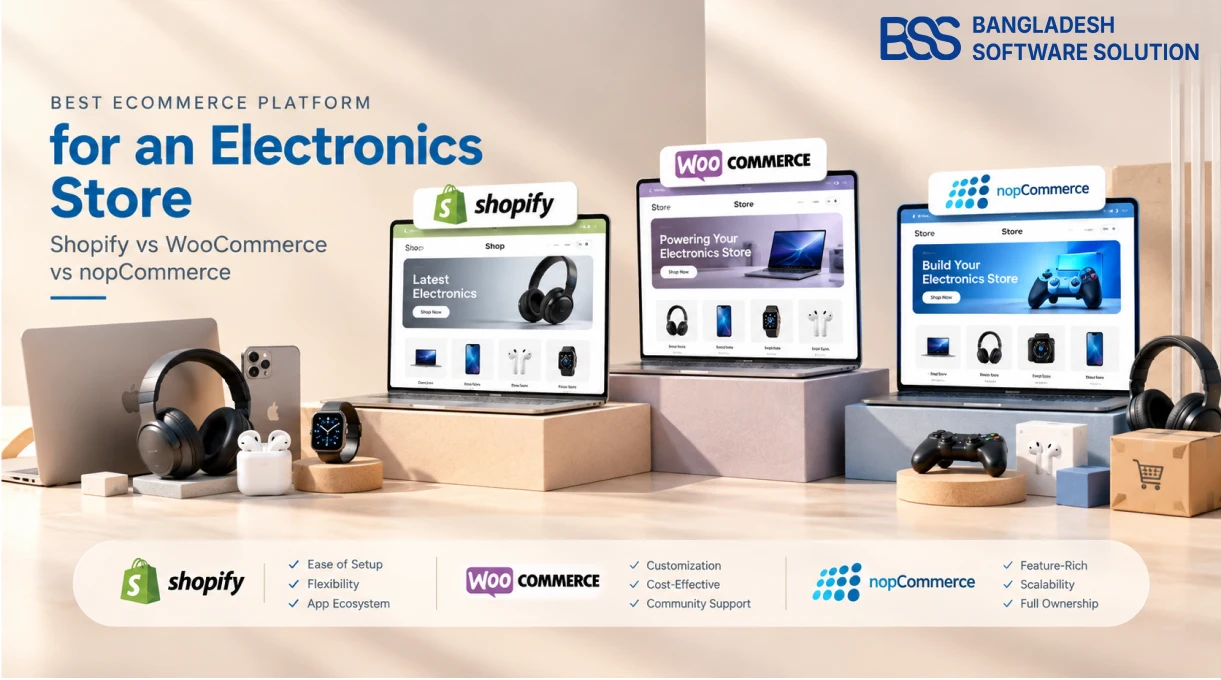
If nopCommerce is already on your shortlist, use our electronics-platform comparison to test it directly against Shopify and WooCommerce.
Turn nopCommerce Into a Product-Discovery Experience
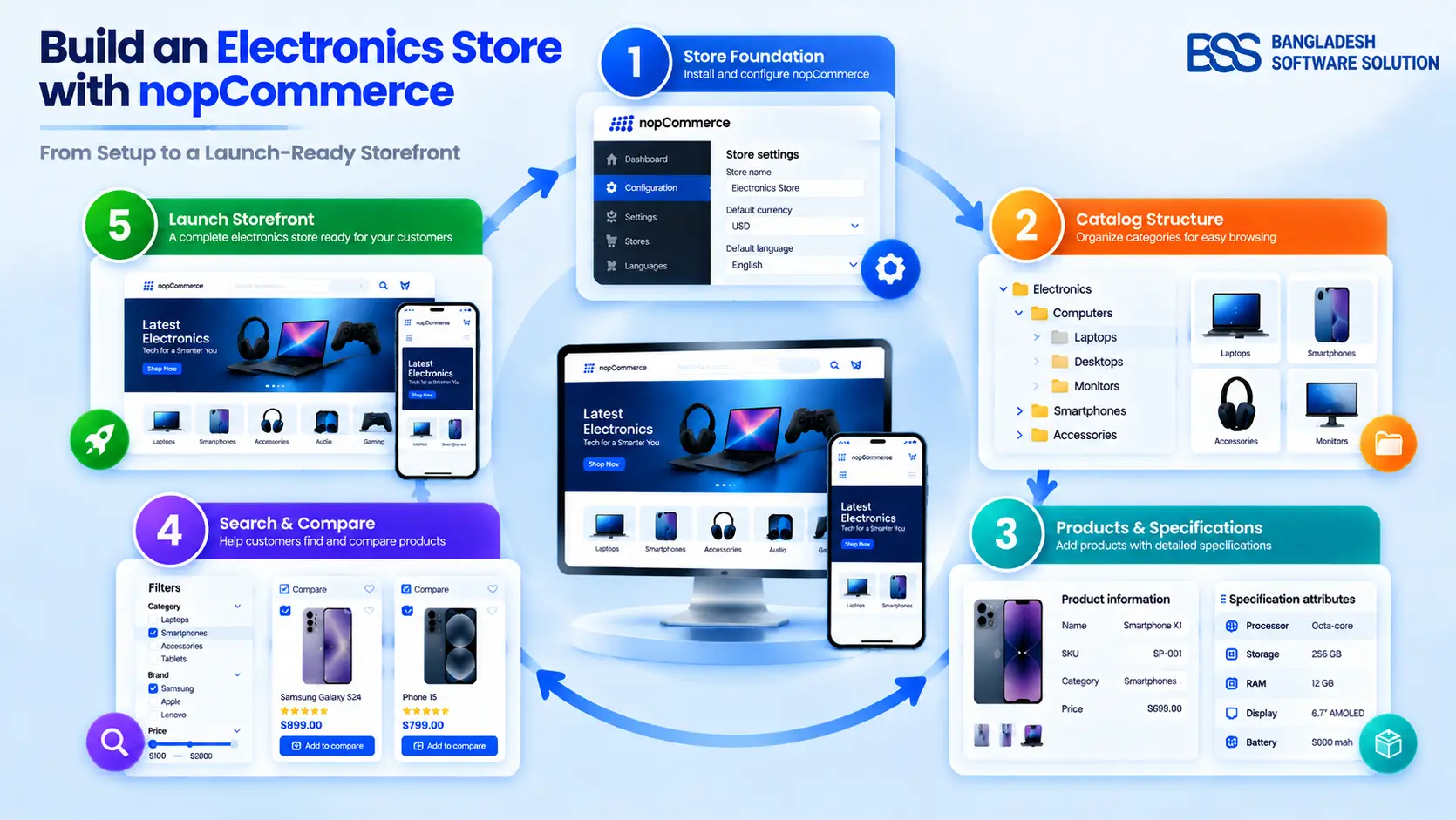
nopGadget combines an electronics-focused theme with 18 plugins for comparison, filtering, product imagery, checkout, content editing, SEO and store operations.
Make the Decision With Evidence From Your Own Store
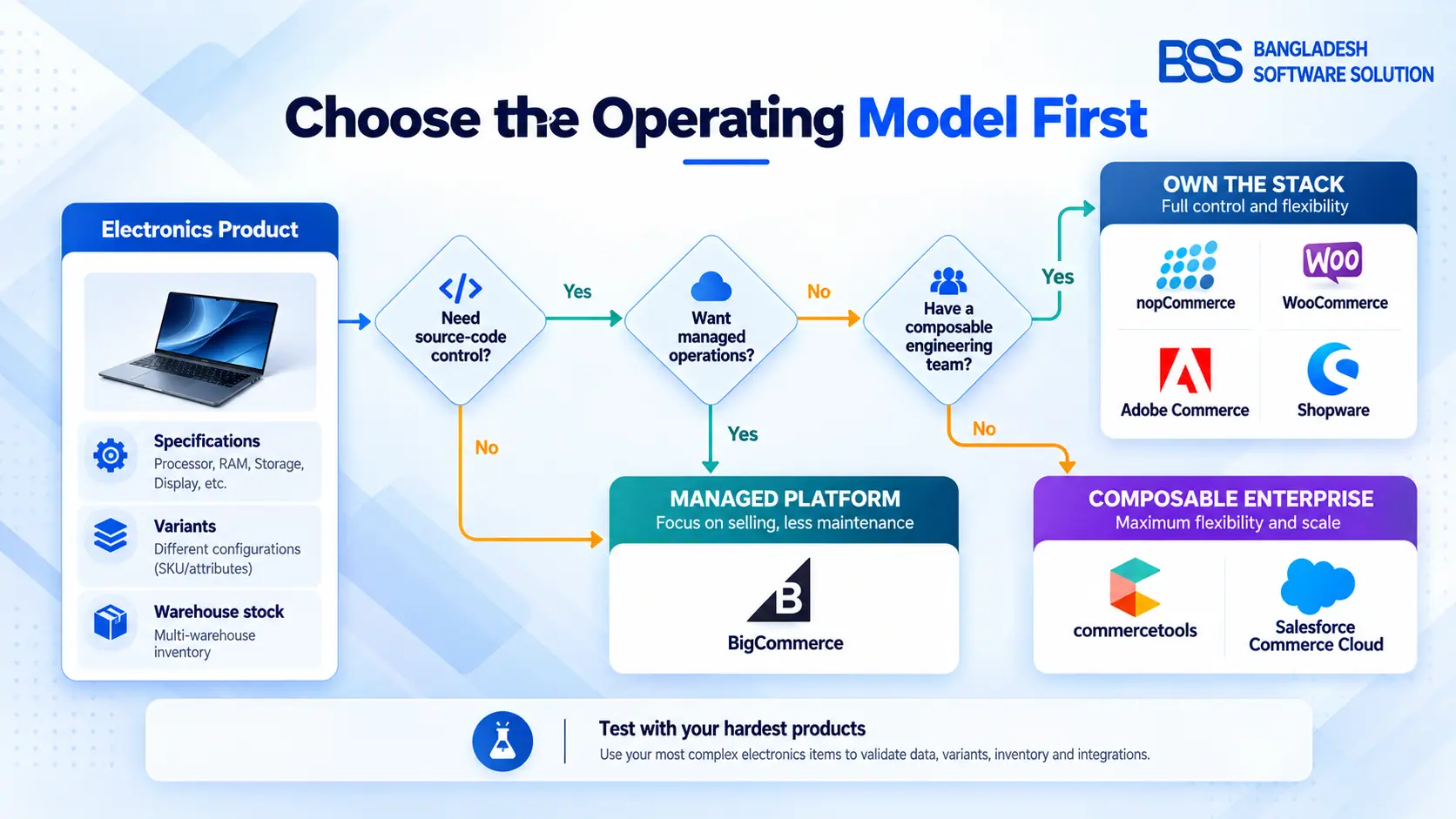
Run this test before requesting proposals
- 1Export twenty difficult products, including variants, bundles and incomplete supplier data.
- 2Document every system that reads or writes price, stock, customer and order data.
- 3Prototype search, comparison, compatibility and mobile product pages with real content.
- 4Price implementation, licenses, hosting, extensions, support and upgrades for three years.
If migration becomes the sensible path, our Shopify-to-nopCommerce migration guide covers data mapping, redirects and launch validation.
Frequently Asked Questions
The Best Alternative Removes the Spreadsheet
Return to the store held together by supplier tabs and app notes. The right replacement is the platform that turns those exceptions into governed product data and reliable workflows. Shortlist by operating model, test with difficult products, and price the full stack—not the demo.