Every AI chatbot sales page seems to promise the same thing. Four times the conversions, a quarter more per order, sales that grow while you sleep.
If you've tried to trace those numbers back to a real study, you know how that usually ends. Most lead to another vendor's blog, a case study with no comparison group, or nothing at all.
We build an AI chat plugin with product recommendations at BSS, so we wanted a straight answer too. This guide looks at what the careful studies found about AI chatbot product recommendations, where they help, where they hurt, and how to test one fairly on your own store.
What the Best Studies Actually Found
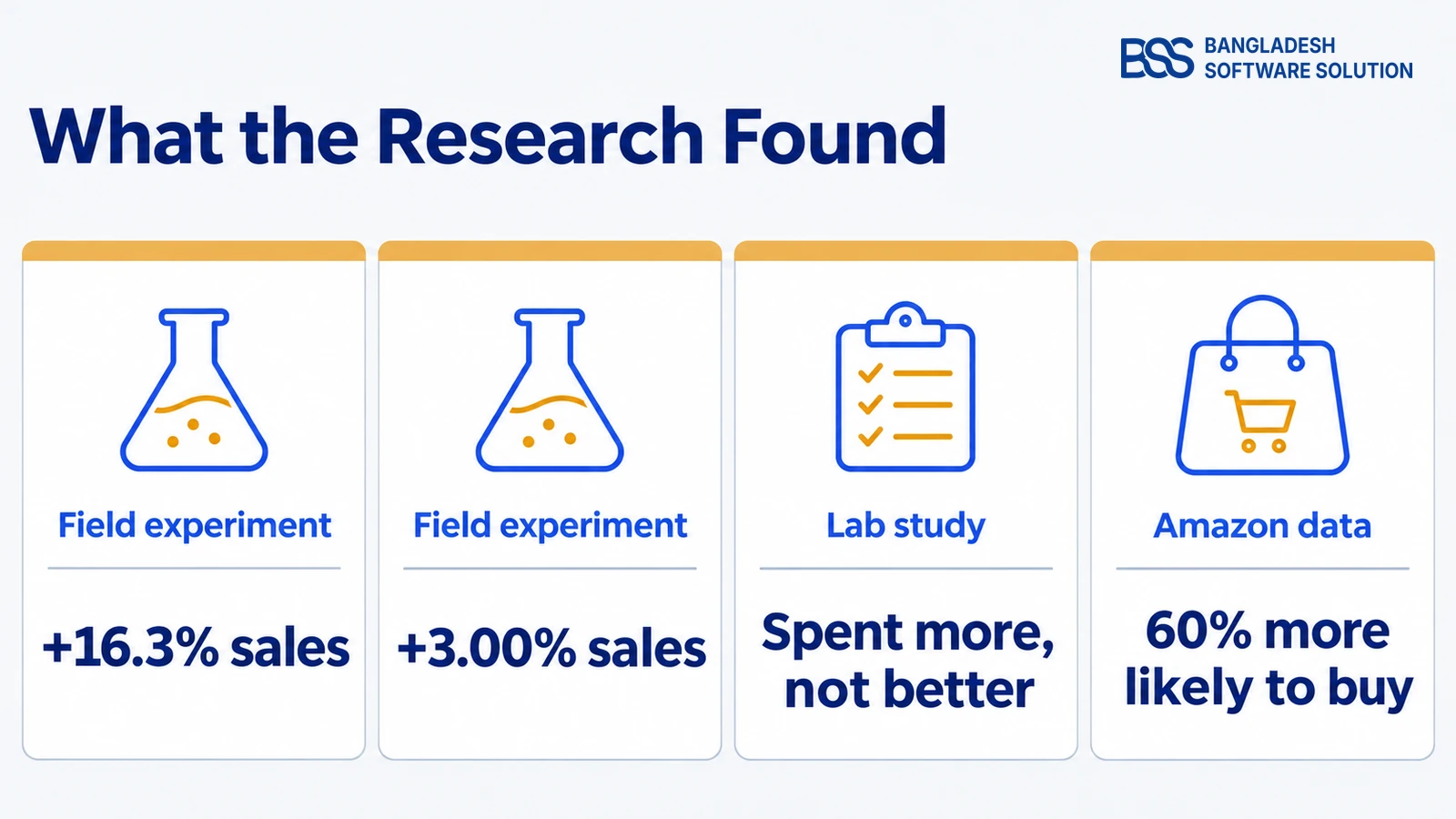
The short answer is yes, AI chatbots can increase sales. But the gains in careful studies are smaller and more specific than the marketing suggests.
The strongest evidence: randomized field experiments
In a set of seven field experiments, Fang and colleagues tested generative AI on a large cross-border online retailer. Shoppers were randomly given the AI version or the normal one, so the results show cause, not just correlation.
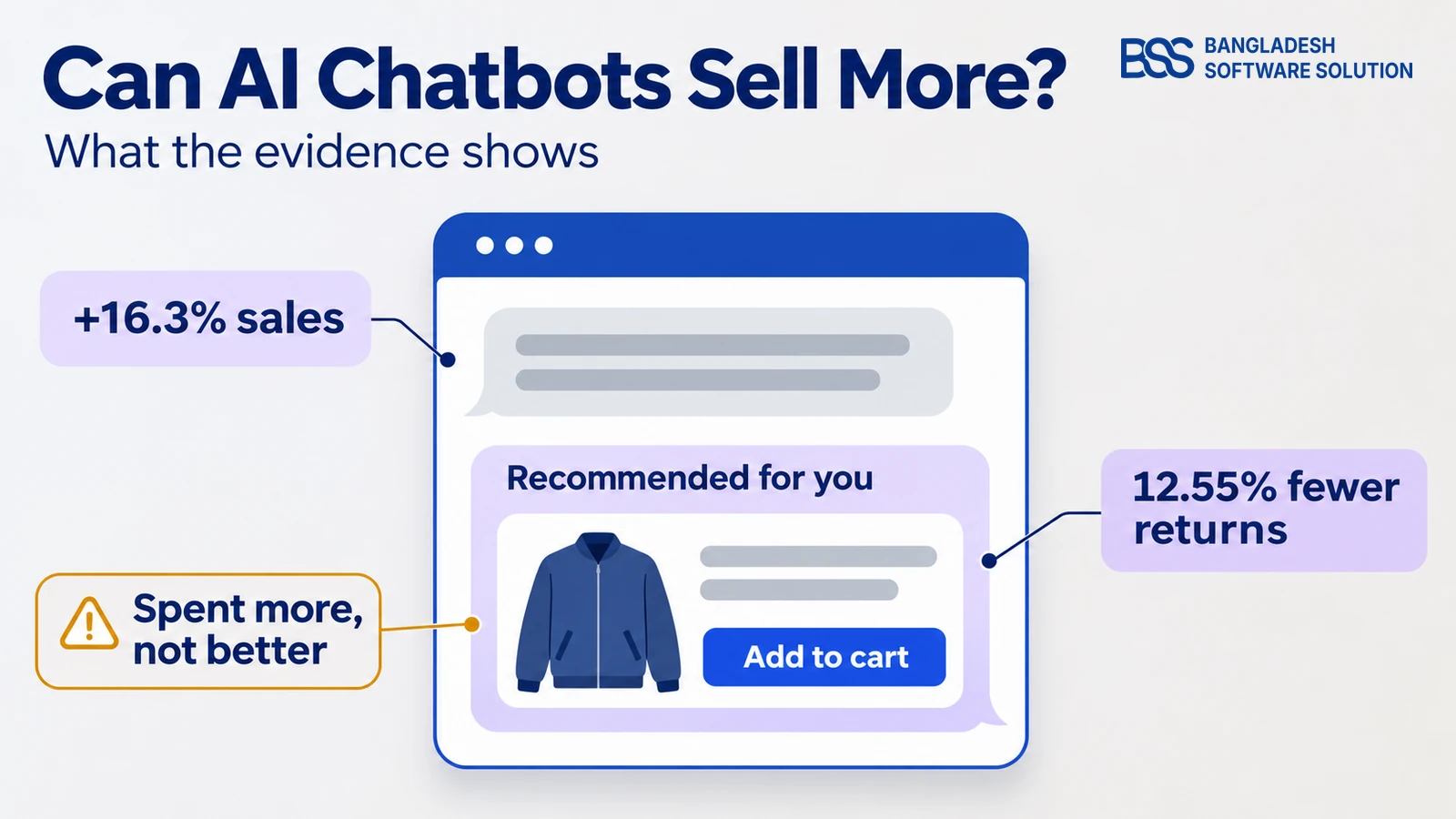
The pre-sale chatbot did best, lifting sales by 16.3% and conversion by 21.7%. One catch matters: the comparison group got no live help at all, just an automatic "service unavailable" reply.
Gains came from more people buying, not bigger baskets, and returns and ratings didn't get worse. Across the AI tools that worked, the authors put the extra value at roughly $5 per customer a year, which is a useful yardstick for what a bot might be worth to you.
A second randomized experiment, by Wang and colleagues in Information Systems Research, gave shoppers on a large livestream selling platform an AI assistant. Sales rose 3.00% and return rates fell 12.55%, and the assistant only helped with products that are hard to judge before buying.
The big-company data: Amazon's assistant
Amazon says shoppers who use its Rufus assistant are 60% more likely to complete a purchase, and expects over $10 billion a year in extra sales from it. Those are real figures from Amazon's 2025 earnings call, as Fortune reported.
But they compare people who chose to use the assistant with people who didn't. Shoppers who ask questions are often closer to buying already, so this shows correlation, not proof.
Wondering if AI recommendations would pay off for your store? Tell us your products and traffic, and the BSS team will give you an honest view.
Talk to the BSS teamWhy Most Chatbot Sales Numbers Mislead
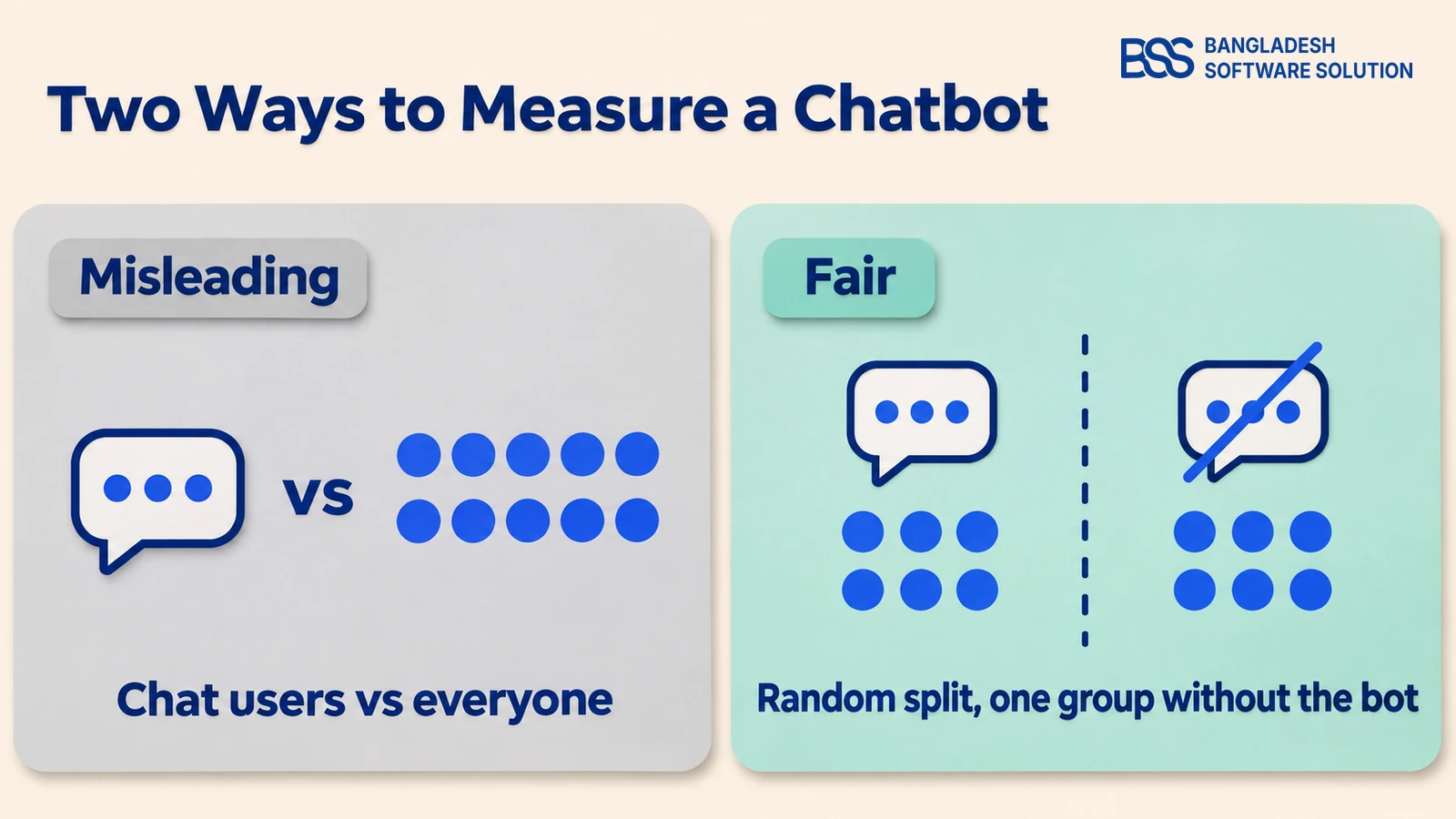
So why do vendor figures look so much bigger? Usually it's how they're measured, not dishonesty.
Take the "23% more conversions" figure that appears on many chatbot pages. It compares sites with and without chatbots, and none of the copies we checked led back to a primary study.
The field experiments avoid all three by splitting shoppers at random. That's why their numbers are smaller, and why you can trust them more.
Also watch what the bot is compared with. The 16.3% lift was against no live help at all.
Against human agents in the same study, the chatbot made no significant difference. A bot beats silence easily, but not necessarily a good team.
Where Recommendations Help, and When They Hurt
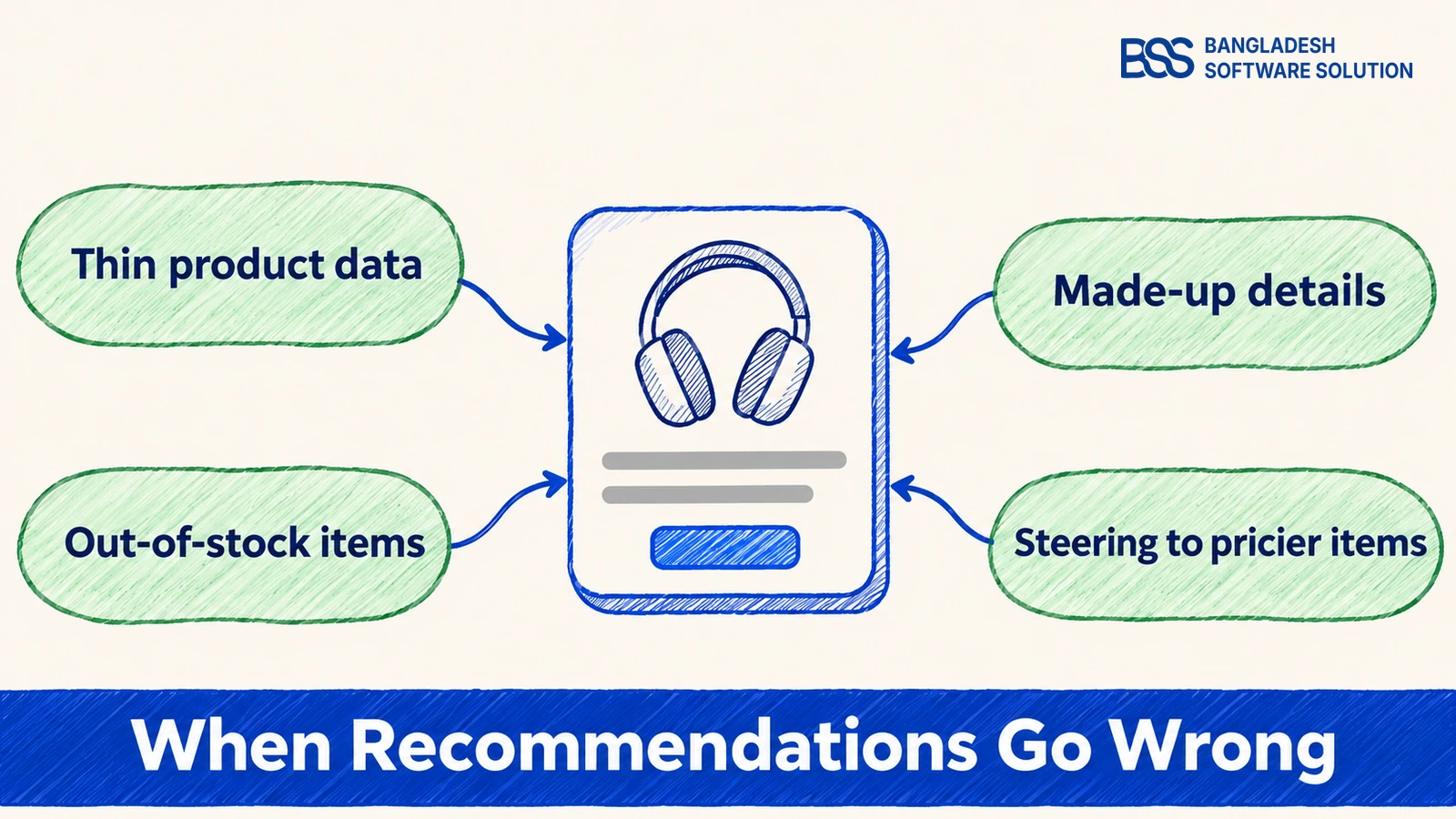
The research points to a clear pattern. AI recommendations help most when shoppers are unsure, and they stop helping when the advice can't be trusted.
Where they help
In the Wang study, the assistant only worked for products with more uncertainty, the kind where fit, specs or quality are hard to judge from a photo. In Fang's experiments, less experienced shoppers gained the most.
So think clothing sizes, technical parts, skincare and gifts. A store selling simple, well-known items may get more from better filters and search than from a chatbot.
When they hurt
A lab study by researchers at ETH Zurich and the University of Haifa gave 265 people a real budget to buy clothing. Those shopping with ChatGPT or Gemini spent more than those using normal search, but got no better products.
They also trusted the result less. The authors wrote about it for ProMarket.
That's a warning for store owners. A bot that nudges people towards pricier items might lift one order, then cost you trust, returns and repeat customers.
Privacy matters here too. If a bot uses browsing history or past orders to personalise its suggestions, that's personal data. Say so in your privacy policy, and in the EU make sure any tracking it relies on has cookie consent.
Product data a recommendation bot needs
-
Complete specifications for every product, not just a title and a photo.
-
Accurate, live stock levels, so it never recommends something you can't ship.
-
Sizing and fit details for clothing and shoes, and compatibility for parts.
-
Clear rules on what it may suggest, such as never pushing a dearer item without saying why.

When we test AI recommendations on stores, the biggest gains come from fixing product data first. A bot can only recommend well from good product specification tables, and those help shoppers who never open the chat too.
How to Test It Fairly on Your Own Store
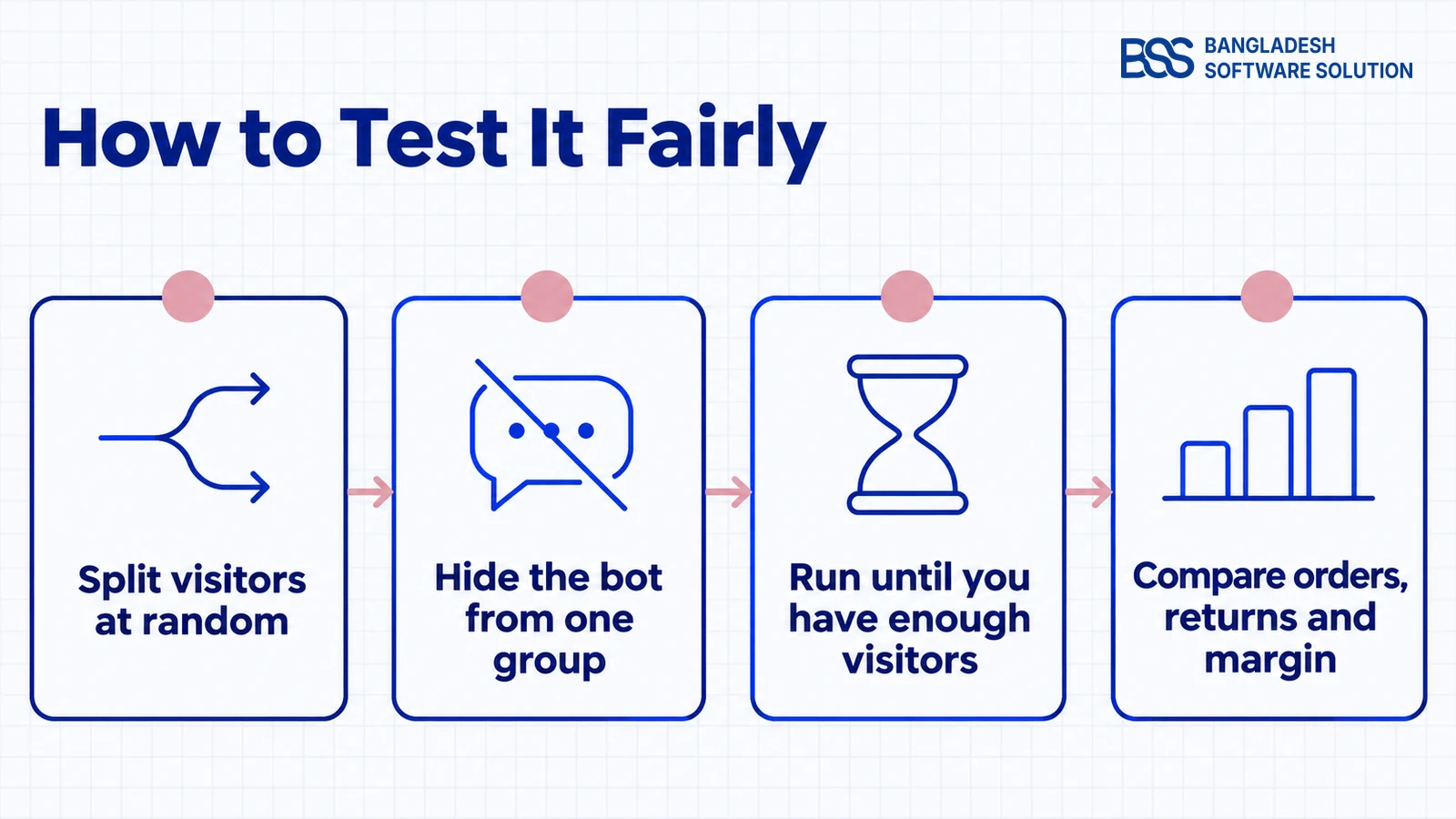
The only way to know what a bot does for your store is to test it the way the researchers did. That means a holdout test: show the bot to a random half of visitors and hide it from the other half.
Then compare the two groups on orders, revenue, returns and margin, not chats or "assisted revenue". Split by visitor, not by page view, so the same person always sees the same version.
Margin is the number that pays the bills. Take away discounts the bot offered, the cost of extra returns and what you pay for AI usage, then see what's left. A bot that adds revenue but gives away margin isn't a win.
How much traffic you need
Here's the part nobody mentions. Small lifts need a lot of visitors to detect. These figures use a standard statistical test (95% confidence, 80% power) and a 2% conversion rate.
| Lift you want to detect | Visitors needed in each group |
|---|---|
| 20% more orders | About 21,100 |
| 10% more orders | About 80,700 |
| 3% more orders | About 867,000 |
So a store with 20,000 visitors a month can spot a big effect in about two months, but not a 3% one. If your traffic is small, test on the product categories where advice matters most, and look for large effects.
If you'd like help setting up a fair test, our team can build the holdout and the reporting on your store.
Should Your Store Add AI Recommendations?
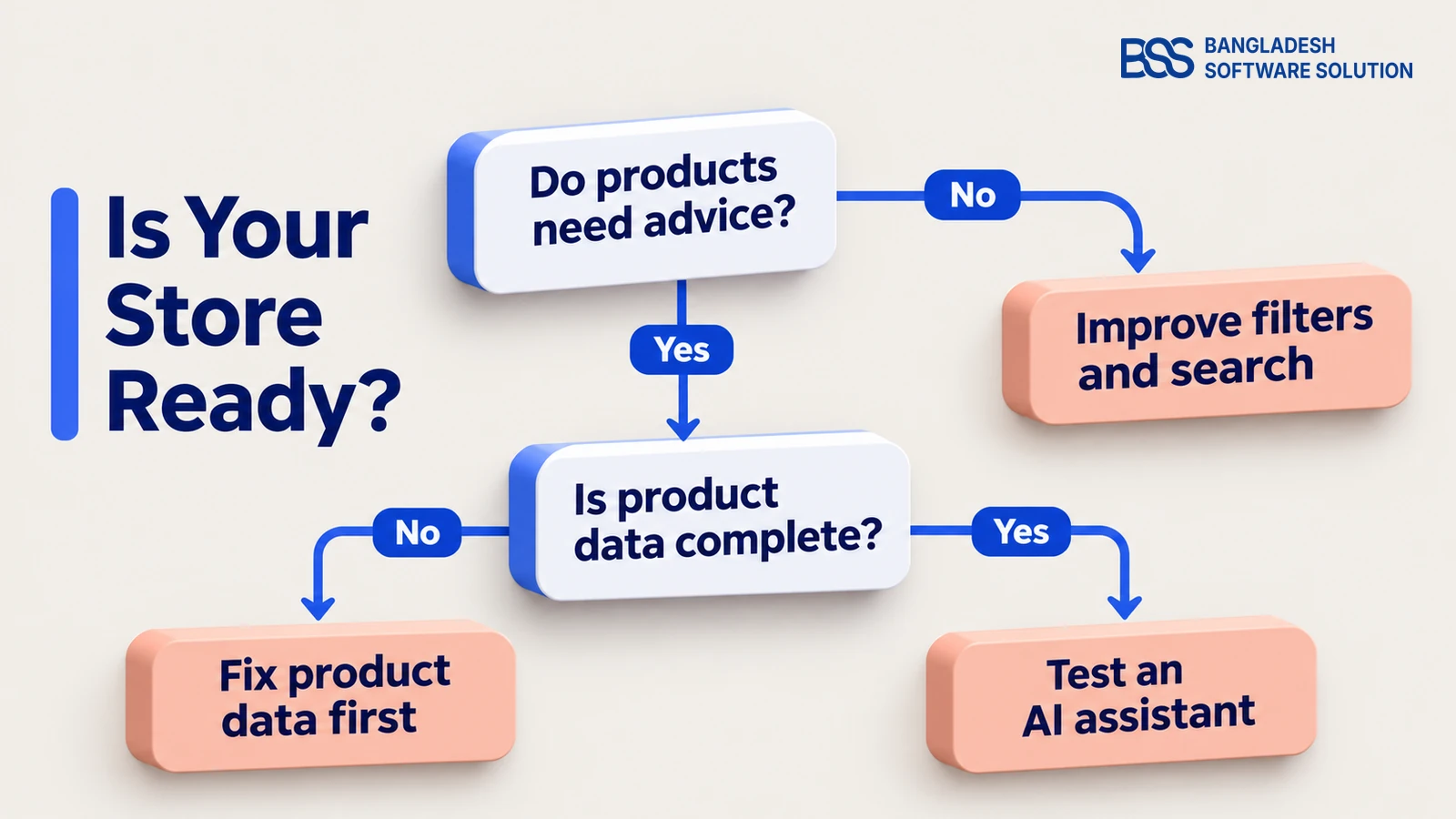
Put the evidence together and the decision gets simpler. Ask whether your products need advice, and whether your product data is good enough to give it.
- Products need little advice: improve filters and search first. A chatbot adds less here.
- Products need advice, but data is thin: fix specifications, sizing and stock first, or the bot will guess.
- Products need advice and data is solid: test an AI assistant with a holdout, and keep a person within reach.
Two details are easy to miss. On phones, show one or two recommended products at a time with a clear Add to cart, because a long scrolling list inside a chat window gets ignored. For B2B buyers, make sure suggestions respect account prices and past orders, or send those questions to a person.
On nopCommerce, version 5.0 added AI recommendation features, which our guide to what's new in nopCommerce 5.0 covers. You can also add recommendations inside a chat, where a shopper can ask questions first.
Recommends products with add to cart inside the chat, and logs the catalog data behind each answer so you can check what it suggested and why.
View the plugin
Connecting a bot to live stock and order data is where most of the work sits. If your store needs that built, you can hire a .NET developer from BSS for it.
Want AI Recommendations You Can Measure? Work With the BSS Team
From cleaning product data to connecting live stock and setting up a fair holdout test, our engineers build AI features for nopCommerce stores and show you what they actually do.
Frequently Asked Questions
Final Thoughts
So, can an AI chatbot recommend products and increase sales? Yes, and the best studies prove it. Just not by four times, not for every store, and not without good product data behind it.
Use AI recommendations where shoppers genuinely need advice, keep a person within reach, and measure with a fair holdout. Do that, and you'll know your real number, not a vendor's.
Tell us about your products and traffic. We'll help you prepare the data, set up recommendations and run a test that shows the real result.
Book a free consultation