Key takeaways
- There are four ways to hire: a freelancer, an agency, a dedicated developer or an in-house hire. The right one depends on how long the work lasts and who will direct it.
- Hire for your platform. A nopCommerce, WooCommerce and Shopify developer have different skills.
- Vet with two live stores, a code sample and a small paid task, and walk away from the five red flags below.
Search for an ecommerce developer and you get marketplaces, agency pages and lists, all saying they are the best. None of them says how to tell, and the cost of a wrong hire is a half-built store and a lost quarter.
We are BSS, and we build on nopCommerce, WooCommerce and Shopify, so we have a stake in this answer. Read the advice below as the checklist we would use if we were hiring, and use it on us too.
Short answer: hire for the platform, not the job title. Use a freelancer for a small fixed job, an agency for a project that needs design and management, a dedicated developer for ongoing work, and an in-house hire when the store is your core product. Vet with live stores, a code sample and a paid trial.
Hiring for a dedicated, full-time role? Our guide to hiring dedicated developers covers how that model works week to week.
Four Ways to Hire: Freelancer, Agency, Dedicated Developer or In-House
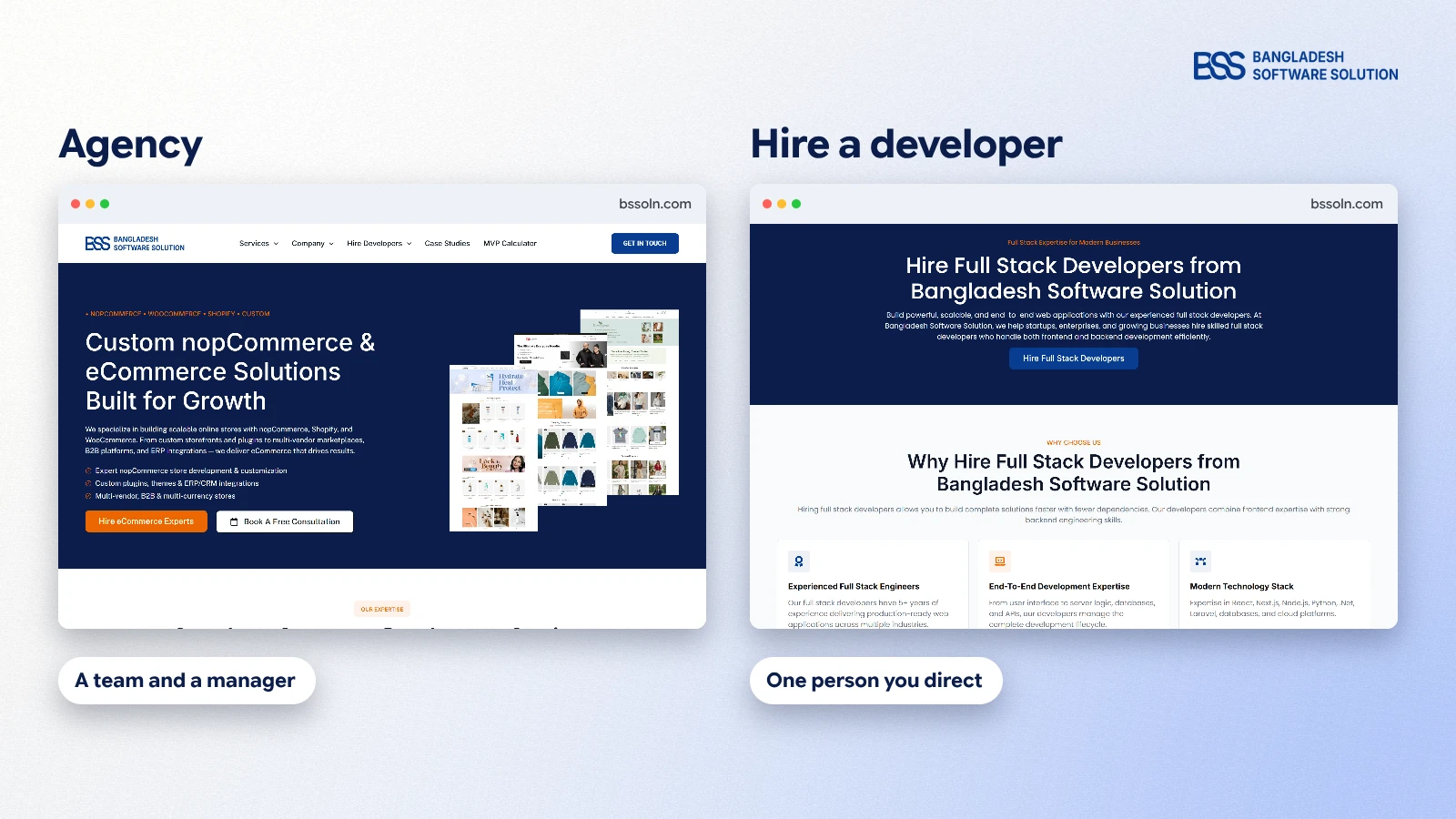
Each way solves a different problem, and each fails in a predictable way. The table gives the short version, and the paragraphs below it give the reasoning.
| Way | Best for | Watch out for |
|---|---|---|
| Freelancer | A small, clear job: a plugin fix, a theme change | One person: sick days, holidays and no second pair of eyes |
| Agency | A project that needs design, build and management | A junior team behind a senior sales call |
| Dedicated developer | Ongoing work on a store you run | Needs someone on your side to set priorities |
| In-house hire | A store that is the core of the business | Hiring time, payroll and one person to replace |
A freelancer is the cheapest to start with and the easiest to lose. That is fine for a bounded job and risky for a store you depend on. An agency gives you a team and a manager, at the price of paying for both, and you should ask who will do the work.
A dedicated developer sits between the two: one full-time person you direct, employed by a company that covers absences. An in-house hire gives the most control and the most cost, and only makes sense when you can keep them busy and keep them.
How each one tends to go wrong
- Freelancer: the person takes another job in month two, and nobody else knows your code.
- Agency: a handover to a junior team after the sales call, and change requests that cost more than the original quote.
- Dedicated developer: nobody on your side sets priorities, so the work drifts.
- In-house hire: a long search, then a single point of failure.
A quick way to decide
Ask three questions. Does the work end on a date, or continue? Can someone on your side direct it? Is the store the core of the business?
A job with an end date and no manager points to an agency. Continuing work with a manager points to a dedicated developer. A store that is the business, with steady work, points to an in-house hire.
Whichever you pick, ask what you get if the person leaves, because that is the question every model is weakest on.
Want a second opinion on which way fits? Describe the store and the work to the BSS team. We will say which of these suits it, even when that is not us.
Talk to an expertMatch the Developer to Your Platform
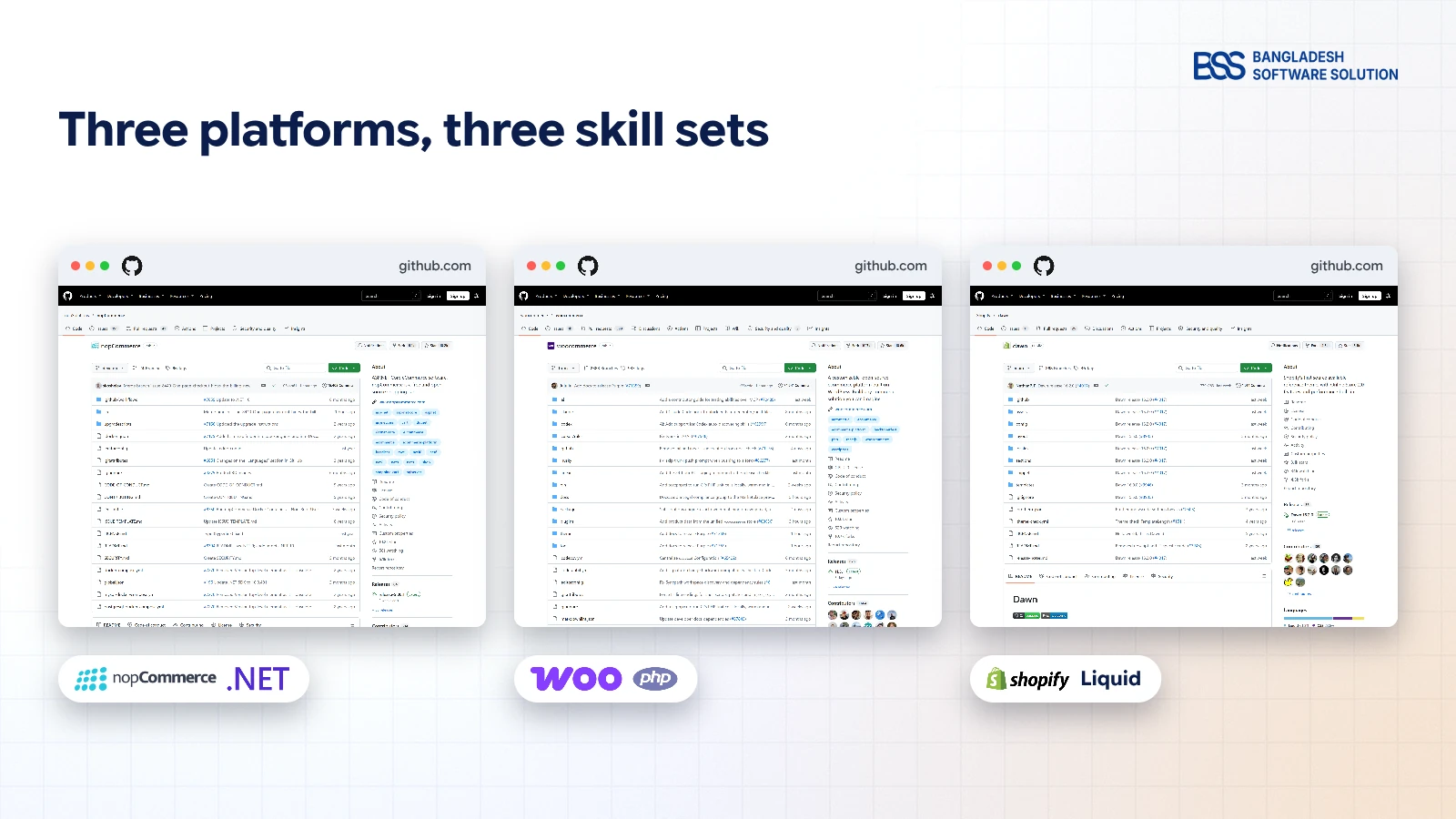
An ecommerce developer is not a general web developer with a shopping cart. The platform decides the language, the tools and the mistakes to avoid, and a developer who is excellent on one can be slow and expensive on another.
- nopCommerce is an ASP.NET Core application in C#, and its source is open on GitHub. Ask about plugin development, themes, upgrades between versions and SQL Server, MySQL or PostgreSQL.
- WooCommerce is a WordPress plugin written in PHP. Ask how they handle plugin conflicts, updates and hosting, since a WooCommerce store is only as stable as its plugin set.
- Shopify themes use Liquid, and Shopify's public Dawn theme is the reference most developers start from. Ask for theme and app work they have shipped, and how they handle checkout limits.



Questions to ask on any platform
- Which version have you worked on most recently?
- How do you keep a store updated without breaking its extensions?
- What do you do on a staging copy before anything reaches the live store?
- Which checkout and payment integrations have you built yourself?
- What did you do the last time a store slowed down?
What about custom or headless builds?
A custom or headless build, where the storefront is separate from the store engine, needs a developer who can design an API and a front end together. Ask for a project of that shape, not just a store. If you only need a theme and a few integrations, a custom build is more developer than the job needs.
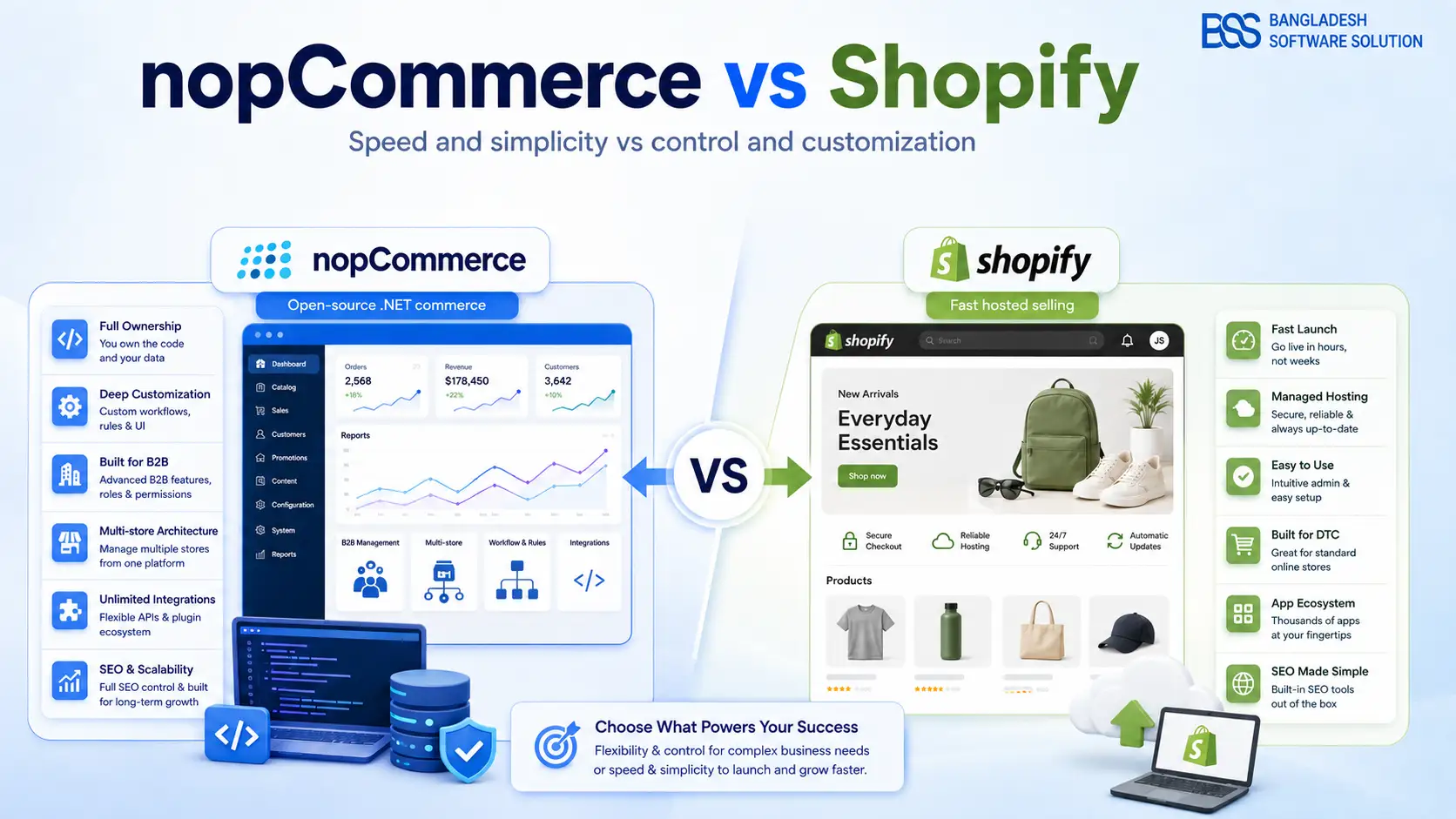
If you have not chosen a platform, choose first. Our comparison of nopCommerce and Shopify and our guide to platforms for small businesses give an honest view, and hiring is easier once the platform is settled.

On nopCommerce, a banner plugin lets your own team change promotions and offers, so developer hours go to development.

The cheapest developer hours are the ones you do not need. Before you hire, list the changes your own team could make with the right tool, such as banners, page text and product copy, and keep developers for the work only they can do. If your store runs on nopCommerce, the BSS Visual Editor is one way to do that.
How to Vet an Ecommerce Developer in an Hour
Write a one-page brief first
Whoever you hire, a short brief saves the first week. Write down what the store sells and to whom, the platform and its version, the three changes that matter most, the systems it must connect to, the date you need it by, and the budget you are willing to spend.
Share the same brief with every candidate. Their questions about it tell you more than their portfolios, and the answers are easy to compare side by side.
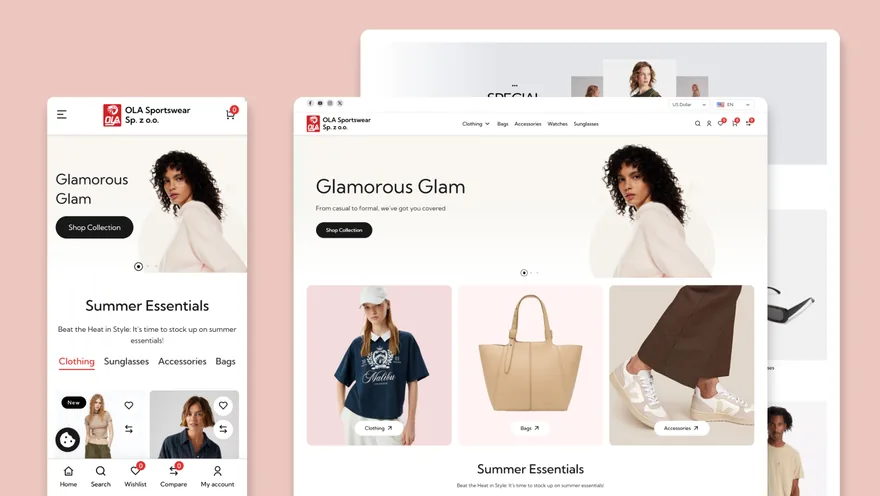
Built by BSS · OLA Sportswear, Poland
B2B and B2C on one nopCommerce store
English and Polish, three currencies, B2B approval and ERP inventory sync.
Read the case studyYou do not need to read code to vet a developer. You need proof you can check yourself, so work through the seven questions below and give each answer a few minutes.
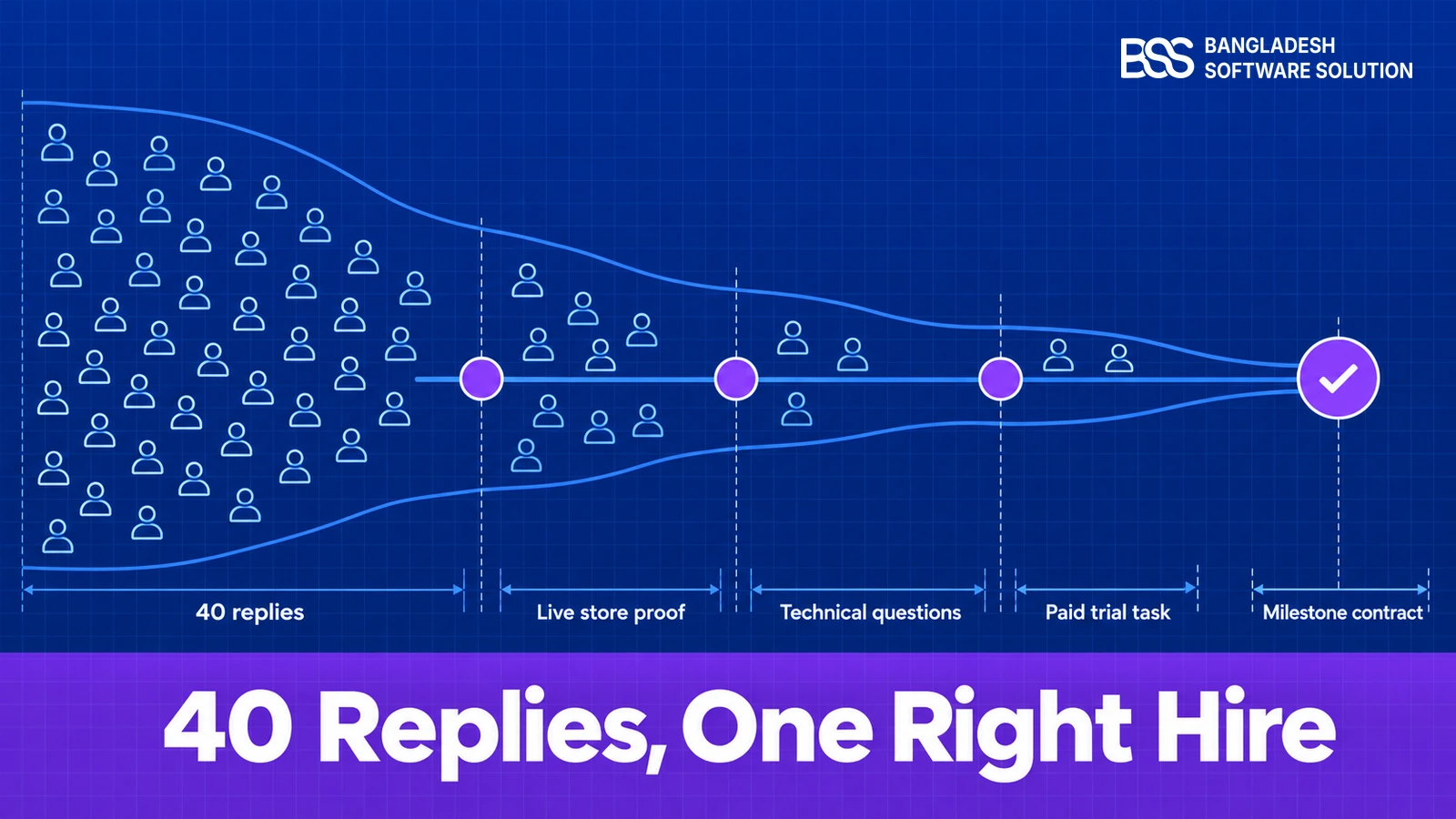
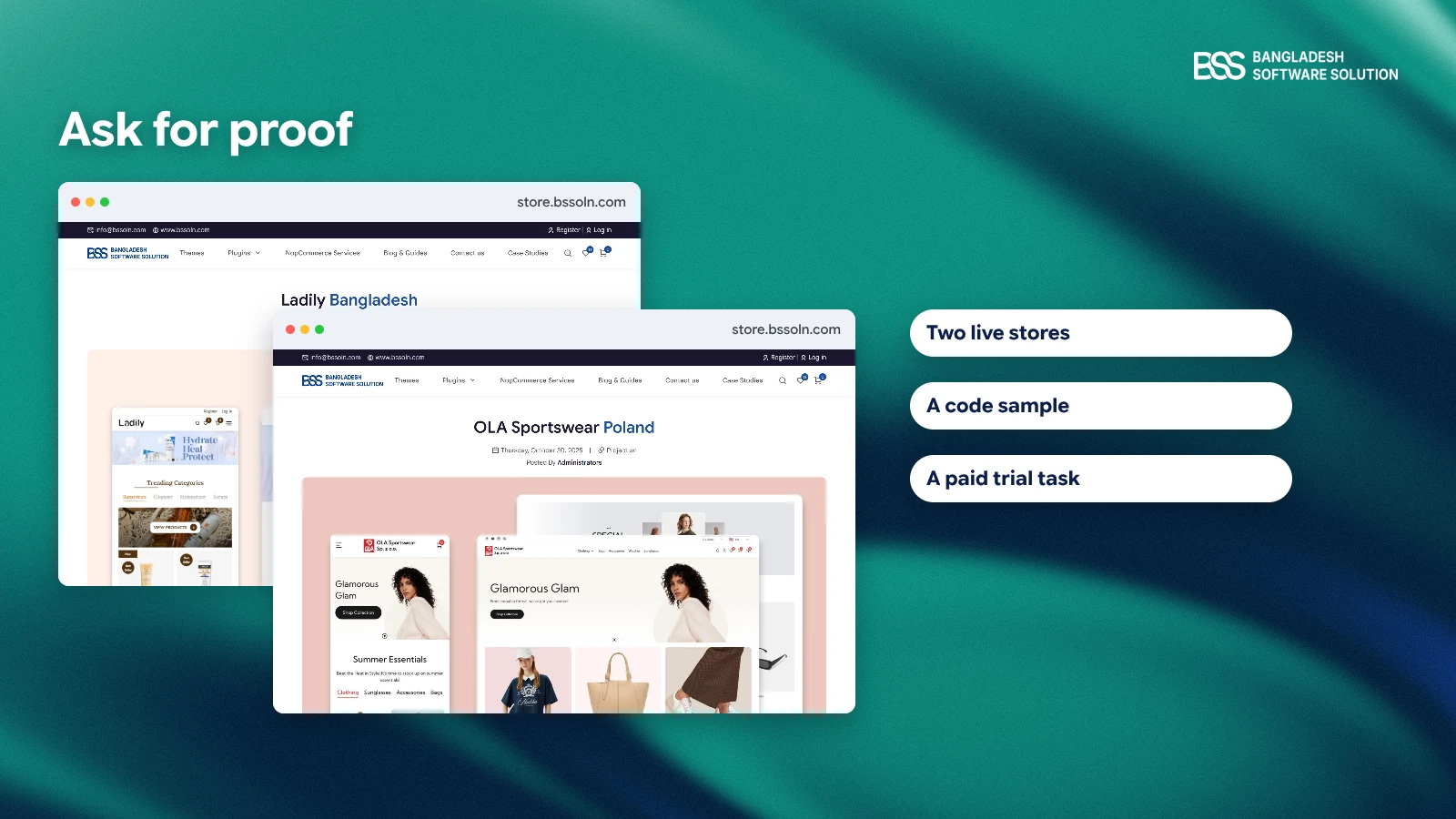
- Two live stores on your platform. Open both on your phone and place a test order in each.
- What they built, and what they inherited. A good developer knows the difference and says so.
- A repository or a code sample. Ask a technical friend to skim it, or ask the developer to walk you through it.
- One bounded task, paid. A day or two of real work shows how they communicate and finish.
- A reference you can phone. Ask the client what went wrong and how it was handled.
- How they test. Ask what happens between a change and your live store.
- Who else touches your store. Ask who covers them when they are away.
Read the questions a candidate asks back before you read their résumé. One who asks nothing has either done it before or is not listening, and a short call with the BSS team is a cheap way to get a second opinion on a shortlist.
How to run the paid trial
A trial only works if it is small, real and judged against something you wrote down. Pick a change you need anyway, such as a checkout field or a product filter, and describe it in a few lines. Agree the price and the day it is due.
Then judge four things: did they ask good questions, did they ship it on staging first, did the change match what you wrote, and did they tell you early when something was harder than expected? A developer who passes those four is worth the larger commitment.
Pay for the trial, even a small one. It keeps the arrangement honest on both sides. The fixed-price model is one way to keep that first job small and clearly defined.
Five red flags
- No live stores to show. Screenshots and mock-ups are not proof.
- A fixed price and date for a vague brief. Either the scope is hiding or the quote is.
- No access to your own repository or admin. Your store and your code must stay yours.
- No staging copy. If every change goes straight to the live store, it will eventually break it.
- A request to pay everything before any work. Pay by milestone.
One flag is a question to ask. Two are a reason to keep looking.
Contract and the First 30 Days
Write the scope down before work starts, even for a small job. A fixed-price project needs a defined scope, a date and a price; BSS's fixed-price page lists clear requirements and a stable scope as the cases it suits. Ongoing work needs a list of priorities and a way to change it.
Put four things in the contract: who owns the code, how milestones are paid, what happens when either side ends the work, and who fixes problems after launch. Ask for the staging copy on day one.
A first month that works
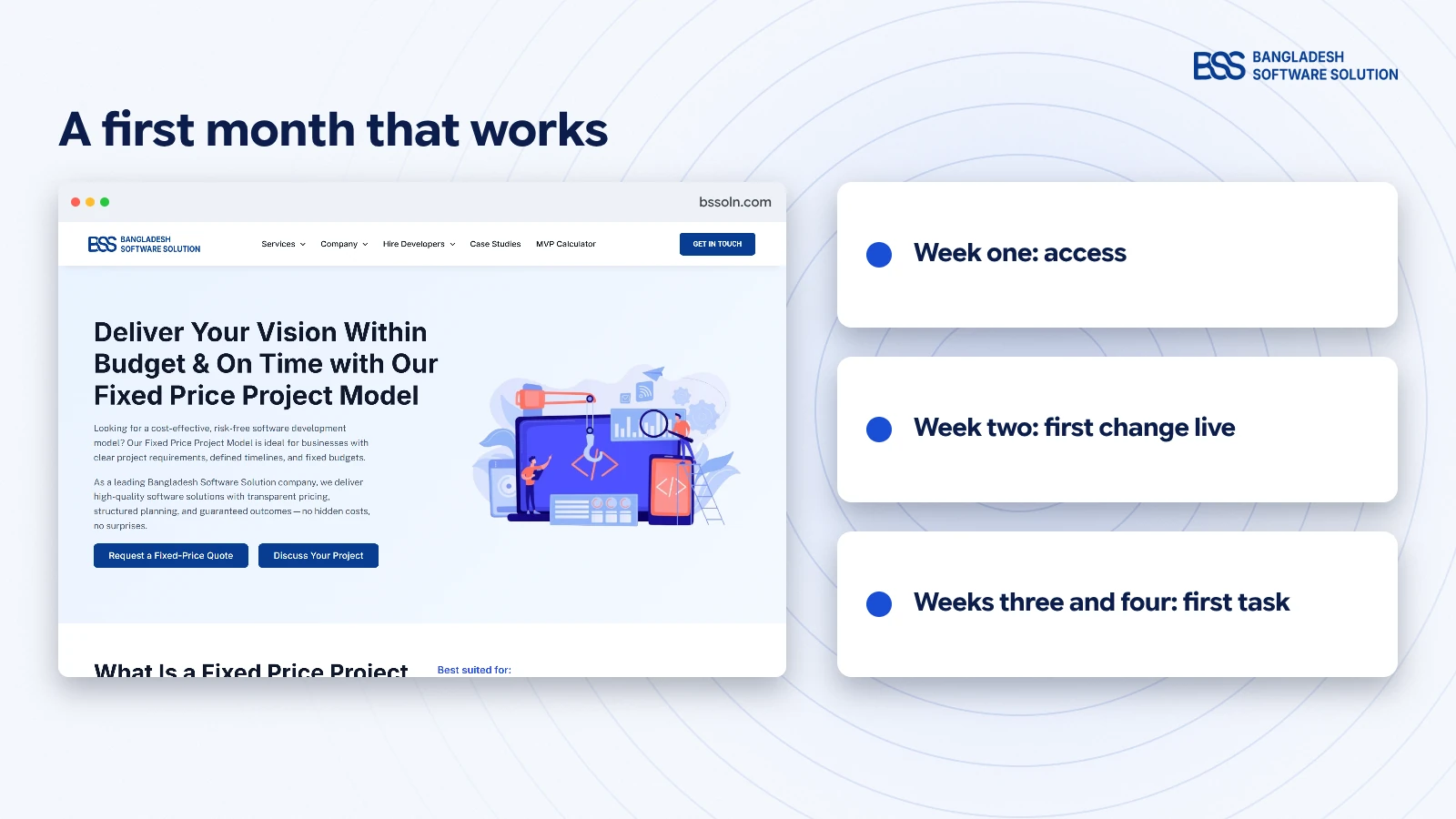
- Week one: access to the store, the repository and a staging copy; a short audit of what exists.
- Week two: the first small change reaches the live store, tested on staging first.
- Weeks three and four: the first real task, reviewed against the scope you wrote.
If the first change does not ship in two weeks, find out why before the second invoice.
Ask for the staging copy on day one and use it yourself. A store you can test before it goes live is the cheapest insurance in this list. Ask every vendor for one, the BSS eCommerce development team included.
Hire and manage yourself
- Write the brief and shortlist
- Vet and trial each candidate
- Write the contract and scope
- Direct and review the work
Or BSS builds it
The BSS team builds ecommerce stores on nopCommerce, WooCommerce and Shopify, on a fixed-price, dedicated or hourly basis, and says early if the work needs another model.
See eCommerce developmentWhat to check at the end of week four
Look at three things. Is the work in your repository and on your staging copy? Do the changes match the scope you wrote? Has the developer told you about a problem before you found it? If all three are yes, widen the scope. If not, fix the working relationship before you add more work.
What to hand over at the end
Whoever builds your store, you should finish with the code in your repository, the admin accounts under your control, a list of the plugins and versions in use, and a short note on how to deploy. Ask for it as you go, not at the end, because the end is when the relationship is weakest.
When to end the engagement
End it when milestones slip twice without a plan, when you cannot reach the person for a week, or when changes keep breaking the live store. Ending early on a fair notice period costs less than hoping the third month will be different.
An ecommerce developer from the team behind these themes and plugins
BSS builds and supports ecommerce stores on nopCommerce, WooCommerce and Shopify. Tell us the store and the work, and we will say which way to hire fits, and whether it is us.
Frequently Asked Questions
Final Thoughts
Back to the half-built store you want to avoid. Pick the way to hire from how long the work lasts and who will direct it, choose a developer who knows your platform, and ask for two live stores, a code sample and a paid trial before you commit.
If you want help choosing, the BSS team will give a straight answer on which way fits your store, including when it is not a BSS engagement.
Tell us the store and the work. The BSS team will say which way to hire fits and who could do it.
Talk to an expert